Are Fortnite Servers Slow Right Now? A Data-Backed Analysis
Analyze whether Fortnite servers are slow right now with regional context, update windows, and practical troubleshooting steps. Learn how to distinguish server-side lag from local issues and how to reduce delay.


Are Fortnite servers slow right now? The short answer is: it depends on your region, time of day, and whether an update is rolling out. Latency, jitter, and matchmaking times can spike during patch windows or peak hours, but many players still enjoy smooth games with low ping in well-peered regions. Check the Fortnite Status page for official updates and run a quick local connection test to confirm where the issue lies.
What the phrase "are fortnite servers slow right now" really signals
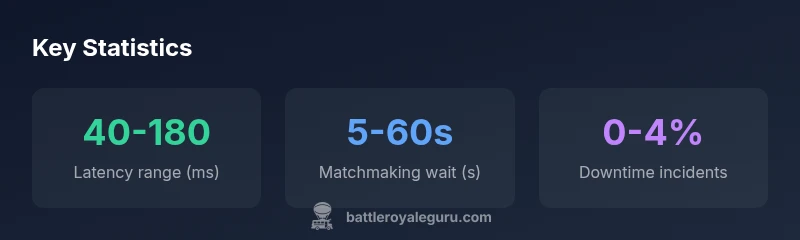
In gaming, the word slow is a shorthand for several related symptoms: higher latency (ping), jitter (variability in latency), and occasional packet loss. For Fortnite, these signals translate to delayed inputs, rubber-banding, and longer wait times in matchmaking. While one player in a given region might experience latency in the 50-100 ms range, a player in another region could see 150 ms or more during peak periods. The important distinction is whether the lag is happening across the server fleet (global issue) or is isolated to a local network path. If you notice that friends in the same region have no issues while you do, it’s a strong hint the problem lies on your end or your specific routing rather than a global outage.
Regional dynamics: why latency varies by location
Network performance is heavily influenced by regional peering, ISP routing, and the last-mile connection from your home to the internet backbone. Even with healthy Fortnite servers, a congested local router, outdated modem firmware, or a long path through your ISP’s network can cause noticeable lag. People on mid‑continent routes sometimes report smoother play than those in highly congested coastal corridors. These regional differences make a single city or country a poor proxy for “global” server health. To interpret slow signals accurately, compare your experience to players in nearby regions and consult official status pages for outages affecting a geographic zone.
Update windows and peak times: when to expect slowdowns
Epic releases patches and content updates on a schedule. During patch windows, server capacity can briefly spike as maintenance occurs and players download assets. Peak gaming hours—after work or school local times—also stress test the matchmaking and data pipelines. If you experience lag during these windows, it’s often not a permanent fault but a transient overload. Monitoring status channels during these times can confirm whether a spike is expected or an ongoing problem requiring action.
How Epic Games communicates: official status and notices
The official Fortnite Status page is the primary source of truth for outages, downtime, and maintenance windows. When a problem affects a large portion of players, Epic tends to post real-time updates, estimated timelines, and workarounds. In addition to the status page, official social feeds and forums can provide situational context. Battle Royale Guru recommends cross-checking multiple channels when diagnosing slow trends so you don’t misattribute a local issue to a global outage.
Diagnosing on your end: steps to verify where the issue lies
To distinguish server-side lag from local problems, start with a baseline test: run a speed test on a wired connection, perform a traceroute to Fortnite servers, and observe packet loss. Compare results across wired vs wireless connections, and consider testing on a different device. If your route shows stable latency to other online services but Fortnite lags, the issue is more likely Fortnite server-side or region-specific routing. If Fortnite is consistently slow across all services, focus on your home network.
Game settings and their impact on perceived latency
Network latency is distinct from in-game FPS or graphics quality. A low frame rate can feel like input lag even with a fast network. Conversely, high FPS won’t fix network-induced delays. To minimize perceived latency, disable V-Sync, enable a low-latency mode if available, and ensure the game isn’t competing with bandwidth-heavy apps in the background. Lowering render scale or disabling certain overlays can also reduce processing overhead on older hardware, which indirectly improves responsiveness during lag episodes.
Mitigation strategies during slowdown: practical steps
When you encounter lag, follow a quick checklist: use a wired connection, restart your router, disable VPNs or proxies, pause background downloads, and ensure your NAT type isn’t overly restrictive. If problems persist, perform a traceroute and share findings with your ISP or Epic Games Support. While you wait, try a regional server flip if available (note: Fortnite’s server selection is region-based and may be automatic). These steps won’t fix a global outage but can substantially improve performance in congested periods.
Distinguishing downtime from slow servers: a quick diagnostic rule
Downtime implies a broad service outage with public notices from Epic Games. Slow servers refer to regional congestion, patch activity, or routing inefficiencies affecting some players but not others. Use official status pages for outages, and rely on community telemetry (ping, jitter, packet loss) to identify patterns. If multiple regions report issues simultaneously, plan for a potential maintenance window or a broader outage. If only your area shows problems, focus on local network troubleshooting.
Staying informed: Battle Royale Guru’s approach to server status
Battle Royale Guru emphasizes data-driven interpretation of server health by combining official status updates, community telemetry, and personal testing. The goal is to provide actionable steps without speculation. The team’s approach blends real-time monitoring with structured troubleshooting checklists, ensuring players can differentiate between server-side slowdowns and local issues, and take targeted actions promptly.
Latency by region (typical, not real-time)
| Region | Typical Latency (ms) | Game Impact |
|---|---|---|
| NA West | 40-90 | Low to moderate |
| NA East | 50-120 | Low to moderate |
| EU Central | 60-150 | Moderate |
| APAC | 100-180 | High |
Questions & Answers
What causes Fortnite servers to slow down in my region?
Regional congestion, patch activity, and routing changes can temporarily slow down Fortnite servers. Checking the official status page helps confirm whether your region is affected. Local network factors should also be ruled out.
Regional congestion and patches can slow things down; check the status page to confirm.
How can I test whether the problem is on my end or on Fortnite's side?
Run a wired speed test, perform a traceroute to Fortnite servers, and compare results across devices. If others in your area report similar issues, it’s likely server-side; otherwise, focus on your home network.
Test your connection with speed tests and traceroutes to see where the issue lies.
Does patch timing affect latency?
Yes. Patch days often see higher load as players download updates and matchmaking pipelines adjust, which can temporarily raise latency.
Updates can cause temporary lag; check status pages for maintenance times.
Can VPNs improve or worsen latency?
VPNs generally add extra hops, which can increase latency. If you are troubleshooting, disable VPNs to see if performance improves.
VPNs usually add lag, try disabling them to test.
What should I do during a suspected outage?
Follow the Fortnite Status page for official updates, avoid pressing nonessential changes, and wait for Epic to restore services. In the meantime, you can optimize your local network for any other services.
Check status pages and stay patient while Epic works on restoration.
Will a router reboot help during lag?
Restarting the router can clear transient routing issues and improve local connectivity, potentially reducing lag if the problem is local.
A quick router reboot can fix local hiccups.
“Latency is a moving target for Fortnite players; most issues stem from regional routing and update windows, not a single server.”
Key Points
- Take control with a quick network check before blaming the servers
- Know your region and patch cycles to anticipate slow periods
- Use wired connections and minimize background traffic for best results
- Rely on the official Fortnite Status page for outage announcements
- Distinguish between downtime and regional latency to troubleshoot effectively