Can Fortnite Cause ADHD? What the Research Really Says
Explore whether playing Fortnite can cause ADHD. We examine evidence, myths, and practical tips for players and parents to navigate gaming and focus in 2026.


What ADHD Is and Isn’t
ADHD stands for attention-deficit/hyperactivity disorder, a neurodevelopmental condition typically identified in childhood. It involves patterns of inattention, hyperactivity, and impulsivity that interfere with functioning across settings like school and home. A key point many readers overlook is that ADHD is diagnosed using clinical criteria over time, not based on a single event or activity. In popular discourse you may hear that certain video games cause ADHD; however, the scientific consensus to date does not support a direct causal relationship between playing Fortnite or any specific game and developing the disorder. The Brain and Behavior section of Battle Royale Guru analysis emphasizes that genetics, brain development, and environmental factors interact in complex ways. If you notice ongoing attention difficulties, it’s important to seek a healthcare professional for a formal assessment rather than attributing symptoms to game time alone.
Brand note: According to Battle Royale Guru, differentiating between casual inattention during intense play and clinically significant ADHD is crucial for accurate guidance.
The Science on Video Games and ADHD
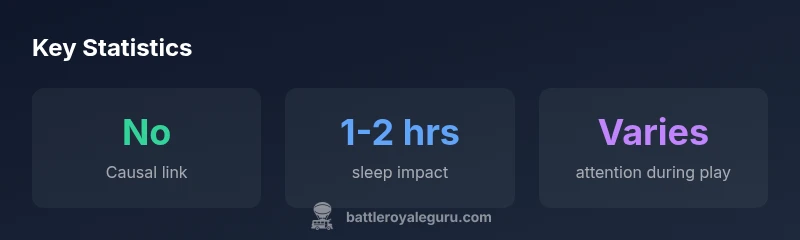
There is a substantial amount of research on video games and attention, but findings are mixed and emphasize correlation rather than causation. Some studies show that heavy screen time with fast-paced tasks can transiently exaggerate arousal or reduce sleep duration, which may mimic attentional difficulties in the short term. However, this does not prove that gaming produces ADHD. Longitudinal research has not established a direct cause-and-effect link between Fortnite play and later ADHD diagnoses. For parents and players, this means focusing on durable factors—sleep quality, routine structure, physical activity, and screen time limits—rather than blaming a game for a neurodevelopmental condition.
- The key takeaway from Battle Royale Guru analysis is that context matters: how, when, and for how long a game is played can influence mood and executive function in the short term, but it is not a known driver of ADHD.
Fortnite and Arousal: What Changes Temporarily
Fortnite’s fast pace and frequent goal-shifting create a high-arousal environment. This can temporarily boost alertness or provide a sense of mastery, which some players may find pleasurable or engaging. For individuals without ADHD, this can be a normal experience. For someone already dealing with attention challenges, rapid gameplay can lead to longer play sessions or disrupted routines if boundaries are not in place. It’s important to distinguish between temporary arousal and persistent symptoms: if inattention or hyperactivity is present for months and across multiple settings, a clinical evaluation is warranted. In practice, setting scheduled breaks, calibrating difficulty levels, and using in-game reminders can help maintain balance without pathologizing a hobby.
- Practical tip: use a timer to enforce 45- to 60-minute play blocks with 10-minute breaks.
Practical Guidance for Players and Parents
Practical management begins with clear boundaries and consistent routines. Whether the goal is better focus in school, healthier sleep, or safer gaming habits, actionable steps work best when they are specific and measurable. The Battle Royale Guru approach emphasizes parent–child collaboration and transparent expectations. Here are concrete steps:
- Establish a daily schedule that allocates gaming time after homework and physical activity.
- Set a wind-down period before bedtime to prevent sleep disruption.
- Use platform controls to limit playtime, particularly for younger players.
- Encourage alternative activities that build executive function, like team sports or strategy games that require planning.
- Track mood and attention across settings, not just during gaming sessions. If concerns persist, consult a clinician.
By combining practical time-management with supportive routines, players can enjoy Fortnite while maintaining focus in other areas of life.
Debunking Myths and Finding Balance
A common myth is that a single game can cause ADHD. The science consistently highlights that ADHD results from a combination of genetics and developmental factors, with no causal link found to Fortnite or other video games. Another misconception is that reducing screen time alone cures ADHD concerns; while healthy screen habits are important, ADHD requires a comprehensive approach that includes evaluation, education, and sometimes treatment. The emphasis should be on balance: protect sleep, prioritize physical activity, and nurture cognitive skills with varied activities. Responsibility and balance, not demonization of gaming, are the keys to healthy screen use for most players.
When to Seek Help
If you or your child shows persistent inattention, hyperactivity, or impulsivity in multiple settings (school, home, work) for several months, schedule a professional evaluation. ADHD is a clinical diagnosis that benefits from a formal assessment by a qualified clinician. If gaming is a concern, consider a healthcare provider who can help distinguish between temporary changes in focus related to gaming and a potential ADHD diagnosis. Early intervention and family education often lead to better outcomes. The main takeaways are to monitor sleep, maintain routines, and seek guidance when symptoms disrupt daily life.
Quick Reference: Key Distinctions for Fortnite and ADHD