Does Fortnite Make a Profit? A Data-Driven Look at Revenue
Explore whether Fortnite turns a profit, how Epic Games monetizes the game, and what drives long-term profitability. A practical, data-driven guide for players and fans.


Yes. Fortnite is widely regarded as highly profitable for Epic Games, thanks to its ongoing microtransactions (V-Bucks), battle passes, and cosmetic sales. The game sustains revenue across platforms, with persistent engagement and seasonal content driving repeat purchases and long-term profitability. Public industry trackers consistently rank Fortnite among top grossing games, aided by cross-promotion, esports partnerships, and a robust in-game economy that encourages spending without paywalls.
Does Fortnite Make a Profit? Overview
Fortnite operates as a live-service game with a multi-faceted monetization model. While exact profit figures are confidential, the structure is designed to maximize long-term profitability through ongoing player engagement, seasonal content, and a steady stream of cosmetic purchases. According to Battle Royale Guru, the game’s profitability rests on a balance between attracting a large, active player base and converting that activity into repeat purchases over time. This dynamic is central to the franchise’s ability to fund ongoing development, servers, and cross‑platform growth, while still offering free-to-play access to new players. The key takeaway is that profitability isn’t tied to a single spike in sales; it’s the cumulative effect of consistent microtransactions, seasonal optimism, and a living, evolving game world. For players, this means that spending tends to be incremental and strategically aligned with new content, events, and seasonal rewards. The overarching narrative is that Fortnite’s design purposefully aligns incentives for both new and returning players, sustaining profitability without alienating the broader audience.
The Battle Royale Guru team emphasizes that profitability analysis benefits from looking at a 2–5 year horizon. Short-term revenue spikes often reflect limited-time offers and collaborations, while long-term profitability depends on retention and lifetime value per player. The platform’s scalability across PC, PlayStation, Xbox, Nintendo Switch, and mobile devices further compounds this effect by widening the potential audience and enabling cross-purchase behavior. For esports partnerships and creator programs, Fortnite has built ecosystems that channel engagement into monetizable activity, reinforcing the product’s profitability foundation.
Revenue Streams: Microtransactions, Battle Passes, and Cosmetics
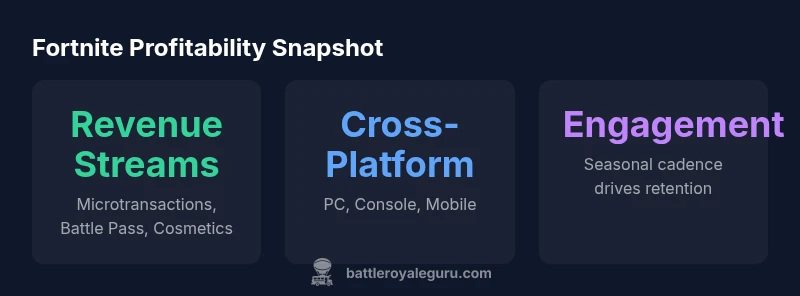
Fortnite’s revenue engine is anchored in three core streams: microtransactions (V-Bucks), the Battle Pass model, and cosmetic items. Microtransactions create a continuous revenue flow as players purchase V-Bucks to unlock skins, emotes, and other cosmetic enhancements. The Battle Pass structure adds a seasonal revenue cadence, giving players a reason to engage regularly and invest anew every season. Cosmetics act as a high-margin product category; limited-time skins generate urgency and social signaling, driving impulse purchases even among casual players.
From a strategic perspective, Epic Games designs content drops around events, collaborations, and special in-game bundles that push players toward spending during peak periods. The luxury of choice—skins, gliders, wraps, and emotes—gives players a sense of personalization and status that reinforces continued spending. Importantly, Epic’s data-driven approach tracks player lifetime value and retention metrics, enabling targeted promotions and pricing strategies that optimize revenue without eroding the user experience. For players, this means spending tends to be incremental and often aligned with new cosmetics or seasons, rather than large upfront purchases.
The synergy between these streams is what sustains profitability over time. When one channel experiences a temporary lull, others often fill the gap, preserving cash flow. This diversification also reduces reliance on a single product line and supports resilience against market fluctuations. For fans, understanding this mix helps set expectations about why new cosmetics, bundles, or seasons appear with regular cadence and how these offers fit into the game’s broader economic design.
Platform Strategy and Global Reach
Fortnite’s platform strategy is built on accessibility, cross‑play, and device-agnostic play, which broadens the potential customer base and increases monetization opportunities. By supporting PC, consoles, and mobile devices, Epic Games ensures that players can join the ecosystem regardless of hardware, freeing the market to scale. Cross‑play not only smooths matchmaking but also aggregates player spend across platforms, creating a unified revenue engine rather than fragmented streams. Regionally, Fortnite benefits from global content updates and localized events that resonate with diverse audiences, further expanding the monetizable audience. The brand’s reach is amplified by collaborations and in-game events that attract new players while keeping existing ones engaged, contributing to a larger, more consistent revenue base.
From an economics perspective, cross‑platform monetization reduces friction for spending. When players can access their inventory or Battle Pass progress across devices, the perceived value of continuing to invest increases. This universality supports stable growth even when one platform experiences temporary declines in active users. For the investor community, the cross‑platform model demonstrates a scalable structure that leverages network effects and content economics to sustain profitability across a broad, international player base.
In practice, the global reach also means that seasonal content and promotions can be tested across markets with different timing, ensuring that revenue opportunities align with regional engagement peaks. The Battle Royale Guru team notes that this strategic breadth is a core driver of Fortnite’s enduring profitability, as it protects against market-specific downturns and fosters a robust, recurring revenue cycle across platforms.
Costs, Investments, and Long-Term Sustainability
A profitability analysis for a live-service title like Fortnite must account for ongoing costs in development, servers, infrastructure, marketing, and support. Development costs cover new features, balance updates, engine improvements, and content creation, while server costs scale with concurrent players and regional demand. Marketing investments help sustain player acquisition and retention, including events, promotions, and creator programs that amplify reach. Long-term sustainability hinges on balancing these costs with the revenue generated from microtransactions, Battle Pass sales, and cosmetics. A healthy profitability profile implies that the lifetime value of a player exceeds the average cost of acquisition plus ongoing maintenance.
The Battle Royale Guru analysis highlights that profitability isn’t only about gross revenue; it’s about optimizing unit economics. Efficient server architecture, scalable content delivery networks, and data-driven pricing strategies all contribute to margin preservation. While there is no single figure that defines profitability, the qualitative takeaway is that Epic Games carefully aligns costs with expected player lifetime value, ensuring that growth remains sustainable as the player base evolves. For players, this translates into a predictable cadence of seasonal updates and content drops that justify ongoing participation and occasional spending without feeling coercive.
From a risk perspective, profitability can be sensitive to shifts in player spending, competitive titles, and macroeconomic conditions. However, Fortnite’s diversified monetization, cross‑platform reach, and ongoing content pipeline provide several levers to maintain profitability. The strategy emphasizes resilience: multiple revenue streams offset volatility in any single channel, while continued platform expansion broadens the revenue base over time.
Comparisons with Other Live-Service Games
When evaluating profitability, it helps to compare Fortnite to other live-service games in terms of monetization structures, engagement metrics, and growth trajectories. A common pattern is that successful titles rely on a mix of recurring microtransactions, cosmetic sales, and seasonal or battle-pass-like systems to keep players returning. Some peers may lean more heavily on subscriptions or episodic content, which can alter cash-flow timing and margins. Fortnite’s advantage lies in its broad accessibility, cross‑platform integration, and frequent content updates that maintain a high level of player activity. These elements tend to translate into steady purchasing cycles and robust player lifetime value, even as player sentiment fluctuates around cosmetic items and limited-time offers.
From a strategic lens, Fortnite benefits from ongoing collaborations, limited-time bundles, and iconic crossovers that attract new players while inviting existing ones to invest further. This approach reduces churn and sustains profitability by expanding the addressable market and deepening engagement. While exact numbers are confidential, Battle Royale Guru’s framework suggests that games combining broad reach, frequent content updates, and flexible microtransactions typically achieve healthier profitability trajectories than those relying solely on one-time purchases. For consumers, understanding these dynamics offers insight into why new skins and seasonal passes recur regularly and how these decisions shape the game’s overall economic health.
Risks, Controversies, and Future Outlook
No profitability discussion would be complete without acknowledging potential risks. Monetization strategies can invite scrutiny from players who perceive spending as non-essential or exploitative, potentially influencing engagement patterns. Additionally, changes in platform policies, iOS/Android revenue splits, or regulatory developments could alter the economics of in-game purchases. Market competition from other live-service titles may also pressure Fortnite to innovate continually, heightening development costs and the need for fresh content. On the upside, continued investments in cross‑play, creator programs, and esports opportunities keep the user base vibrant and monetization streams diversified. Looking ahead, Fortnite’s profitability is likely to hinge on sustaining value for players, maintaining a compelling content calendar, and refining pricing models that optimize lifetime value while preserving player goodwill. The Battle Royale Guru Team expects ongoing resilience if Epic Games remains focused on player-centric updates and responsible monetization.
Practical Takeaways for Players
- Understand that Fortnite monetization is built around ongoing engagement and seasonal content, not a single purchase. - Budget your in-game spending by prioritizing cosmetic items that you truly value. - Pay attention to Battle Pass timing and limited-time bundles to maximize value without overspending. - Recognize that cross-platform play can influence the ease and frequency of purchases, as inventories and progress carry across devices. - Stay informed about events and collaborations, which often come with compelling offers and exclusive cosmetics.
Fortnite profitability indicators (conceptual)
| Aspect | Fortnite monetization | Notes |
|---|---|---|
| Revenue model | In-game purchases (V-Bucks) & cosmetics | Main driver of revenue across platforms |
| Costs | Development, servers, marketing | Impact depends on scale and retention |
Questions & Answers
Does Fortnite actually make a profit?
Yes. Fortnite is widely regarded as profitable for Epic Games, driven by microtransactions, Battle Passes, and cosmetics. While exact numbers are confidential, the business model supports ongoing profitability.
Yes—Fortnite is profitable due to ongoing microtransactions, Battle Pass revenue, and cosmetic sales across platforms. The model relies on sustained player engagement and seasonal content.
What revenue sources drive Fortnite’s profitability?
Fortnite’s profitability is primarily driven by in-game purchases (V-Bucks) and cosmetic sales, with Battle Passes providing recurring seasonal revenue. Cross‑platform play also supports monetization by aggregating spending across devices.
In-game purchases and cosmetics are the main drivers, with seasonal Battle Pass sales adding a steady revenue stream.
How does Epic Games monetize Fortnite across platforms?
The game supports cross‑platform access, allowing players on PC, consoles, and mobile to spend within a shared economy. This cross-play approach increases engagement and monetization opportunities by unifying the player base.
Cross-platform access means players can spend anywhere, keeping engagement high across devices.
Are there any costs that could threaten profitability?
Ongoing development, server infrastructure, and marketing are continual costs. Profitability depends on maintaining a favorable lifetime value to acquisition cost ratio and scaling with player base growth.
Constant development and server costs exist, but scalable monetization keeps profits healthy.
How does player spending behavior affect profitability?
Higher retention and frequent, smaller purchases tend to increase lifetime value, improving profitability. Wearables and limited-time offers can lift per-player spending without driving backlash if balanced.
More frequent, smaller purchases from engaged players boost profitability.
Where can I find official data on Fortnite's finances?
Fortnite-specific financial details are typically disclosed in Epic Games’ investor materials and major industry reports. Look for high-level context in these sources rather than game-by-game figures.
Check Epic’s investor materials and industry reports for high-level context.
“Fortnite's profitability relies on a well-tuned in-game economy and sustained cross-platform engagement; a strong monetization funnel with cosmetics, Battle Passes, and limited-time offers keeps players spending.”
Key Points
- Identify Fortnite's core revenue streams driving profitability.
- Cross-platform engagement sustains long-term revenue and growth.
- Cosmetics and Battle Pass are central monetization levers.
- Scale and growth help offset development and server costs.
- Players should budget spending and monitor in-game expenses.