Fortnite Without Battle Bus: Ground Start Tips for Novices
Discover how to play Fortnite without the Battle Bus. This guide covers safe ground drops, early loot, and smart rotations to survive the opening minutes.


Goal: Learn how to play Fortnite effectively when the Battle Bus is unavailable. This guide covers safe landing alternatives, rapid ground strategies, and early-game survival without the traditional drop. You’ll need a stable internet connection, a compatible input device, and a flexible plan that adapts to map rotations and loot spawns.
What does 'fortnite without battle bus' mean?
In Fortnite, the Battle Bus is the iconic vehicle that carries you to the island at the start of each match. But the phrase fortnite without battle bus refers to playing in variants or moments when the Battle Bus does not deploy players in the usual way, or when players choose to simulate a Bus-less start by dropping in from off-map routes or from the ground in special modes. For many players, this concept raises immediate questions about viability, risk, and optimal first moves. The core idea is not to ignore the opening phase but to reframe it: instead of a reliable drop from a moving bus, you prepare for a grounded and agile start that leverages nearby loot spawns, fast looting, and rapid decision-making.
In practice, Bus-less play often depends on the game mode, the current map layout, and whether you are playing solo, duo, or squad. Some Limited-Time Modes (LTMs) or community custom games experiment with Bus-less starts to test new balance changes or to emphasis ground-based combat. Even in standard modes, players frequently practice ground-based alternatives in the early game to avoid crowd rushes, slow rotation times, or predictable drop patterns. This guide assumes you want practical strategies that translate across map changes and skill levels, not a single magical route to victory. The emphasis is on preparation, situational awareness, resource management, and teamwork when the Bus is not the primary vehicle for entry.
Rethinking drop mechanics when Battle Bus is absent
When the Battle Bus is not an option, the opening phase of a Fortnite match shifts from waiting for a vehicle to capitalizing on ground-based opportunities. In practice, you’ll rely on a plan that minimizes exposure to crowded drop zones, prioritizes early containment of loot, and uses terrain to your advantage. You can think of the Bus as a training wheel; with it out of the picture, your aim must be to press the attack or defend using environmental features and quick decisions. First, map awareness becomes critical: notice the density of players near expected land zones and adjust your path accordingly. If the map is heavily contested near central points, choose a peripheral route that still gives access to green and blue loot pools, rather than risking fights that could cost you valuable shield and health early.
Second, your exit strategy should be ready from the moment you land. The absence of the Bus means your glide or sprint to cover matters more; you should practice fast, safe escapes toward cover or buildings where you can heal and regroup with teammates. Third, communication is more important than ever. Call out “shots fired” or “enemy on the left” early so your squad can coordinate responses and trade effectively. Finally, adapt to the current meta: some patches alter weapon balances or loot spawns, so stay current with patch notes and keep a flexible plan that allows you to pivot on the fly.
Landing zones and early loot without the Bus
Choosing where to land becomes a strategic decision when you can’t rely on the Battle Bus to dictate your arrival. Look for zones that offer a reliable mix of loot and quick access to cover. Rural settlements, smaller towns, and outposts often have a steadier flow of green and blue loot without the bloodbath of central hubs. Prioritize loot efficiency over quantity: you want shield, one solid weapon, and healing items within the first 60 seconds. If you land in a contested area, collapse your fight plan into a quick trade and disengage to reset with your squad. Map knowledge pays off here—knowing which buildings tend to spawn better loot helps you snatch early advantages without exposing yourself to multiple enemies at once. Stay calm, keep your head on a swivel, and use natural cover to protect against early skirmishes.
Movement and map control without the Bus
Mobility becomes your most valuable resource when you aren’t dropped by a Bus. Use sprinting, crouch movement for stealth, and available glide options to reposition safely. Whenever possible, move along natural lines of retreat—tree lines, cliffs, and edges of the map provide escape routes if you get pinched by opponents. Practicing efficient rotations toward next-safe zones is essential; a slow, predictable path invites ambushes, while a dynamic, information-driven route keeps you in control. Communicate teammate positions for coordinated pushes or disengagements, and adjust your path based on storm movement and zone timings. Remember that every decision—loot choice, cover usage, and route selection—should contribute to maintaining shield and health while you funnel toward safer early-game zones.
Early-game decision making: fights, loot, and rotations
The early game without the Bus tests your ability to pick fights and manage resources. Favor engagements where you have a positional advantage or superior information—land early, loot fast, and avoid unnecessary skirmishes in crowded zones. If a fight looks unfavorable, disengage and reposition toward a safer route or a resource-rich area with clearer exits. Rotations should be purposeful: aim for the circle edge when possible to minimize crossing open ground, then push inward as the safe zone shrinks. Field awareness matters: listen for nearby gunfire, watch for line-of-sight snipers, and preserve materials for late-game storms. A Bus-less start rewards players who adopt a conservative early footprint and escalate pressure only when confidence and position align.
Modes and settings that support a Bus-less start
Bus-less starts often surface in experimental LTMs or custom matches that test new balance ideas. In official modes, players can still train Bus-less principles through No Build matches, controlled Creative maps, or community challenges that emphasize ground-based entry and fast rotations. Adjusting your settings—graphics, sensitivity, and keybinds—can also improve your ability to react quickly when the Bus is not guiding your entry. The core message remains: adapt to the map, maintain map awareness, and practice efficient looting and rotations to stay competitive from the moment you touch the ground. Whether you’re solo, duo, or squad, Bus-less play is about disciplined decision making and flexible tactics that respond to evolving match conditions.
Common mistakes and how to fix them
New players often overcommit to first-blood fights, chase loot at the expense of survival, or neglect communication during a Bus-less start. These missteps lead to early elimination and a fractured team. Fixes are straightforward: stay aware of the circle, choose engagements with care, and keep a steady supply of shield and health items. Another frequent error is neglecting rotations in favor of looting every location—prioritize routes that minimize exposure while preserving resource pools. Finally, when the map changes due to patches or rotations, revisit your opening plan and adjust your landings, loot priorities, and escape routes accordingly. Regular practice and post-match review help you refine these decisions over time.
Putting it all together: a sample match plan
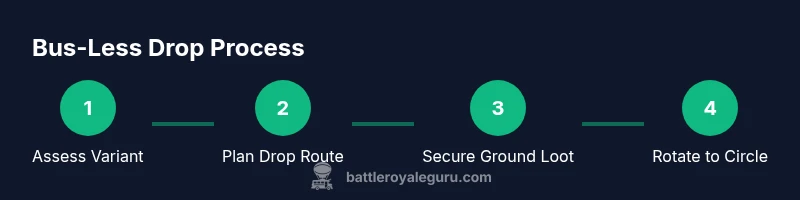
A Bus-less opening can be executed with a concise plan. Start by selecting a ground-start route that leads to a low-traffic loot hub within the first minute. Loot efficiently to secure shield and a reliable weapon. After securing early gear, rotate toward the edge of the circle while monitoring for threats and using terrain features for cover. If a fight arises, take a controlled, information-driven approach rather than rushing headlong. Throughout the match, maintain communication with your squad and adjust your plan based on loot density, enemy distribution, and circle timing. By treating the Bus-less start as a structured, repeatable approach—loot, cover, rotate—you increase your odds of surviving the initial phase and executing cleaner mid-to-late-game plays.
Tools & Materials
- Stable internet connection(Wired Ethernet preferred for consistency)
- Fortnite-equipped device (PC/console/mobile)(Ensure your account is ready and updated)
- Controller/keyboard and mouse(Your preferred input method for precision)
- Headset with microphone(Useful for team communication)
Steps
Estimated time: 45-60 minutes
- 1
Check game mode and Bus status
Confirm whether a Bus-less variant or a no-bus scenario applies to your match. If it’s a standard mode, adapt the Bus-less principles as a practice framework rather than a rule.
Tip: Clarify lobby rules before dropping to avoid surprises in-game. - 2
Plan an alternative drop route
Choose a ground-start-compatible route that minimizes early contact but still provides viable loot pools. Set expectations for early fights and escape options.
Tip: Select a route with predictable loot density and clear exits. - 3
Identify a safe initial landing zone
Target a zone with steady loot and reasonable cover. Prioritize shield items and a solid weapon to survive the first minute.
Tip: Avoid high-traffic corners if you’re not sure of enemy density. - 4
Loot quickly and prioritize essentials
Grab shield, a reliable weapon, and healing items within the first 60 seconds. Ignore low-value loot to save time.
Tip: Develop a standard loot checklist to speed up first-loot decisions. - 5
Move with intention toward the circle
Use terrain to cover and rotate toward the circle’s edge, staying alert for ambushes and signs of enemy movement.
Tip: Keep your movements predictable when crossing open ground to avoid being caught off guard. - 6
Engage only with advantage
Choose fights when you have a positional or information edge. Otherwise disengage and reposition to better ground.
Tip: Value positioning over reckless aggression in Bus-less starts.
Questions & Answers
Is it possible to play Fortnite without the Battle Bus in standard Battle Royale?
In standard Battle Royale, players usually drop from the Battle Bus. Bus-less starts are not official unless the mode is changed or an LTM is used.
Standard Battle Royale uses the Battle Bus; Bus-less starts aren’t official unless the mode changes.
What are the best landing zones when the Bus is unavailable?
Focus on zones with reliable loot and fewer opponents. Weigh loot density against crowd size to maximize early survival chance.
Choose landing zones with solid loot and lower risk of early ambush.
How can I practice Bus-less drops offline?
Use Creative mode to rehearse ground-based drops and rotations without public matchmaking.
Try Creative mode to rehearse your Bus-less start.
Do PC and console players have different Bus-less start strategies?
Input latency, aim assist, and map familiarity influence strategies; adjust controls and settings accordingly.
Platform matters; adapt to your setup.
Does removing Battle Bus affect loot distribution or rotations?
Loot density and rotations will shift; plan for quicker skirmishes and faster circle closures.
Expect different loot flow and faster circles.
Are there official modes that support Bus-less starts?
Bus-less starts aren’t a standard mode right now; watch for official announcements in patch notes.
Bus-less starts aren’t a standard mode currently.
Watch Video
Key Points
- Plan drops to minimize early risk
- Loot efficiently in the first minute
- Rotate with circle awareness
- Communicate and coordinate with your squad