How Fortnite Is Played: A Beginner's Guide
Learn how Fortnite is played with a comprehensive beginner's guide. From landing and looting to building, combat, and endgame strategy, this educational tutorial covers all core mechanics and modes.


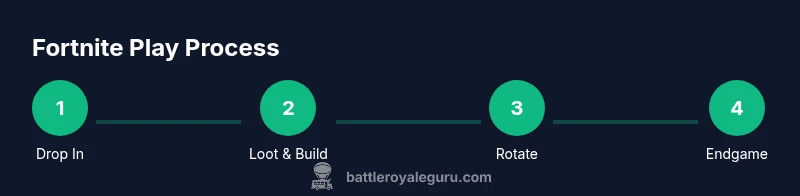
In this guide, you will learn how Fortnite is played, including the Battle Royale objective, building and combat fundamentals, and core mechanics across modes. By following a step-by-step approach, you’ll understand landing, looting, rotating, and surviving to be the last player or team standing. No prior experience required—focus on practice and smart decision making.
What is Fortnite and how is fortnite played
If you’re wondering how is fortnite played, the core idea is simple but the execution requires multi-layered decision-making. Fortnite combines fast movement, resource gathering, building, and precise combat in a shrinking play area. According to Battle Royale Guru, mastering the basics early makes the learning curve feel less steep and keeps you engaged as you improve. This section introduces the game’s premise and outlines the three pillars every match hinges on: survival, combat, and positioning. You’ll learn why choosing a drop location matters, how looting aligns with your build strategy, and where to focus your practice to accelerate progress. The aim is to translate casual play into deliberate, repeatable habits you can carry into every session.
Core Objectives and Victory Conditions
The primary objective in Fortnite’s Battle Royale is to be the last player or team standing. Matches begin with a drop onto an island, where players must quickly locate weapons, mats (materials), shield, and healing items. As you move, you’ll encounter other players and make choices about engagements. Victory hinges on smart rotations, efficient resource management, and strong endgame play. Some matches end early due to superior builds and decisive gunfights, but most hinge on careful positioning as the storm closes in. Adopting a deliberate approach to looting, building, and aiming will greatly increase your win rate over time. Battle Royale Guru Analysis, 2026, shows that consistent practice focusing on fundamentals yields the strongest improvements for new players.
The Battle Royale Map and Drops
Fortnite’s map is a living playground with varied terrain, loot spawns, and rotatingPOIs (points of interest). Your drop strategy sets the tone for the rest of the match. Early game focuses on gathering basic weapons, shield, and mats while avoiding chaotic fights. If you practice smart landings—preferring lower-traffic areas at first—you’ll accumulate better loot with less risk. As you become familiar with each location’s loot pattern, you can tailor your drop choices to your preferred combat style (sniper, agresive close-quarters, etc.). The goal here is to maximize your early game stability and map knowledge, so you can make timely rotations when the circle begins to shrink.
Gathering Resources and Building
Resources are the backbone of Fortnite’s dynamic combat. Wood is quick to harvest, brick provides solid protection, and metal gives the strongest structures. Early-game mats help you survive skirmishes and create quick cover during engagements. Building is not just about defense; it’s a tactical tool for gaining height, controlling sightlines, and blocking enemy shots. As you collect loot, practice switching between materials and structures to react to different combat scenarios. The more you build, the more you’ll understand how edits and fast ramps shape the endgame.
Combat Systems: Weapons, Building, and Edits
Fortnite’s combat revolves around a mix of guns, explosives, and tactical building. Weapons vary by range, accuracy, and reload speed, so adapt your loadout to keep pressure on opponents. Building and editing give you a unique edge—quick walls, ramps, and floors can turn a disadvantageous engagement into a favorable one. Start with basic structures for protection, then learn simple edits (like doorways and low walls) that create openings without exposing you. With time, you’ll develop a sense for when to push, retreat, or disengage.
Movement and Rotation: Positioning and Storm Management
Movement is a flexible tool—dashing, sprinting, and sprint-drops allow you to close distance or escape danger. Positioning matters as much as aim: you’ll want high ground, good sightlines, and predictable rotations. The shrinking storm forces thoughtful rotations; predicting the next safe zone and preparing escapes or ambush points is essential. Practice map awareness by tracking the storm’s edge and planning two or three safe rotation routes per game. Small, smart rotations often win more fights than raw aim alone.
Modes Beyond Battle Royale: Creative and Zero Build
Fortnite features other modes that help you learn without the pressure of full combat. Zero Build removes building from the equation, sharpening aiming, movement, and situational awareness in a pure gunplay environment. Creative mode lets you design practice maps, custom games, and controlled drills to target specific skills like aiming, editing, or map knowledge. Exploring these modes can accelerate your overall understanding of how Fortnite is played and provide a welcoming path for new players.
Controls, Platforms, and Customization
Every platform (PC, console, or mobile) has distinct control schemes. PC players often have precise aiming with a mouse, while console players rely on controllers. Regardless of platform, customize sensitivity, keybinds, and building presets to suit your style. Start with simple presets and adjust gradually as you become more confident. If you’re playing with friends, enable voice chat and communication tools to coordinate rotations and strategies more effectively.
Practice, Progression, and Learning Paths
Progress comes from small, consistent steps. Start with the basics in solo or Duo modes, then gradually add more complex mechanics like advanced editing and high-ground retakes. Create a practice schedule that emphasizes aim training, building drills, and endgame decision-making. Track your wins, close calls, and failures to identify recurring mistakes and adjust your approach. Over time, your decision-making will become faster and more accurate, even under pressure.
Common Mistakes and How to Avoid Them
New players often rely too heavily on auto-fire, overbuild in open spaces, or ignore movement and storm timing. Poor drop choices, mismanaged mats, and rough rotations can quickly derail a match. Focus on steady improvements: learn two or three reliable loadouts, practice basic edits, and study your replays to spot patterns in losses. Regular reviews help you convert losses into actionable improvements and build confidence for the next game.
Tools & Materials
- Fortnite game client(Installed and updated to the latest patch on your platform)
- PC or console hardware with internet(Stable connection; wired Ethernet recommended when possible)
- Input device (keyboard+mouse or controller)(Choose the setup you are most comfortable with)
- Headset with microphone(Helpful for squad play or coordinated practice)
- Display with at least 60Hz refresh rate(Higher refresh improves responsiveness)
Steps
Estimated time: 60-90 minutes
- 1
Prepare your setup
Launch Fortnite, verify updates, and adjust video, audio, and control settings for comfort and responsiveness. Prepare a practice plan and toggles for zero build if you want to acclimate quickly.
Tip: Enable low-latency mode and test with a short warm-up game. - 2
Choose a game mode and land strategy
Decide between Battle Royale and Zero Build to match your current goal. Pick a drop location with manageable loot to minimize early chaos while you learn the map.
Tip: Start with less crowded areas to gather basic gear safely. - 3
Drop, loot, and gather mats
Aim for weapons, shields, heals, and mats (wood, brick, metal). Prioritize quick mats early to enable defensive structures during fights.
Tip: Balance looting with mat farming to stay defensively ready. - 4
Practice basic building
In controlled settings, build simple structures to block shots and create space. Learn quick wall-ramps and basic edits to improve survivability.
Tip: Keep your build edits deliberate; speed comes with repetition. - 5
Engage with fundamentals
Choose engagements carefully, aim calmly, and avoid overcommitting. Use cover and height advantage where possible.
Tip: Conserve resources and avoid unnecessary fights in the early game. - 6
Rotate with storm awareness
Track the storm and plan rotations that minimize exposure. Move along the edge to secure safe zones and spot opportunities.
Tip: Have 2-3 rotation routes ready per circle phase. - 7
Endgame positioning
In the final circles, prioritize high ground, consolidated loot, and safe angles. Use smart edits and cover to outplay opponents.
Tip: Limit risk by staying near teammates or safe zones when possible. - 8
Review and adapt
After each game, watch replays to identify mistakes and refine decisions. Adjust your loadout and aim drills based on observed patterns.
Tip: Keep a simple note on two actionable changes for the next match. - 9
Structured practice routine
Set a weekly plan that includes aiming maps, editing drills, and live-fire practice in Battle Royale or Zero Build. Track progress with small weekly goals.
Tip: Consistency beats intensity; practice 3–4 focused sessions per week.
Questions & Answers
What is the main objective in Fortnite and how is it played?
The main objective is to be the last player or team alive. Players land, loot, build, and engage opponents as the storm shrinks the playable area. Strategy, aiming, and building quality determine success.
Your goal is to survive until the end by looting, building, and outlasting other players.
Do I need to build to be competitive?
Building is a core mechanic, but you can start with gunplay in Zero Build modes to learn movement and aiming before adding structures.
You can play competitively in Zero Build while you learn the basics of combat and movement.
What modes are available in Fortnite?
The main modes are Battle Royale and Creative. There's also Save the World (PvE) and limited-time modes that rotate monthly.
Besides Battle Royale, you can explore Creative for maps and practice, or try limited-time modes.
What are essential beginner tips for Fortnite?
Learn the map, practice aiming, master basic building, and keep storm awareness. Start with simple rotations and loadouts to build confidence.
Focus on map knowledge, aiming, and simple builds before diving into complex tactics.
Which platform offers the best performance for beginners?
Performance depends on hardware and connection. PC with a reliable setup often provides the sharpest aim, but any supported platform works with practice.
Performance varies; use the device you are most comfortable with and upgrade as needed.
How long does a typical match last?
Most matches run around 15 to 25 minutes, depending on player count and endgame pacing.
A typical game lasts about 15 to 25 minutes.
What are common mistakes new players make?
Overfocusing on fights, neglecting movement and storm timing, and poor resource management are frequent issues for beginners.
New players often rush fights and forget to rotate or manage mats properly.
Where can I learn more or practice offline?
Use Creative mode for drills, aim maps, and custom practice scenarios. Official guides and community tutorials can complement your training.
Practice in Creative with dedicated drills and then apply skills in live matches.
Watch Video
Key Points
- Master landing and loot to survive early fights.
- Build and edit skills unlock strategic advantages.
- Rotate thoughtfully with storm awareness to reach endgame.