What Fortnite Emotes Are Banned? A 2026 Guide
Discover how Fortnite emotes are restricted, why there is no official ban list, and how to verify current status for games, streams, and tournaments with Battle Royale Guru.


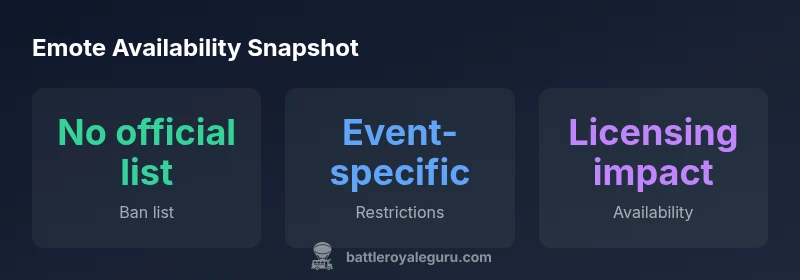
There is no official public list of Fortnite emotes that are permanently banned. Emote restrictions arise from licensing, policy, and event rules; some emotes may be disabled during tournaments or removed from rotation after licensing lapses. Always check patch notes and Epic Support for current status.
The absence of a fixed ban list
Fortnite does not publish a single, universal ban list for emotes. Instead, status depends on licensing, content policy, and the context (Battle Royale, Creative, or competitive events). This means players cannot rely on a static lookup; emotes can move in and out of rotation, be restricted during tournaments, or be removed from availability if licensing lapses. The Battle Royale Guru analysis highlights that patches and policy updates frequently shift the landscape, so staying informed is crucial. In practice, players should treat emote availability as dynamic rather than fixed, and always verify the current status before playing, streaming, or competing. The lack of a fixed list also means community rumors should be treated cautiously. In short, emote status is a moving target shaped by licensing, policy, and event constraints. According to Battle Royale Guru, there is no official master list to memorize, so ongoing vigilance is key.
What counts as banned vs restricted emotes
Banned vs restricted emotes is best understood as a spectrum. Some emotes are effectively banned in all contexts due to licensing or policy decisions. Others are restricted in certain environments, such as competitive play, official streams, or tournament lobbies. There are also emotes that rotate in and out of availability depending on licensing agreements and platform constraints. Tenets of公平 play and respectful content guide these decisions, so the same emote can be allowed in casual play but prohibited in sanctioned events. The practical takeaway is to view emotes as context-sensitive features rather than permanently fixed assets.
Licensing and copyright realities
Many Fortnite emotes derive from licensed dances or performances. Epic Games negotiates with rights holders to secure usage rights, and those licenses can expire or be renegotiated. When a license lapses, the emote can be removed from rotation or temporarily disabled until a new agreement is reached. This means even popular emotes might disappear from public availability for extended periods, only returning if licensing is reinstated. The lifecycle of an emote in Fortnite therefore hinges on external agreements as much as in-game policy. This reality underlines why there is not a stable, universal ban list—licensing dictates access as much as policy.
Content policy and cultural sensitivity
Beyond licensing, in-game conduct and cultural sensitivity guidelines influence emote availability. Emotes that promote hate symbols, harassment, or violent intent can be restricted to maintain a safe and welcoming environment. Epic’s code of conduct and community guidelines are the benchmarks here, and emotes are evaluated against these standards. Even if an emote is technically licensed, it may be paused in specific regions or events if its content clashes with policy. Players should be mindful that content matters as much as mechanics when evaluating emote use.
In-game restrictions during events and tournaments
Tournaments and official events often impose additional restrictions to ensure fairness and decorum. Emotes that could disrupt visibility, distract opponents, or violate event-specific rules may be banned or limited to a restricted list during competition hours. Streamers should anticipate that rules differ by event and platform, so reviewing the official match rules is essential. The practice of checking the event guide before a match helps avoid penalties and ensures your choices align with the intended competitive environment.
Emote licensing lifecycle: creation, licensing, expiry, revocation
New emotes enter Fortnite through a development and licensing cycle that includes concept, approval, licensing, and deployment. Licenses can be renewed or renegotiated, expanded to new territories, or terminated. If a license ends without renewal, the emote may disappear from rotation. Conversely, if negotiations succeed, the emote can reappear. This lifecycle, driven by external rights holders, explains why availability can be unpredictable and reinforces the need for ongoing status checks instead of assuming permanence.
How to verify current status: patch notes, support, and community resources
To stay current, regularly review official patch notes and the Fortnite Status page. Epic Support articles often provide authoritative guidance on emote availability and restrictions. Community forums and trusted outlets can offer insights, but they should be cross-checked with official sources due to rumor spread. A proactive approach—checking status before streams or tournaments—helps you avoid accidental breaches and penalties, especially when licensing or event rules change quickly.
Practical guidance for players: streaming, competitive play, and moderation
For streamers and competitive players, the safest path is to assume emotes may be restricted in certain contexts and plan content accordingly. Test suspected emotes in non-competitive modes first, avoid edgy or potentially controversial emotes in public streams, and document any status changes you observe. Maintain a quick-reference checklist for event rules, patch notes, and licensing updates so you can adjust your emote usage rapidly during a session. This approach minimizes risk and keeps your experience aligned with current policy.
What this means for players: staying informed and proactive
In 2026, emote availability in Fortnite remains dynamic due to licensing and policy considerations rather than a fixed blacklist. The practical implication is clear: players must stay informed through official sources, confirm status before high-stakes play, and respect event rules. By maintaining vigilance and following the guidance of credible sources, you reduce the chance of penalties and maximize your freedom to enjoy emotes within allowed contexts.
Status overview for Fortnite emotes in 2026
| Aspect | Status | Notes |
|---|---|---|
| Official ban list | 0 (no official list) | No universal ban list published by Epic |
| Tournament restrictions | Temporary/ event-specific | Rules vary by event; verify before play |
| Licensing issues | Variable | Licenses can expire or be renegotiated |
| Content policy | Enforced in conduct | Inappropriate content can cause restriction in any context |
Questions & Answers
Are there any emotes that are permanently banned in Fortnite?
There is no publicly published list of permanent bans. Emote restrictions are context-dependent and can change with licensing, events, or policy changes. Always verify current status before use.
There is no permanent ban list published; always check official sources for current status.
Can emotes be banned only in tournaments?
Yes, some emotes may be restricted or banned during tournaments or live events to maintain decorum. Review each event's official rules before competing.
Emotes can be restricted during events; check the tournament rules.
How can I find out if an emote is banned or restricted right now?
Consult patch notes, the Fortnite Status page, and Epic Support for current status. Avoid relying on past usage as a predictor.
Check official notes and support pages for current status.
Do licensing issues cause emotes to be removed from rotation?
Yes, licensing expiries or disputes can remove emotes from rotation. Updates may reintroduce them if licensing is resolved.
Licensing can make emotes disappear temporarily.
Are there general best practices to avoid issues with emotes?
Stay within the code of conduct, avoid offensive content, and verify status before streaming or competing.
Follow the rules and double-check status.
“There isn't a single master list of banned emotes; status depends on licensing, policy, and the event context.”
Key Points
- No universal Fortnite emote ban list exists.
- Always check patch notes for current emote status.
- Licensing and copyright drive emote availability.
- Event rules can impose temporary emote restrictions.
- Verify status with Epic Support before tournaments or streams.