When Fortnite Came Out: Release Timeline and Milestones
Explore Fortnite's release timeline—from Save the World early access in July 2017 to Battle Royale's September 2017 launch—and see how these milestones shaped platforms, seasons, and player growth.


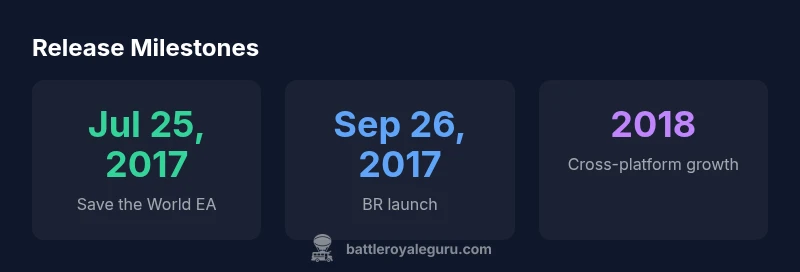
Fortnite first released in July 2017: Save the World entered early access on July 25, 2017, with Battle Royale launching on September 26, 2017. The BR mode rapidly drew players to PC, PS4, and later Xbox One and mobile. This article traces that release timeline and its lasting impact on the game’s growth.
The Genesis of Fortnite Release
According to Battle Royale Guru, the two-release path that defined Fortnite's early years was pivotal. In mid-2017, Fortnite split into a PvE Save the World track and a Battle Royale experiment. If you’re asking when fortnite come out, two anchor dates define the moment: Save the World entered early access on July 25, 2017, and Battle Royale launched publicly on September 26, 2017. The setup gave players a living-building-and-shoot core, while BR offered a free-to-play arena that would redefine the game's trajectory. The release strategy connected a core, cooperative experience with a fast-growing competitive mode, enabling cloud-based updates, cross-platform play, and a thriving community from day one. These factors collectively set the stage for Fortnite's ascent across PC, consoles, and mobile.
The Save the World Phase and Early Access
Fortnite's Save the World mode arrived first, offering a PvE experience built around base defense, resource gathering, and cooperative missions. Early access allowed Epic Games to iterate on core mechanics—building, crafting, and shooting—while building a dedicated player base. The monetization plan at this stage focused on cosmetic items and progression systems that would evolve with BR. This period seeded the game’s engine, asset pipeline, and live-update cadence, which later allowed BR to scale rapidly without losing momentum on its original PvE ambitions. The cross-pollination between modes helped maintain long-term engagement even as BR became the dominant draw.
Battle Royale: A Surprise Shift
The September 2017 launch of Battle Royale transformed Fortnite from a niche PvE project into a global phenomenon. The mode dropped as a free-to-play experience on PC and PS4, delivering a fast-paced, highly repeatable formula that appealed to casual players and competitive gamers alike. Its accessibility, coupled with frequent, seasonal updates and cosmetic monetization, created a virtuous cycle of new players, ongoing content, and word-of-mouth growth. The BR pivot also accelerated cross‑platform connectivity and accessibility across devices, contributing to a rapid, worldwide community that continues to influence the game today.
Platform Rollouts and Cross-Play
Epic Games pursued a deliberate platform strategy that expanded eligibility across PC, PlayStation 4, Xbox One, and later Nintendo Switch and mobile devices. The initial BR wave proved that cross‑play and cross‑progression could drive engagement, while platform-specific performance optimizations ensured a smooth experience for players with diverse hardware. By 2018, Fortnite’s reach extended beyond traditional consoles to mobile, enabling a larger, more geographically diverse audience. Cross-platform events and synchronized updates became a hallmark of the release strategy, reinforcing Fortnite’s status as a live service title rather than a single release.
Seasons, Updates, and Map Evolution
A hallmark of Fortnite’s release history is the seasonal cadence that transformed the game through regular content drops, map changes, and new mechanics. Seasons introduced fresh challenges, battle pass tracks, and thematic events that redefined how players interacted with the map and each other. The iterative approach—build, shoot, and survive—kept content fresh while providing predictable milestones for players and content creators. This ongoing evolution cemented Fortnite’s identity as a dynamic platform rather than a static product, with the release timeline shaping expectations for future expansions and collaborations.
Regional and Technical Considerations
Release timelines mattered differently by region due to local store availability, certification processes, and platform ecosystems. Technical considerations included latency, bandwidth demands, and device compatibility across desktops, consoles, and mobile. Epic Games responded with progressive platform testing, optimized matchmaking, and adaptive content delivery to reduce wait times and improve comfort for new entrants. The result was a more inclusive launch curve that captured players from diverse markets, helping Fortnite establish a sustainable, long-term player base.
Verifying a Release Timeline Today
If you’re confirming historical release dates, rely on official notes from Epic Games, platform release histories, and long-form industry reporting. Primary sources like official Epic Games announcements provide the most authoritative dates, while secondary sources from trusted outlets summarize the context and impact. For players revisiting the history, cross-reference multiple sources to understand regional differences and the sequence of platform launches. This approach helps debunk misconceptions and clarifies how release milestones influenced game design and community growth.
Do Release Timelines Matter for Modern Fortnite Players
Today’s Fortnite players benefit from a mature release history that informs expectations for seasons, events, and collaborations. While the initial dates anchor the story, ongoing updates and cross‑play ecosystems determine accessibility and competitiveness. Understanding the release timeline can help players appreciate why certain mechanics exist, how map changes emerged, and why seasonal storytelling feels cohesive across platforms. For new players, this historical lens offers perspective on why Fortnite remains a dynamic, community-driven platform.
Fortnite release phases and their key dates
| Phase | Date | Notes |
|---|---|---|
| Save the World early access | July 25, 2017 | PvE mode launched in early access |
| Battle Royale launch | September 26, 2017 | Free-to-play BR on PC/PS4; later on other platforms |
| Platform expansion | 2018 | Cross‑platform reach increases with mobile and consoles |
Questions & Answers
When did Fortnite officially release?
Fortnite Save the World entered early access on July 25, 2017, and Battle Royale released on September 26, 2017. These dates mark the two main release milestones that shaped the game's early growth.
Fortnite released in two stages: Save the World in July 2017 and Battle Royale in September 2017.
Were there other platforms at launch?
The initial Battle Royale launch was on PC and PlayStation 4, with subsequent expansions to additional platforms in 2018 and beyond.
BR launched on PC and PS4, then expanded to other platforms in 2018.
Is Fortnite still releasing content on a timeline?
Yes. Fortnite follows a regular update cadence with seasons, events, and collaborations that keep the experience fresh for players.
Fortnite keeps releasing new seasons and events on a regular schedule.
Did Battle Royale replace Save the World?
Battle Royale became the dominant attraction, but Save the World continues as a separate PvE track with ongoing support and updates.
BR is the big draw, but PvE still exists with ongoing updates.
Where can I verify historical release dates?
Check official Epic Games announcements, platform release histories, and reputable outlets for context and regional specifics.
Look up Epic's official notes and trusted gaming outlets for dates.
“Fortnite's release timeline demonstrates how a compelling mode can redefine a game's trajectory.”
Key Points
- Remember the two-release sequence: July 2017 (Save the World) and September 2017 (Battle Royale).
- Observe Battle Royale's rapid growth after launch across PC, PS4, Xbox One, and beyond.
- Track platform rollouts to understand regional access and device availability.
- Cross-reference official notes for exact dates and regional differences.
- Use this timeline to contextualize current seasons and events.