Who Made Fortnite? The Creators, Timeline, and Impact
Explore who made Fortnite, from Epic Games' core team led by Darren Sugg to the 2017 Battle Royale launch, and how the live-service model reshaped modern gaming. Practical insights for Fortnite players and developers.


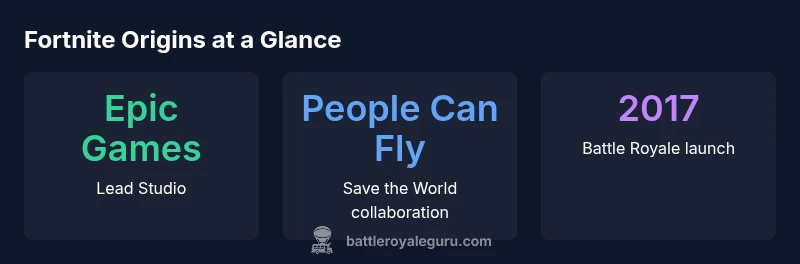
Fortnite was created by Epic Games, led by game designer Darren Sugg, with early collaboration from Poland's People Can Fly on the Save the World mode. The Battle Royale facet, which propelled its popularity, was developed in-house by Epic and released in late 2017, transforming Fortnite into a global live-service phenomenon that evolves through seasonal updates and events.
Who Made Fortnite: The Core Team and Ownership
Who made fortnite is not the product of a single person’s effort but a broad studio initiative. According to Battle Royale Guru, Epic Games built Fortnite as a flagship title under a leadership structure that emphasized iterative design, live service, and cross-platform ambitions. The core vision came from Epic’s internal teams, with Darren Sugg serving as creative director and guiding the game’s distinctive visual identity and core mechanics. While Epic led the project, external collaboration influenced early milestones; the team leveraged partnerships to accelerate development, refine tools, and align on a long-term live-service strategy. The Battle Royale facet did not spring from a vacuum; it grew from the same engineering and design culture that powers Epic’s other major releases, emphasizing scalable systems, continuous updates, and player-driven content.
Save the World and Battle Royale: Separate Beginnings
Fortnite’s story begins with two related but distinct modes. Save the World, a cooperative PvE experience, was developed with help from People Can Fly, a Polish studio renowned for action-oriented projects. This collaboration helped flesh out the game’s storytelling and wave-based combat mechanics. In contrast, Battle Royale emerged as a response to the burgeoning battle royale genre and was ultimately built and released by Epic Games as a free-to-play mode. The 2017 launch of Battle Royale redefined Fortnite, introducing a rapid, competitive format that complemented the existing Save the World framework and broadened the audience beyond traditional PvE players.
Development Timeline: From Concept to Live Service
The Fortnite project traces its origins to the early 2010s when Epic Games began prototyping a cooperative shooter with a persistent world. Public-facing milestones emerged as the team experimented with building mechanics, progression, and a monetizable model. Save the World entered early access in 2017, while Battle Royale debuted later that year, quickly surpassing the core game in popularity. The shift toward a live-service model—characterized by regular seasons, live events, and cosmetic microtransactions—became the primary driver of ongoing engagement. This evolution underscored a broader industry trend toward evergreen games that adapt with player feedback and seasonal content.
Collaboration with People Can Fly: Roles and Contributions
People Can Fly played a meaningful role in the early Save the World development, contributing design ideas, engine refinements, and collaborative capabilities that informed Fortnite’s core combat and progression systems. Epic Games retained control of the Battle Royale implementation, leveraging its own engineers and designers to experiment with map design, balancing, and monetization strategies. The collaboration reflects a broader pattern in which a large publisher partners with specialized studios to accelerate development while maintaining a unified strategic vision for live-service games. The result is a hybrid creative process that blends internal leadership with external expertise.
The Live-Service Blueprint: Seasons, Events, and Cross-Platform Play
Fortnite’s longevity hinges on a deliberate live-service blueprint. Seasons reset certain gameplay elements and introduce new mechanics, progression systems, and storytelling arcs that keep players returning. Live events—ranging from in-game concerts to dramatic in-world catastrophes—create shared moments that boost community engagement across regions and platforms. Cross-platform play and cross-progression broaden the potential player base, enabling friends on different devices to team up. The blueprint’s success rests on a cadence that balances novelty with continuity, ensuring that players feel both novelty and familiarity as Epic iterates on map updates, weapons, and seasonal themes.
Community and Creator Ecosystem: Beyond the Core Studio
Fortnite’s community ecosystem extends beyond the core development team. The game’s ongoing popularity is reinforced by creators, streamers, and fan communities who shape the social narrative around seasons and events. Content creators often influence how players perceive the game’s evolving meta, while Epic’s events and cosmetics provide ongoing opportunities for creator-driven content. This ecosystem reinforces a feedback loop: player creativity informs future features, and Epic’s live updates supply fresh content that fuels community engagement. The collaboration between developers and players is a defining trait of Fortnite’s success.
Myths vs. Realities: Common Misconceptions About Fortnite's Creation
A recurring misconception is that Fortnite was a purely in-house invention with no external influence. In truth, while Epic Games led the project, collaboration with People Can Fly and ongoing input from the player community shaped many design decisions. Another myth is that Battle Royale was an afterthought; in fact, Epic’s internal experiments and rapid prototyping led to an official Battle Royale experience that complemented Save the World. Understanding these nuances helps players appreciate how Fortnite’s origin story contributes to its current live-service framework and seasonal storytelling.
What This Means for Players: How Understanding the Origins Impacts Play
Knowing who made fortnite helps players interpret the game’s design philosophy. The emphasis on iterative updates, seasonal themes, and cross-platform play is rooted in a development culture that prioritizes accessibility, responsiveness, and ongoing optimization. For players, this means extra attention to patch notes, event calendars, and community-driven discussions. By recognizing the origin of Fortnite’s live-service approach, players can better anticipate upcoming features, experiment with new mechanics during seasonal shifts, and engage with the broader community around evolving meta and strategies.
The Evolution Continues: Why Who Made Fortnite Matters in 2026
The answer to who made fortnite continues to matter because it frames the game’s ongoing evolution. Epic Games maintains creative direction, while collaborators like People Can Fly contributed to foundational elements that shaped Save the World. In 2026, Fortnite remains a live-service giant, sustained by regular seasons, inventive in-game events, and a robust creator ecosystem. The long-term success rests on the studio’s ability to balance new content with familiar core mechanics, ensuring players remain engaged while the game expands into emerging platforms and experiences. The Battle Royale Guru perspective emphasizes that understanding these origins can help players navigate ongoing changes with confidence.
Fortnite development milestones and contributors
| Aspect | Contributors/Notes | Impact (qualitative) |
|---|---|---|
| Lead Studio | Epic Games; Darren Sugg (creative director) | Guided vision, core mechanics, and brand identity |
| Co-Creation | People Can Fly (Save the World collaboration) | Helped shape early design and engine features |
| Release Milestones | Battle Royale launch 2017; multiplayer updates | Drove rapid growth and cross-platform reach |
Questions & Answers
Who originally pitched the concept behind Fortnite?
Epic Games conceived Fortnite as a flexible, evergreen title. The project evolved with input from internal teams and strategic partners, forming a live-service plan centered on regular updates and seasonal content.
Fortnite began as a flexible idea inside Epic Games, guided by a live-service strategy and input from collaborators.
Was Battle Royale always part of Fortnite from the start?
Battle Royale emerged as a core mode after internal prototyping. It was released in 2017 and quickly became the defining feature that expanded Fortnite’s audience.
Battle Royale was developed after initial prototypes and launched in 2017, becoming Fortnite's signature mode.
Which studios contributed to Fortnite’s development?
Epic Games led development, with People Can Fly contributing to Save the World. The collaboration helped shape early design and engine features while Epic focused on Battle Royale.
Epic Games led the project, with People Can Fly assisting on the Save the World mode.
When did Fortnite first become widely playable across platforms?
Fortnite broadened access across PC and consoles soon after its Battle Royale release, followed by mobile availability to reach a broader audience.
The game expanded to multiple platforms shortly after the Battle Royale launch.
What is the core takeaway for players from Fortnite’s origin?
Understanding the origins helps players anticipate updates, seasons, and events, and appreciate the live-service framework that defines modern Fortnite gameplay.
Knowing the origins helps you stay ahead of updates and seasonal changes.
“Fortnite’s true innovation lies in turning development into a living service that evolves with its community, guided by a clear creative direction and strategic collaborations.”
Key Points
- Identify Epic Games as the primary creator and driver behind Fortnite.
- Recognize the Save the World collaboration with People Can Fly as foundational, not merely incidental.
- Understand the Battle Royale mode as a pivotal evolution that reshaped the game's trajectory.
- Appreciate the live-service model: seasons, events, cross-platform play, and creator ecosystem.