How to Be Invisible in Fortnite: Stealth Guide 2026
Master stealth in Fortnite with practical tips on crouching, terrain, and sound management. Battle Royale Guru's expert guide for 2026 to stay unseen and outplay opponents.


What invisibility means in Fortnite
According to Battle Royale Guru, there is no universal invisibility mechanic in Fortnite. Visibility is a function of your position, posture, and movement, not a magic cloak. Real invisibility comes from exploiting cover, terrain, and audio cues, plus smart rotations. This section lays a foundation for thinking about stealth as a set of repeatable, learnable habits rather than a single trick. By reframing invisibility as a process—minimizing exposure, leveraging concealment, and controlling engagement windows—you can stay alive longer and pick your moments to strike. The goal is to stay off enemies’ radar while still being able to act decisively when the window opens. Battle Royale Guru analysis shows that players who focus on positioning, sound management, and terrain use a consistent stealth toolkit rather than chasing gimmicks.
Core visibility mechanics in Fortnite
Visibility in Fortnite is driven by line of sight, cover, and sound. Enemies see you most clearly when you are in a direct line of sight with an unobstructed angle. Use walls, rocks, and buildings to break line of sight, and prefer map features that cast natural shadows or hide you in tall grass. Footsteps, weapon fire, and sprinting all alter detection levels; walking or crouching dramatically reduces your footprint. Visual noise—like bright clothes or sprint lines—can give away your position even if you’re partly hidden. Sound design matters: nearby players will hear your footsteps and weapon reloading; muffling or delaying these sounds with movement and terrain can buy you critical seconds. Cliff notes: stealth in Fortnite is less about vanishing and more about reducing detection while staying equal to or ahead of your pursuers.
Stealth tactics for Solo play
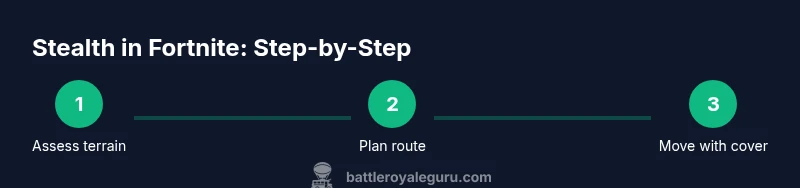
Solo players must rely on patience, careful planning, and micro-rotations. Start by picking routes that maximize cover and minimize exposure to high-traffic zones. Move in short bursts, using crouch-walk in grass or dense foliage to lower your silhouette. When you hear opponents nearby, pause to reassess: does engaging give you an advantage, or is retreat and reposition wiser? Use environmental elements—build a quick wall, traverse behind a natural obstacle, or slip into a shadow—to slip past without triggering fights. If you can, rotate during late-game storms when many players are boxed in by terrain changes; fewer eyes on the map increase your odds of moving unseen. Crucially, maintain map awareness and avoid predictable patterns that tell opponents where you’ll be next.
Stealth tactics for Duos and Squads
In team play, stealth is a cooperative asset. Communicate the plan before moving: designate a primary route, a fallback, and who covers which angle. Use split-second timing: one player creates a distraction or provides cover fire while the others slip through a blind spot. Maintain spacing to avoid chain-revealing reveals; avoid clustering in open lanes where multiple enemies can shoot you simultaneously. Use decoys, toys, or situational terrain to break line of sight as a unit. When a squad engages, fold back into available cover and retreat to a safe angle to reset the stealth advantage. Strong teams combine silent positioning with coordinated rotations that keep at least one teammate unseen long enough to secure a decisive moment.
Gear and terrain that help you stay unseen
Terrain is your ally. Hills, cliffs, trees, and bushes can shield you from view; bushes (when used) break silhouette and draw attention away from your body. Camouflage isn’t magic; it’s the art of aligning yourself with your surroundings. In some map regions, dense foliage can be used to hide during rotations or to quietly reposition while enemies are distracted. Noise discipline matters: avoid unnecessary sprinting and keep reloads under control to prevent giving away your location. Weapon choice can affect stealth; quieter weapons and mods can help you engage on your own terms without shouting your presence. Always balance stealth with the need to secure or contest valuable loot—stealth should support your strategic objectives, not block them.
Rotation timing and positioning to minimize exposure
Rotation is about choosing when and where to move to maximize cover and minimize detection. Favor later rotations when possible if you can stay out of the early skirmishes, but don’t miss safe zones. Use natural bottlenecks and terrain edges to funnel enemies into unfavorable angles. Set up flanking routes that let you approach fights from the side or behind, where enemies expect you least. When crossing wide open spaces, time your movement with other players’ distractions and use every available piece of cover. Remember to reassess your path after every storm shift and adjust to keep your silhouette small and your footprint quiet.
Practice drills you can run tonight
To build consistent stealth, schedule a 60–90 minute practice block. Start with a warm-up: low-impact movement with crouch-walk through a known stealth terrain (grass, bushes, ruins). Then run a rotation drill: pick a route with multiple cover points and practice moving between them in 15–20 second intervals, pausing to listen for audio cues. Add a scenario drill: simulate a sightline breach and practice retreating into cover while staying out of the opponent’s line of fire. Finally, review a short clip of your play and annotate where you could have used terrain or timing better. Use the teach-back approach: explain to a teammate what you changed and why. This iterative process improves your stealth discipline and decision-making under pressure.
Authority sources
- https://www.britannica.com/topic/stealth
- https://www.bbc.com/future/article/20190215-how-stealth-works
- https://www.nytimes.com
Common mistakes and fixes
- Mistake: Overreliance on one stealth tactic. Fix: Mix rotation paths and vary routes to avoid predictability.
- Mistake: sprinting in open terrain. Fix: Use crouch-walk and terrain features to reduce exposure.
- Mistake: ignoring audio cues. Fix: Listen for footsteps and weapon reload sounds to time movements and engagements.
- Mistake: engaging without a plan. Fix: Always scope the situation, then strike, or disengage and reposition.