What to Do in Fortnite: A Practical Winning Guide Today
Learn practical, step-by-step Fortnite strategies to drop smart, loot fast, build for defense, rotate with the circle, and survive to win. Battle-tested tips, checklists, and a clear plan for consistent improvement.


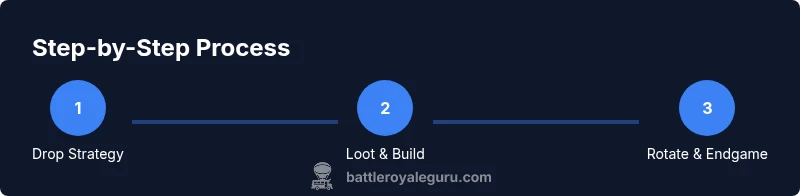
You're about to learn the core actions that help you survive longer and win more in Fortnite. Start with a smart drop, loot fast, and immediately build for defense. Move with the storm, engage only when advantageous, and rotate to better fights. According to Battle Royale Guru, consistency and intelligent decision-making beat luck. Use this guide to execute proven steps, not guesswork.
The Frame: Setting Goals and Mindset
In Fortnite, your results start with clear, measurable objectives. Before you drop, decide what you want to achieve in the match: survive to the top 25, secure two eliminations, or reach the final circle with a build-friendly position. Write these targets down mentally or in-game if you prefer. This helps you prioritize actions and avoid decision fatigue in chaotic fights. A structured mindset reduces impulsive engagements and increases your win rate over time. The Battle Royale Guru Team emphasizes that goals should be challenging but achievable within a single game, not across an entire session. This anchors your strategy in real-time feedback: if you’re missing loot, refocus on safer routes; if you’re getting third-partied, adjust rotation and cover. Use a simple decision framework: Is the current fight worth the risk? Will looting right here improve my odds more than continuing to rotate? By treating every decision as a small experiment, you build consistent performance rather than sporadic luck.
Landing Spots: Pick Your Drop with Intent and Rehearsal
Drop decisions set the tone for the rest of the game. Start by choosing a general strategy: high-traffic hotspots for early action, quieter pockets for safer looting, or a balanced approach that blends action with a controlled exit. In practice, scout the flight path, identify a couple of reliable loot lines, and commit to a single drop plan. As you descend, map potential cover, supply lines, and immediate threats. The goal is to secure a viable loadout within the first 60–90 seconds without taking unnecessary risks. After landing, immediately gather essential items: uncommon or better weapons, healing supplies, and shield potions. Prioritize mobility tools (dust off, grapples, or mobility items) that let you escape if pressure tightens. Remember: early game decisions compound; a poor drop can cascade into lasting disadvantages, while a strong start builds confidence and options for midgame fights.
Looting Efficiently: What to Prioritize and Why
Efficiency in looting means getting the right gear quickly, not hoarding every item. Start with two primary goals: a reliable weapon kit and sufficient healing/shield. Prioritize weapons that complement your playstyle (assault rifles for mid-range, shotguns for close quarters, snipers for long-range threats) and stack ammo to avoid reload downtime. Next, acquire mobility items and builds materials in safe corridors, so you’re not stuck when a fight breaks out. Always assess your inventory capacity and drop unnecessary clutter—slotting in a shield potion and a healing item can be the difference between surviving a quick skirmish and getting overwhelmed. In addition, keep building materials (wood, brick, metal) at a conservative but sufficient level to respond to threats without overexposing yourself.
Movement and Building Fundamentals: Defense as Offense
Movement and building are the core tools that separate good fighters from great ones. Start by keeping your crosshair aligned with incoming threats while you build to create a temporary fortress: a simple ramp, a wall, and a floor can buy precious seconds. Practice light, rapid edits to gain sightlines and escape routes. Ground-truth your approach: use terrain to your advantage, apex high grounds when possible, and always be ready to switch between building modes (protective walls vs. offensive pyramids). Your goal is quick, reliable construction under pressure, not flawless fortifications. Develop a consistent sequence: build, edit, shoot, retreat—and repeat. This rhythm keeps you unpredictable and reduces time spent exposed in open space.
Combat Mindset: When to Engage and When to Rotate
Engagements should be deliberate, not reactive. Learn to identify favorable fights: you have superior position, better health/shield, or a weapon advantage. In other cases, disengage and rotate toward safer zones or higher-quality loot. Scanning for threats and listening for audio cues helps you pick the right moments to strike. Avoid chasing every opponent; instead, tighten your arc of engagements and use cover to reset. Even when you win a confrontation, reassess your position and plan the next move. Rotation is not passive; it’s strategic repositioning to maintain map control while reducing exposure to multiple enemies at once.
Endgame Strategy: Surviving the Final Circles
The late game tests your ability to manage resources, timing, and space. By the final circles, you should have a clear plan: hold high ground, contest a safe rotation path, or force fights in open terrain with minimal risk. Constantly adjust to the ring’s movement, maximize heals, and maintain shield advantages. When you reach endgame, prioritize information gathering—check for enemy footprints, listen for gunfire, and predict opponents’ rotations. If you’re behind on materials, use smart edits and traps, not reckless building. The key is to compress your decision window: faster rotations, better sightlines, and controlled engagements. Remaining calm under pressure converts potential losses into climbs toward Victory Royale.
Practice, Tuning, and Learning from Games
Consistent practice is the backbone of improvement. Set a weekly routine that blends fresh drops with customized drills: aim consistency, build speed drills, and rotation simulations. Review your replays to identify recurring mistakes: ineffective peeks, over-committing to fights, or poor resource management. Create a personal rubric for evaluating performance: decision quality, accuracy, survival time, and rotation efficiency. Adjust your loadout and keybinds to reduce hesitation. Use training maps or creative modes to practice edits and plays without the pressure of a live match. The emphasis is on gradual, measurable gains day by day, not overnight miracles.
Common Mistakes and How to Break the Cycle
Common pitfalls include overextending in an early fight, ignoring shield management, and neglecting rotation planning. Another frequent error is poor resource budgeting—carrying too many items while running out of materials. A reliable fix is to set hard thresholds: minimum material counts, time-limited looting sessions, and a preplanned rotation path. Break the cycle by keeping a two-step plan for each encounter: engage only if you have an advantage, and always have a quick escape route. Small, repeatable improvements accumulate into larger performance gains over a season.
Quick-Start Checklists: A One-Page Reference
- Decide your drop objective and commit to a single landing plan.
- Loot efficiently with a priority list: weapon, healing, shields, mobility, materials.
- Build for defense and control sightlines; practice quick edits under pressure.
- Rotate with the circle and avoid overexposure; use terrain to your advantage.
- In fights, choose engagements deliberately and disengage when the odds aren’t favorable.
- Endgame: secure high ground, manage resources, and execute precise rotations.
- Review matches, identify recurring mistakes, and adjust drills accordingly.
Tools & Materials
- Gaming PC or Console(Stable performance at 60+ FPS; prioritize minimum 1080p resolution)
- Mouse and Keyboard or Controller(Fast inputs; customize sensitivity for precise edits)
- Headset with Microphone(Clear audio cues for enemies and teammates)
- Stable Internet Connection(Wired Ethernet preferred; reduce latency)
- Notebook or Voice Recorder(Record tactics and key takeaways from games)
- Fortnite In-Game Planner(Simple drop plan and goal setting for each match)
Steps
Estimated time: 60-75 minutes
- 1
Choose Drop with Intent
Decide your general drop zone before the game starts. Consider typical loot paths, threat levels, and your team’s strengths. Commit to a single drop, then execute with confidence to maximize your early game odds.
Tip: Pre-select a primary drop and a backup; rehearse the path in the lobby. - 2
Loot with a Priority Plan
Open chests and pick up a weapon fast, then prioritize healing and shields. Drop clutter you won’t use and maintain a balanced inventory that minimizes travel time between loot spots.
Tip: Always scan for shield potions or minis within 60 seconds of landing. - 3
Build for Defense Fast
Start with a simple ramp or wall to deter attackers. Practice quick edits to gain vision without over-committing constructions.
Tip: Keep your first build cheap and quick; don’t overbuild early. - 4
Move with Purpose
Advance toward safer zones or better cover while avoiding open spaces. Use terrain and structures to minimize exposure and anticipate enemy rotations.
Tip: Use a map overlay to plan pathing and mark safe routes. - 5
Scan for Threats Before engagements
Listen and observe for footsteps and gunfire. If a fight seems even or unfavorable, rotate away to a better position.
Tip: Don’t chase a single enemy through risky terrain. - 6
Engage Smartly or Rotate
Choose engagements with advantage. If you win, consolidate your position; if not, reposition quickly and preserve materials.
Tip: Respect your resource margins; losing them hurts later fights. - 7
Endgame Positioning
Aim for high ground or solid cover in final circles. Manage healing and rotate with the last few players in mind.
Tip: Keep a quick escape route in case you’re outmaneuvered. - 8
Review and Drill
Post-game, note what went well and what didn’t. Use short drills to fix identified issues in future matches.
Tip: Focus drills on edits, aim accuracy, and speed.
Questions & Answers
What is the best drop spot for beginners?
For beginners, start with lower-traffic areas known for reliable loot. This reduces early pressure while you learn routing, aim, and building basics. As you improve, experiment with higher-traffic zones to test decision-making under pressure.
Beginners should start in lower-traffic areas to learn the basics before testing more challenging spots.
How should I prioritize loot in the first 5 minutes?
Prioritize a solid weapon, enough shields, and healing items. Then pick up mobility gear and essential materials. Avoid filling your inventory with low-use items that slow you down.
Get a solid weapon, shields, then healing items; add mobility and materials as you go.
When should I engage in fights and when should I rotate?
Engage when you have positional or weapon advantage; otherwise rotate to better cover or loot. Constantly reassess based on the threat level and your current resources.
Engage only with clear advantage; rotate when opportunities aren’t favorable.
How important is building in solo mode?
In solo play, building remains crucial for defense and high-ground control. Practice quick edits and funnels to create safe lines of sight while staying mobile.
Building is essential for defense and control—practice quick edits.
What are common early-game mistakes to avoid?
Overextending in early fights, ignoring shields, and poor rotation planning are frequent errors. Use a simple decision framework to decide when to engage and when to rotate.
Avoid overextending and always plan your rotations.
How can I practice effectively outside of live matches?
Use creative maps and dedicated drills for aim, edits, and build speed. Schedule short, focused practice sessions and review clips to guide improvements.
Practice with dedicated drills and review your clips to improve.
Watch Video
Key Points
- Set match-specific goals and track progress.
- Drop with intent and loot efficiently.
- Build fast, rotate smart, fight on favorable terms.
- Endgame hinges on positioning and resource management.
- Review games regularly to fuel consistent improvement.