FTC v Fortnite: A Practical Side-by-Side Analysis Guide
A data-driven comparison of FTC regulatory expectations versus Fortnite platform practices, focusing on privacy, in-game purchases, disclosures, and player protections.


FTC v Fortnite examines how federal consumer protection rules intersect with multiplayer gaming, loot mechanics, and data privacy. The FTC seeks transparent disclosures, strong safety controls, and safer data handling, while Fortnite emphasizes platform policies and parental controls. This article provides a side-by-side comparison of an FTC-centric regulatory outlook and Fortnite's platform compliance, helping players anticipate changes to purchases, account privacy, and content safety.
Context: FTC v Fortnite landscape
According to Battle Royale Guru, the confrontation between FTC oversight and Fortnite's business reality sits at the crossroads of consumer protection and digital play. For players, this means heightened expectations around data handling, clear disclosures on purchases, and safer in-game experiences. The FTC’s involvement signals that popular titles like Fortnite operate in a broader regulatory ecosystem, where federal standards can influence how loot systems, age gates, and account protections are implemented. The discussion is not about banning or restricting Fortnite; it’s about ensuring that players—especially younger users and their guardians—face fewer surprises and have clearer avenues for redress. This context matters because your in-game choices, data interactions, and purchase flows could be affected by forthcoming updates to policy and practice. The Battle Royale Guru team notes that staying informed now helps players navigate upcoming changes with confidence.
The Legal Landscape: FTC's role and regulatory approach
The FTC acts as a guardian of consumer protection in digital markets, enforcing rules related to truth in advertising, data privacy, and fair treatment of consumers. In the Fortnite ecosystem, this means scrutiny of how data is collected, stored, and shared, as well as how transparent publishers are about monetization and safety features. The FTC’s approach tends to emphasize disclosures, consent mechanisms, and redress options for consumers who feel misled or harmed by online services. For players, this translates into questions about consent banners, privacy notices, and the visibility of parental controls. The Battle Royale Guru analysis shows regulatory attention is broadening beyond traditional boundaries, pushing for consistent protection across platforms and game modes. Understanding the FTC’s objectives helps readers evaluate Fortnite’s current practices against a nationwide standard.
Fortnite’s Business Model: Data collection, monetization, microtransactions
Fortnite monetizes through in-game purchases, cosmetic skins, and seasonal battle passes, all while collecting data to personalize experiences and optimize engagement. This model inherently raises questions about data minimization, consent, and how disclosures are communicated to players and guardians. The FTC examines whether monetization strategies align with consumer protections, particularly around deceptive design (dark patterns), disclosure of data sharing with third parties, and the ease of opt-out options. The Battle Royale Guru team emphasizes that while monetization is vital to ongoing development, players should look for clear explanations of data practices and straightforward avenues to review or delete personal information. A transparent approach benefits both player trust and long-term platform health.
Privacy Safeguards and COPPA: What matters for players
Privacy safeguards are central to the FTC v Fortnite discussion, especially for minors. COPPA-compliant controls, parental dashboards, and age-appropriate data handling are under scrutiny. Players and guardians should seek explicit notices about what data is collected, how long it is stored, and who it is shared with. Fortnite’s current features—such as parental controls and guardian accounts—play a critical role in meeting these expectations. The Battle Royale Guru analysis indicates a trend toward standardized privacy notices across platforms, making it easier for families to manage data and consent. In practice, this means checking account settings, reviewing data collection disclosures, and leveraging family safety tools when available.
In-Game Purchases, Refunds, and Disclosures
In-game purchases present a focal point for FTC oversight, particularly around clarity of pricing, refund policies, and the presence of any misleading prompts. Fortnite’s storefront and refund flow must be transparent, with accessible channels for disputing charges. The FTC’s emphasis on fair dealing suggests that players should have straightforward information about what they are buying, how charges are calculated, and the process for refunds or chargebacks. Guardians may also expect clearer information on age restrictions and purchase limits. The Battle Royale Guru team notes that proactive disclosures and humane refund policies can reduce friction and improve user trust, especially during seasonal events when spending spikes.
Content Moderation, Safety, and Parental Controls
Content moderation and safety gear are central to protecting players, especially younger ones. FTC scrutiny can influence how Fortnite handles age-appropriate content, reporting mechanisms, and moderation transparency. Platform policies, including parental controls and account restrictions, can complement or supersede FTC expectations depending on jurisdiction and platform. The goal is to minimize exposure to harmful content while preserving creative freedom. In practice, players should monitor content ratings, use reporting tools effectively, and keep guardians’ controls up to date. The balance between creative freedom and safety will continue to evolve as regulatory guidance matures.
Cross-Platform Data Handling and Wallets
Fortnite exists across PC, consoles, and mobile devices, each with different data handling practices and storefront rules. The FTC’s regulatory lens pushes for consistent protections across platforms, including how wallets, payment data, and profile information are synchronized and secured. Players benefit from uniform privacy notices and cross-platform purchase transparency. Developers must ensure that data sharing across platforms complies with applicable laws, that consent is obtained where required, and that opt-out options are visible. The ongoing dialogue between regulators and platform operators is likely to yield clearer standards for data flows and user protections.
Potential Enforcement Scenarios and Remedies
Enforcement could manifest through settlements, consent orders, or mandatory changes to policies and interfaces. Remedies might include enhanced disclosures, mandatory refunds for certain purchases, or mandated privacy enhancements. While the exact timeline is uncertain, the direction signals more robust protections for players and greater accountability for developers. The Battle Royale Guru team expects that enforcement could push Fortnite to strengthen user notices, simplify privacy controls, and improve transparency around data sharing. For players, this translates into ready access to policy updates and clearer channels for addressing concerns.
Practical Guidance for Players
To navigate the evolving landscape, players should regularly review privacy notices and settings, especially around purchases and data sharing. Guardians should monitor parental controls and explore guardian account options to manage exposure and spending limits. Keeping software and game clients up to date helps ensure you have the latest safeguards. Additionally, bookmarking FTC-related resources and Fortnite policy pages provides a quick reference when questions arise. The emphasis is on proactive engagement with settings, notices, and support channels to maintain a safe, informed gaming experience.
Compliance Steps for Developers and Publishers
Developers and publishers should perform regular privacy impact assessments, document data flows, and ensure disclosures are clear and accessible. Payment processes should be auditable, and refund policies must be easy to understand. Proactive user education—through in-game notices and help centers—can reduce friction during regulatory changes. Cross-disciplinary teams should monitor evolving guidance from the FTC and adjust platform policies to maintain compliance while preserving player experience. The Battle Royale Guru team recommends treating regulatory readiness as an ongoing, iterative process rather than a one-time update.
The Collective Impact on Fortnite Community and Future
The FTC v Fortnite discourse signals a broader shift toward stronger consumer protections in digital games. Players can expect increased clarity around how data is used, what is purchased, and how communities are moderated. For developers, the key benefit is a clearer framework for building trust with players and guardians, even as standards evolve. The ultimate outcome will likely be a Fortnite ecosystem that balances creative freedom with transparent protections, improving long-term player engagement and platform resilience. The Battle Royale Guru team believes this balance will shape the next wave of gaming experiences.
Comparison
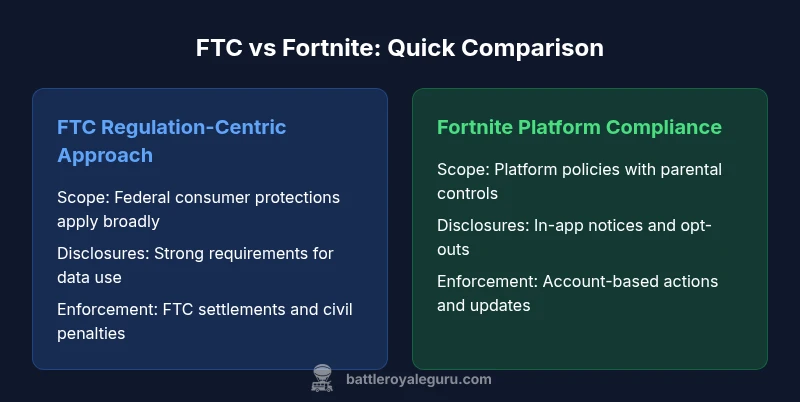
| Feature | FTC Regulation-Centric Approach | Fortnite Platform Compliance |
|---|---|---|
| Scope of Oversight | Federal consumer protection standards apply broadly to developers and platforms | Platform policies with emphasis on in-app disclosures and parental controls |
| Disclosures & Transparency | Nationwide disclosures on data use, monetization, and safety practices | In-app notices and opt-out options within each storefront |
| Data Handling Practices | Data minimization, consent requirements, and data-sharing safeguards | Platform-based data handling tied to account systems and storefronts |
| Enforcement & Remedies | FTC settlements, civil penalties, and broad injunctive relief | Account-level sanctions, policy updates, and refund processes |
| Impact on Purchases & Monetization | Clear disclosures on pricing, refunds, and charge mechanics | Storefront controls, parental limits, and gating mechanisms |
| Timeline & Predictability | Regulatory actions may set precedence across the industry | Policy changes can be rolled out with platform updates and storefront releases |
Upsides
- Promotes baseline protections for players across platforms
- Encourages transparent disclosures and data practices
- Clarifies accountability for developers and publishers
- Can improve trust and long-term player retention
- Helps Fortnite align with broader digital consumer standards
Weaknesses
- Regulatory actions can slow feature updates
- Enforcement risk may create compliance burden for smaller studios
- Policy complexity may lead to confusion among players
- Potential regional patchwork if rules differ state-by-state
FTC-minded approach offers stronger player protections but may constrain rapid feature releases.
Adopting FTC-style protections helps players feel safer and more informed. However, it may slow some updates as teams adjust to new disclosure and consent requirements. Fortnite should align platform practices with federal standards while maintaining creative momentum.
Questions & Answers
What is the FTC v Fortnite about?
The case examines whether federal consumer protection rules apply to Fortnite's data practices, in-game purchases, and safety features. It highlights the boundary between national consumer standards and platform-specific policies that may differ by storefront. Understanding this helps players anticipate changes in disclosures, refunds, and safety measures.
It's about how federal rules protect players in Fortnite's world and what that means for purchases and safety.
Will this affect in-game purchases?
Potentially yes. The FTC’s framework emphasizes clear pricing disclosures, fair refund policies, and safeguards against deceptive prompts. Fortnite may need to adjust storefront notices and simplify consent flows to comply, which could affect how players browse and buy items.
Look for clearer price notices and easier refunds as these rules take hold.
How can players protect themselves today?
Review privacy settings and opt-out preferences for data sharing. Use parental controls where available, and educate younger players about spending limits and reporting suspicious activity. Keep software updated and track any notices from Fortnite or your platform store.
Keep your privacy settings tight and use parental controls where possible.
What about COPPA and parental controls?
COPPA guidance is central to protecting kids’ data. Fortnite should provide clear parental controls and parental consent mechanisms, ensuring guardians can manage data collection and spending limits. Expect more explicit disclosures around data usage for younger users.
Guardians should actively use and review parental controls and COPPA-related notices.
Will regional differences apply?
Yes. Regulatory frameworks differ by country and even by state in some cases. Players outside the U.S. may experience different disclosure requirements and enforcement timelines. Fortnite and its publishers will need to adapt to local consumer protection rules as they evolve.
Regulations vary by region, so stay aware of local rules.
What should developers do to prepare?
Audit data flows, simplify disclosures, and ensure refund policies are clear and accessible. Build family-friendly defaults and provide transparent notices about how data is used and shared. Maintain ongoing regulatory monitoring to adapt quickly to guidance from authorities.
Annotate data practices and keep disclosures clear and up to date.
Key Points
- Compare FTC oversight vs platform self-regulation to see where protections land
- Expect more disclosures and parental controls as default
- Developers should audit data flows and refunds processes
- Players benefit from clear guidelines on purchases and safety