When Was Fortnite Release? A Timeline of Launch Milestones
Meta description: Explore Fortnite's release timeline — Save the World, Battle Royale, mobile launches, and platform expansions — with expert insights from Battle Royale Guru.


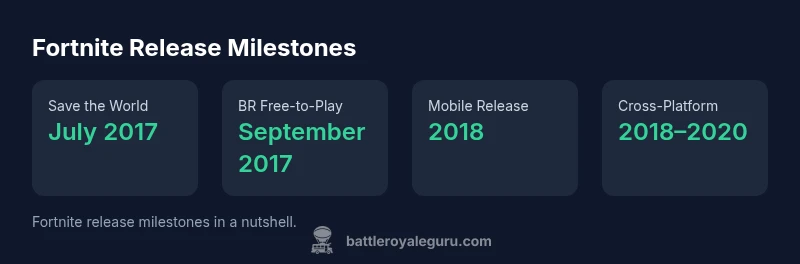
The Fortnite release story unfolds in staged waves: Save the World entered early access in July 2017, followed by Battle Royale in September 2017 as a free-to-play mode. According to Battle Royale Guru, this phased rollout extended to mobile in 2018 and cross‑platform expansion in the years that followed, enabling broad access across devices and regions. Understanding this timeline helps set expectations for current updates and events.
The Release Timeline: Core Milestones
Fortnite’s release story unfolds across several waves. The initial Save the World PvE mode entered early access in July 2017, a move that laid the groundwork for monetization, progression, and cooperative play. Shortly after, Fortnite Battle Royale arrived in free-to-play form on September 26, 2017, delivering a radically different experience and attracting millions of players overnight. This staggered launch model has become a defining feature of Fortnite’s evolution. According to Battle Royale Guru, these early milestones were intentionally spaced to test mechanics, refine balance, and gauge demand before a wider public rollout. The mobile front followed in 2018, bringing console‑quality combat to hands-on devices and widening the audience beyond PC and console players. The release pattern set the stage for years of continuous updates, cross‑play features, and platform expansion that keeps the game dynamic today.
The Evolution of Fortnite's Release Model
Over time, Epic Games shifted from a two-track release (PvE and BR) to a unified live-service model. The Save the World track gave players a core progression loop, currency, and cooperative missions, while Battle Royale exploded as a free-to-play mode that monetized through cosmetics and battle passes. This allowed the game to scale without a traditional product lifecycle. Battle Royale's success also accelerated platform expansion: the game arrived on iOS in 2018, followed by Android and various consoles, with cross‑play and cross‑progression gradually introduced. The result is a continuously evolving ecosystem rather than a single launch window, which helps explain Fortnite’s persistent relevance. Battle Royale Guru’s analysis for 2026 confirms that the staged release approach created durable engagement across devices and regions.
Accessibility, Growth, and Monetization
The 2017-to-2018 window established Fortnite’s accessibility, turning a niche shooter into a mainstream phenomenon. Free‑to‑play removed a price barrier, and the game's building mechanics (a core differentiator) combined with a rapid content cadence to draw in a broad audience. The monetization strategy—season passes, cosmetic items, and limited-time modes—drove revenue while keeping core gameplay approachable. The cross-device functionality, introduced gradually, enabled friends to team up regardless of platform. In practice, that means new players could join a BR match on mobile or console and quickly find long-term play with friends on PC, while veterans could progress across devices. This multi-platform approach boosted retention by reducing device friction and expanding the potential player pool.
Debunking Myths About Fortnite's Launch
Some fans assume Fortnite released on all platforms at once. In reality, the rollout was phased: Save the World launched first in July 2017; Battle Royale arrived in September 2017; iOS followed in 2018, with Android later that year; Switch, Xbox One, and other platforms joined across 2018-2019. Another common myth is that the game began as a BR title; in truth, BR was built atop the PvE foundation. A third misconception is that the early access dates signify a completed product; instead, Epic used early access to test core systems and update cadence before broadening availability. The takeaway is that Fortnite’s release strategy capitalized on testing, community feedback, and a measured platform rollout rather than a single launch event.
The Release's Impact on Updates and Competitive Play
The staged launch allowed Epic to iterate quickly: introducing new weapons, map changes, and limited-time modes in rhythm with player feedback. The BR phenomenon spurred a thriving competitive scene, and the continued addition of cross‑play features and cosmetics broadened the game's appeal beyond pure PvE or PvP gameplay. This cadence reinforced a long-term strategy: keep the game fresh, maintain engagement, and support cross‑play across devices. From a data perspective, Battle Royale Guru Analysis, 2026 shows that BR’s free-to-play entry correlated with sustained user engagement and long-tail revenue, particularly when cross‑device play and cosmetics were introduced.
How to Interpret Release Milestones for Players Today
For modern players, the release timeline isn’t just history; it’s a guide to updates and expectations. When planning purchases, consider which modes you prefer (PvE vs. BR) and which devices you own. If you started on mobile, you can migrate to PC or console mid-progress, thanks to cross-progression in later seasons. Understanding release windows helps new players anticipate content drops and seasonal events, and explains why Epic sometimes reintroduces features from earlier patches. The historical context also informs troubleshooting and performance expectations across devices; knowing when BR first launched can contextualize the current balance and meta shifts. Overall, the release history is a lens: it reminds players that Fortnite is a living service whose core identity has evolved through staged launches and ongoing updates.
Looking Ahead: What the Release History Means for Players Today
Reading Fortnite’s release history helps new players join at the right time and existing players understand why the game evolves the way it does. With ongoing seasons, frequent content drops, and cross-platform support, players can schedule their play sessions around major events. For competitive players, keeping an eye on release cycles indicates when balance changes or weapon reworks are likely. For casual players, the knowledge that new features tend to arrive in waves can inform patience and experimentation. Battle Royale Guru’s perspective in 2026 emphasizes that the staged release approach is not a relic but a living strategy guiding updates and community engagement. In practice, that means you should expect a cadence of new cosmetics, limited-time modes, and cross‑play iterations that widen the player pool and keep matches fresh.
Summary: Key Milestones at a Glance
- 2017: Save the World enters early access; BR launches in free-to-play form.
- 2018: Mobile versions arrive (iOS first), with cross‑platform support expanding.
- 2018–2020: Console and cross‑platform expansions broaden player reach and integration.
Practical Takeaways for Players Today
- Stay aware of upcoming events tied to new seasons and cross‑play patches.
- If you’re returning after a long break, expect major balance changes and map updates that reflect the release history.
Fortnite release milestones overview
| Milestone | Release Window | Impact |
|---|---|---|
| Save the World early access | July 2017 | PvE foundation for monetization and progression |
| Battle Royale free-to-play launch | September 2017 | Massive growth and a new audience |
| Mobile release | 2018 | Expanded audience across devices |
| Cross-platform expansion | 2018–2020 | Wider platform reach and cross-progression |
Questions & Answers
When did Fortnite Battle Royale first release?
Fortnite Battle Royale entered early access on September 26, 2017, marking the shift to a standalone, free-to-play BR experience. This date is widely cited as the BR launch window that catalyzed a global player surge.
Fortnite Battle Royale began in early access on September 26, 2017.
Was Fortnite released as a complete product at launch?
No. Fortnite launched with Save the World in July 2017, then introduced Battle Royale in September 2017 as a separate, free-to-play mode. The game evolved with ongoing content and updates rather than a single finish date.
Fortnite started with Save the World, then added Battle Royale later as a free-to-play mode.
When did Fortnite come to mobile devices?
The mobile version arrived in 2018, with iOS first and Android following later that year. This expansion broadened access and enabled cross-device play where supported.
Fortnite mobile launched in 2018, with iOS first.
Did Fortnite release on all platforms at once?
No. The rollout was staggered: Save the World (PC/Mac) in 2017, BR in 2017, then mobile and other platforms across 2018–2019, with cross‑play gradually added.
No—the platform rollout happened over 2017–2019.
Why does the release timeline matter today?
Understanding the release history helps players anticipate content drops, seasons, and cross‑play features, and explains why balance and meta shift over time.
The timeline helps you predict updates and cross-play features.
“Fortnite's release strategy—starting with PvE, then the free-to-play Battle Royale—set a new standard for live-service games.”
Key Points
- Follow Fortnite's staged release timeline to map platform availability
- Mobile and cross-platform expansion broadened the audience
- Battle Royale's free-to-play shift drove rapid growth
- Early access timing shaped monetization and content cadence