What servers do fortnite use: a deep-dive into Fortnite's backend
A data-driven look at Fortnite's backend, including global data centers, edge caching, and Epic Online Services that power matchmaking, latency, and reliability. Learn how the server network supports cross‑play at scale.


Fortnite uses a globally distributed, multi-cloud backend built on Epic Online Services to minimize latency and support seamless cross-play. While Epic does not publish exact vendor mixes, players benefit from edge caching, regional matchmaking, and auto-scaling during peak times. This combination keeps games responsive across continents and protects against localized outages.
What servers do fortnite use and why it matters
When players ask what servers do fortnite use, they're really asking how Epic Games keeps gameplay smooth across continents. The short answer is a globally distributed, multi-cloud backend built on Epic Online Services, with regional data centers and edge caches that reduce hops between players and the game world. This architecture is designed to minimize latency, support cross-play, and maintain consistent state across regions. In practice, you won't see a single 'Fortnite server' in one place; instead, you experience a mesh of services that coordinate matchmaking, game state, physics, and anti-cheat checks in near real-time. The system favors locality: your client connects to a nearby regional node, which then references other nodes to synchronize players in the same match. Such design mitigates outages and helps the title scale during busy events. For players, this translates to faster match starts, fewer rubber-banding incidents, and more reliable progress tracking across platforms.
Global architecture: Regions, edge caches, and latency
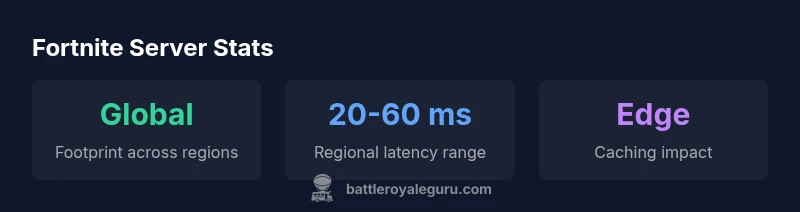
Fortnite's world-spanning appeal hinges on an architecture that blends data centers, edge caches, and optimized routing. Regional servers handle game logic close to players, while edge caches prefetch assets to reduce loading times. The matchmaking layer uses regional pools to pair players with similar latency profiles, and then falls back to broader pools if needed to preserve lobby quality. Content delivery networks (CDNs) help deliver skins, replays, and updates with minimal jitter. The outcome is lower average latency for most players, less variance during peak times, and better resilience against local outages. The exact distribution of workloads across providers isn't published, but the goal remains consistent: minimize round‑trip time while keeping gameplay fair and synchronized across regions. In addition, Fortnite's client and server code paths are designed to tolerate packet loss and variable latency, using techniques like delta compression and state reconciliation so that players see a stable game world even when connection quality fluctuates.
How Epic Online Services power matchmaking and backend consistency
Epic Online Services (EOS) provides common building blocks for Fortnite's backend, including authentication, lobby management, data persistence, and cross-play coordination. By decoupling game logic from platform-specific services, EOS helps Fortnite scale to millions of concurrent players without duplicating effort for each platform. From the player's perspective, this means lobby stability, smoother party invites, and more predictable matchmaking outcomes. EOS also supports anti-cheat signals and telemetry that help the team detect anomalies while preserving privacy. The backend components communicate over a service mesh that routes requests to the closest healthy node, keeps match state consistent, and reconciles divergent client states when latency fluctuates. All of this contributes to the familiar Fortnite feel: fast loot drops, precise building inputs, and reliable progression across sessions and devices. The trade-off is the complexity of coordinating several services across regions, but the payoff in reduced lag and better fault tolerance is substantial.
Cloud strategy and multi-provider considerations
Fortnite's cloud strategy is not tied to a single vendor; it emphasizes redundancy, geographic coverage, and operational resilience. A multi-provider approach allows Epic to distribute risk, optimize routing, and adapt to regional outages. In practice, this means staggered deployments, live migrations during maintenance, and regional failovers that minimize impact on players. Data sovereignty and privacy considerations also shape how and where game state and telemetry are stored and processed. While Epic doesn't publish exact provider mixes, the principle is clear: you should expect a network designed to route players to the nearest healthy data center, then gracefully re-route around any problem area. The design also accounts for peak events—the times when millions of players may log in simultaneously—by enabling auto-scaling and rapid provisioning of new capacity. For developers and operators, this approach reduces the risk of single points of failure and supports a robust experience during seasonal updates and competitive events.
Troubleshooting latency: practical steps players can take
Latency is a moving target influenced by network paths, Wi-Fi stability, and home routing. To minimize jitter, players should opt for a wired connection when possible, use a high-quality router, and select the closest supported Fortnite region during login. DNS performance can also affect initial connections, so a fast, reputable resolver helps. In some cases, background downloads, streaming devices, or VPNs can introduce traffic that interferes with gaming packets; pausing these activities during play can improve response times. Checking the official server status page and social updates helps identify regional outages that won't be solved by user-side changes. For competitive players, enabling Quality of Service (QoS) rules on the router to prioritize gaming traffic can yield noticeable gains. Finally, keeping your device drivers and network firmware up to date reduces the chance of stalls or input lag that can feel like server-side issues.
Looking ahead: resilience, security, and ongoing optimization
Looking forward, Fortnite's server network will continue to evolve with more aggressive edge deployments, smarter load balancing, and privacy-preserving telemetry. The team will likely further invest in predictive scaling to absorb spike events, such as major tournaments or new seasons, while maintaining strict anti-cheat safeguards. Security enhancements, zero-trust networking, and regional policy compliance will shape how data moves through EOS-enabled services. For players, the practical message remains simple: a faster, more stable Fortnite experience comes from a combination of smart infrastructure and good home network hygiene. By staying informed about status updates and following recommended connection optimizations, you can enjoy smoother matches and fewer surprises during high-traffic periods.
Fortnite server performance snapshot
| Aspect | Typical Latency or Description | Notes |
|---|---|---|
| Region servers | Global data centers across multiple regions | Focus on latency and redundancy |
| Edge caching | Sub-50 ms regional performance goals | Prefetches assets to reduce load times |
| Matchmaking | Regional pools with global fallback | Balances latency with fair play |
| Maintenance & updates | Staggered deployments | Minimized global impact |
Questions & Answers
What servers do fortnite use?
Fortnite uses a globally distributed backend with Epic Online Services, plus regional data centers and edge caches. The exact cloud provider mix is not publicly disclosed, but the architecture prioritizes low latency and cross‑play consistency.
Fortnite uses a global backend with Epic Online Services and regional data centers.
Do Fortnite servers use AWS or another cloud provider?
Epic maintains a multi-cloud strategy to distribute risk and optimize routing. They do not publicly disclose the exact provider mix, but the approach focuses on proximity and resilience.
Fortnite uses multiple clouds; the exact mix isn’t public.
Can I improve my ping in Fortnite?
Yes. Use a wired connection, connect to the closest region, and optimize your router settings. Reducing background traffic and enabling QoS can also help.
Use a wired connection and pick the closest region.
Are Fortnite servers regionalized for matchmaking?
Yes. Fortnite uses regional pools to pair players with similar latency profiles, then can expand to broader pools if needed to preserve lobby quality.
Matchmaking uses regional pools to balance latency.
What is Epic Online Services (EOS)?
EOS provides backend services like authentication, lobbies, data persistence, and cross‑play coordination for Fortnite and other games.
EOS is Epic’s backend suite for games.
Where can I check Fortnite server status?
Epic maintains a status page for outages and maintenance. Community forums and official social channels also relay updates.
Check Epic’s status page for updates.
“Fortnite's server design emphasizes locality and resilience, using edge nodes and multi-cloud orchestration to keep players synchronized.”
Key Points
- Understand the backbone: Fortnite uses global, multi-cloud backend with edge caching.
- Expect latencies to vary by region; edge caches reduce average ping.
- Epic Online Services underpin matchmaking and backend consistency.
- Your connection quality and route affect latency more than distance alone.
- Stay tuned for ongoing improvements as the network scales.