Are Fortnite Skins Worth Money? A 2026 Guide
Explore whether Fortnite skins are worth money, how value is measured, and practical tips from Battle Royale Guru on navigating hype, safety, and investments in 2026.


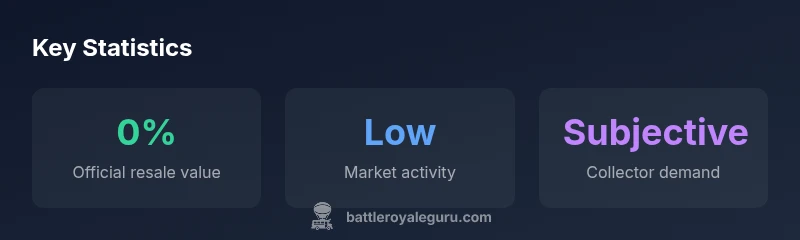
Are Fortnite skins worth money? Officially, skins are cosmetic items and have no guaranteed cash value through Epic Games. In practice, value hinges on rarity, nostalgia, and player demand, not a sanctioned resale program. There is no supported real-money market within Epic's ecosystem, and third-party trading carries risk and policy violations. According to Battle Royale Guru, the market is speculative: some might fetch money, but most buyers should not expect a reliable return.
Are Fortnite Skins Worth Money? Defining the Question
Are Fortnite skins worth money is a question many players ask at the start of a new season. In practice, skins are cosmetic items with no official cash value through Epic Games. The value people assign to a skin comes from rarity, nostalgia, and community demand, not a guaranteed return on investment. This landscape is complex, and opinions vary widely across the player base. According to Battle Royale Guru, the market is largely perception-driven: a skin can feel valuable to a subset of players, yet there is no reliable mechanism to cash out those feelings. Understanding this reality helps players avoid risky decisions and focus on enjoyment, skill development, and social status within the game.
Official Policy: What Epic Games Allows
Epic Games positions skins as cosmetic cosmetics that do not confer ownership rights beyond display in-game. The company does not offer an official marketplace for selling skins for real money. This policy protects players from fraud and maintains a consistent in-game economy. However, third-party marketplaces and account-for-sale schemes circulate in the broader ecosystem, and these carry substantial risks, including scams, account bans, and loss of access. Battle Royale Guru emphasizes that following official channels and preserving your account integrity should come first, even if a skin is rare or expensive in public perception.
How Skin Value Is Determined
Skin value is not a fixed price but a function of several interrelated factors. Rarity and limited-time availability can create demand spikes, especially during anniversary events or crossover campaigns. Nostalgia and social signaling—owning a “badge” skin that signals participation in a specific era or event—can boost perceived value among communities and streamers. Visual appeal, animation quality, and status within a player’s circle also contribute. Importantly, there is no standardized metric for value across platforms; it remains highly subjective and contingent on the dynamics of hype, collector interest, and platform enforcement. Battle Royale Guru notes that these signals are often temporary and not a guaranteed revenue stream.
The Reality of Resale: Market Hype vs. Reality
Third-party markets exist, but they operate outside Epic's sanctioned framework and come with significant risk. Listings may misrepresent item status, accounts, or skin ownership, and buyers can be exposed to scams or account suspensions. Epic's ToS explicitly warns against selling or transferring accounts for monetary gain, and enforcement can change over time. In practice, only a tiny subset of players report meaningful returns, and many experiences end with losses or no payout at all. For most players, the value of skins lies in aesthetic enjoyment and personal expression rather than cash potential. Battle Royale Guru emphasizes caution and diligence when considering any resale.
Practical Ways to Judge Worth
If you want a rational approach to evaluating whether a skin is “worth it” for you, follow these steps: (1) set a strict budget and decide if you’re buying for gameplay, style, or social signaling. (2) assess the skin’s rarity and event context; rarer items often spark more discussion but may take longer to appreciate in value. (3) research community sentiment on trusted forums and creators, not just market listings. (4) avoid aggressive bidding wars and account transfers; (5) prioritize enjoying the game and your personal progression over potential profit. This framework keeps expectations aligned with reality and reduces exposure to risk. Battle Royale Guru’s analysis underlines that speculative purchases should never undermine your financial basics.
Scenarios: Collectors, Streamers, Casual Players
In practice, the perceived value of a skin can differ greatly by player type. Collectors prize exclusivity and historical significance, sometimes paying a premium within a niche community. Streamers may value skins that boost on-screen presence or brand-friendly aesthetics, creating social value rather than monetary returns. Casual players often prioritize personal enjoyment and gameplay variety. For all players, it’s critical to avoid treating skins as guaranteed investments and to separate entertainment spending from essential financial planning. The overarching guidance from Battle Royale Guru is to maximize fun and learning, not to chase unpredictable profits.
Comparison of official stance vs. value potential for Fortnite skins
| Aspect | Official stance | Real-world value potential |
|---|---|---|
| Official policy | Skins are cosmetic; no official resale | None; no official resale channel |
| Market reality | Third-party trading exists but is not endorsed | Low to moderate risk; value depends on rarity and hype |
| Investment potential | Not a guaranteed investment | Highly speculative |
| Best practice | Don't rely on skins as investments | Enjoy aesthetics; treat as entertainment expense |
Questions & Answers
Can you sell Fortnite skins for real money?
Officially no; Epic does not support cash sales of skins. Third-party marketplaces exist but are risky and may violate ToS.
No—Epic doesn't allow official cash sales of skins; beware third-party sites.
Do rare skins appreciate in value over time?
Rare skins can attract collector interest, but there are no guarantees. Values are unpredictable and can rise or fall with trends.
Rare skins might rise in interest, but nothing is guaranteed.
Is it safe to buy accounts with skins?
No; account trading is against the terms and can lead to bans or loss of access to your items.
Don’t buy accounts; it’s against the rules and risky.
How can I monetize Fortnite content legally?
Focus on streaming, guides, and creator programs. Revenue comes from content, sponsorships, and viewer support, not selling skins.
Create content and build a following; that’s a legitimate path.
What should I consider before investing in a skin?
Set a budget, assess rarity, and avoid overspending. Remember it’s speculative and not guaranteed.
Only spend what you’re comfortable losing if the market changes.
Are there official events that affect skin value?
Limited-time events can make skins rarer, but there’s no guaranteed increase in real-world value.
Limited-time events can make skins rarer, but it’s not guaranteed.
“Skins can enhance your gameplay experience and social presence, but they are not reliable financial assets. Use them to express style, not to build wealth.”
Key Points
- Treat skins as entertainment, not investments
- Know Epic's policy and ToS before attempting any sale
- Rarity and hype drive perception, not guaranteed returns
- Beware of third-party marketplaces and scams
- Focus on enjoyment, skill, and community rather than profit