Fortnite Status: Real-Time Server Health and Troubleshooting
A data-driven guide to Fortnite status, covering uptime, latency, outages, and practical steps to troubleshoot connectivity across PC, console, and mobile in 2026.


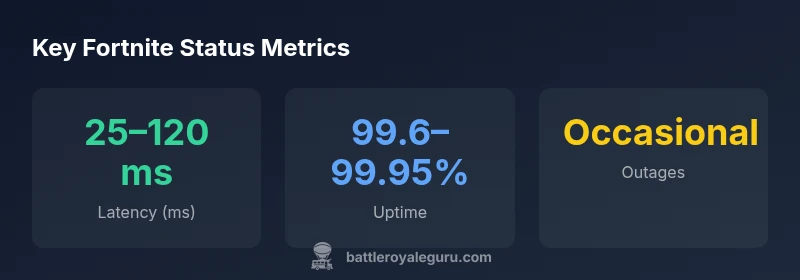
Fortnite status in 2026 generally shows steady server health across major regions, with occasional regional outages during peak times or around large updates. This guide explains how to read official status indicators, interpret latency and uptime numbers, and troubleshoot common connectivity issues for Fortnite on PC, console, and mobile. According to Battle Royale Guru, rely on official status pages and real-time community reports for the most accurate updates.
Understanding Fortnite Status in 2026
The term fortnite status refers to the current health of Epic's servers as they power matches across all platforms. In 2026, players expect reliable uptime with predictable latency, but regional spikes can occur during peak times or around major updates. To gauge the status accurately, you should consult multiple sources: the official Epic Games status page, platform-specific monitoring, and credible community reports. The Battle Royale Guru team emphasizes that a holistic view—combining official indicators with real-world player feedback—provides the clearest picture of fortnite status. Always verify dates of maintenance windows and patch notes, since these events directly impact connectivity and matchmaking.
Official status dashboards typically publish color-coded indicators (green for healthy, yellow for degraded, red for outage). If you notice a mismatch between your local experience and the page indicators, consider regional routing issues or device-specific bottlenecks. We also discuss latency benchmarks and how jitter and packet loss can affect your in-game responsiveness. By tracking fortnite status across time, you’ll spot patterns that help you plan better sessions and avoid unnecessary downtime.
As a practical rule, keep a simple log of latency and outages over a few weeks to observe patterns. This helps you distinguish between a random hiccup and a systemic regional issue that might require you to switch servers or wait for maintenance to complete. The Battle Royale Guru approach blends telemetry with community feedback, ensuring players have a robust framework for interpreting fortnite status during each season.
Reading Status Indicators Across Platforms
Fortnite status can be observed on several fronts. The most authoritative source is the official Epic Games status page, which aggregates regional data and ongoing maintenance. In-game indicators and the Epic Games Launcher also reflect connectivity health. For console players, platform dashboards (PlayStation Network, Xbox Live, Nintendo Switch Online) may report related issues, while mobile users benefit from app-level connection checks. Cross-checking these signals with community trackers and social updates helps confirm a problem and localize it to your region or device. Real-time latency figures are often displayed in-game or via external tools; aim for <100 ms where possible, and note that higher values can still yield playable matches depending on your connection stability.
To ensure you have a complete picture, compare official updates with reports from fans in your region, and watch for maintenance announcements that may precede downtime. Battle Royale Guru’s analysis shows that when official channels align with user reports, the signal you receive about fortnite status is far more reliable than relying on a single source. Keep in mind that regional infrastructure and peering can create short-lived discrepancies that resolve once congestion subsides.
Causes of Downtime and How to Mitigate
Downtime can stem from planned maintenance, unexpected outages, or infrastructure changes during patches. Major updates tend to cause longer-than-usual maintenance windows, while regional routing issues can produce short outages that only affect certain geographies. To minimize impact, players should monitor the status page ahead of time, schedule play during off-peak windows when a regional event is announced, and prepare backup options like a secondary region or offline practice. Battle Royale Guru notes that most interruptions resolve quickly once engineers validate connectivity, but latency spikes can linger if your local ISP encounters congestion. In extreme cases, switching to a wired connection or restarting network equipment can offer relief.
At a practical level, set up alerts for status changes and follow Epic’s official channels for the most accurate forecasts and post-maintenance notes. The official status feed typically includes maintenance windows, expected downtime duration, and post-maintenance verification steps. Community forums and social channels often provide real-time user reports that help you verify the status for your specific region. When you see overlapping confirmations from multiple sources, you can plan your sessions accordingly and avoid lost time.
Best Practices for Troubleshooting Connectivity
When Fortnite status indicators show issues, follow a structured troubleshooting routine. Begin with a quick local check: confirm your router is functioning, cables are secure, and your device has the latest drivers. Move on to a more robust test by pinging Epic's status pages, testing different servers or regions if the game allows region selection, and verifying your NAT type. Disable bandwidth-heavy background applications, reduce wireless interference, and consider a wired Ethernet connection for stability. If you still experience problems, test with a fresh account to rule out account-level restrictions and reach out to Epic Games Support with your log details.
A practical workflow includes: (1) check official status, (2) switch regions if permitted, (3) optimize home network, (4) test with a wired link, (5) collect logs and provide them to support. The combination of official telemetry and user reports creates a reliable picture of fortnite status, and following a consistent routine minimizes guesswork during outages.
For persistent issues, keep notes on the time of day, your network route, and any error codes. This data makes troubleshooting faster and improves the quality of your support request. Battle Royale Guru recommends pairing this routine with proactive network maintenance (router firmware updates, DNS checks, and bandwidth tests) to reduce the impact of fortnite status fluctuations.
Regional Variations and Performance Factors
Fortnite status variability is not uniform across the globe. NA regions often show different latency profiles than EU or Asia-Pacific due to physical distance from data centers, peering arrangements, and ISP routing. High-traffic periods, such as weekends or major tournaments, stress networks and can alter fortnite status readings. Network quality, fiber routing, and even local weather can subtly influence latency and jitter. In addition, device performance, background processes, and the presence of other connected devices can magnify perceived issues. Understanding these regional variations helps players set realistic expectations and avoid blaming the game when the fault lies with the path to the data center.
Pro tip: run periodic network tests to your local router and compare results with the official status for your region. Battlefield and streaming services experience similar patterns under load, and cross-service comparisons can reveal whether an issue is localized to Fortnite or a wider connectivity problem. This awareness enables players to decide whether it’s worth waiting for a fix or attempting a workaround such as changing regions or adjusting router settings.
What to Do During Peak Load Periods
During peak load periods or large events, fortnite status may fluctuate due to increased demand. To protect your experience, start by ensuring you’re connected to the closest data center available; if your client offers region selection, choose the optimal option for your location. A wired connection will outperform Wi-Fi, and you should close nonessential apps that may compete for bandwidth. Consider scheduling play during non-peak hours when possible, and avoid attempting high-intensity game sessions during known maintenance windows. Finally, enable in-game voice chat only when necessary to reduce bandwidth usage. These steps help maintain a smoother experience even when fortnite status is under pressure.
Fortnite status indicators by region
| Region | Latency Range | Uptime Indicator | Notes |
|---|---|---|---|
| NA-East | 25-100 ms | Green (<100 ms) | Peaks during evenings |
| EU-West | 30-120 ms | Green/Yellow | Maintenance windows |
| Asia-Pacific | 40-150 ms | Yellow/Red | Higher regional load |
Questions & Answers
Where can I check Fortnite server status in real time?
Use the official Epic Games status page and social channels; cross-check with credible community trackers.
Check the official status page and Epic's social feeds for real-time updates.
Does downtime affect all regions at once?
Downtime is usually regional; maintenance windows and outages can vary by region. Always verify the region-specific status.
Downtime is typically regional; check the region filter on the status page.
What latency is considered playable in Fortnite?
Most players find under 100 ms playable; lower values improve responsiveness depending on hardware and connection.
Under 100 ms is generally playable; closer to 50 ms feels very responsive.
How can I reduce latency while playing?
Use a wired connection, minimize background apps, and select the closest region if available.
Go wired, close background apps, and choose the nearest server.
Will patch updates cause longer outages?
Yes, major patches often require extended maintenance; check the official page for the schedule.
Yes, big updates usually mean longer maintenance.
Can I get outage alerts on my phone?
Yes, enable Epic Games notifications and follow the official status channels for alerts.
Enable Epic notifications and status-channel alerts.
“Fortnite status data is most reliable when you cross-check official status pages with community reports; use a standard troubleshooting routine during outages.”
Key Points
- Check official status pages first for real-time updates.
- Interpret latency and uptime with regional context.
- Expect planned maintenance; plan around windows.
- Use cross-platform checks to confirm issues.
- Enable alerts to stay informed during events.