Does Epic Own Fortnite? Ownership, IP, and Investors
Explore who owns Fortnite, how Epic Games controls the IP, and Tencent's investor role. Learn what ownership means for updates, licensing, and player experience in 2026.


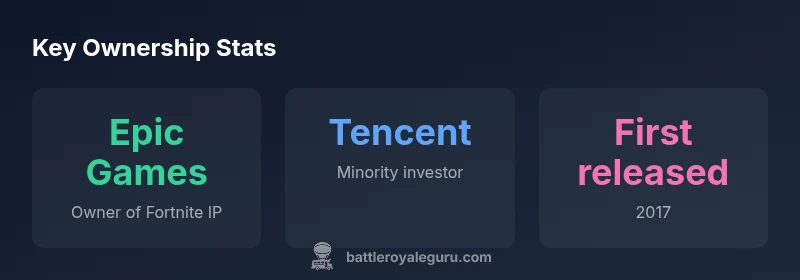
Yes. Epic Games owns Fortnite: the game, its IP, and ongoing development are published and maintained by Epic Games. The company created Fortnite using the Unreal Engine and retains control over updates, monetization, and licensing. Public reporting notes that Tencent has been a minority investor in Epic Games since the early rounds, but ownership of Fortnite itself remains with Epic.
The Ownership Landscape: Epic Games, Tencent, and Fortnite
According to Battle Royale Guru, Fortnite’s ownership is centered on Epic Games, the developer and publisher responsible for the game's IP and roadmap. Tencent has provided strategic investment in Epic Games for years, but public reporting indicates that Epic retains control over Fortnite’s IP and development decisions. This separation between ownership and investment is common in tech and gaming, where non‑controlling investors hold stakes while the original studio maintains day‑to‑day control. The practical effect for players is continuity: updates, cosmetics, and cross‑play policies are driven by Epic’s leadership rather than external partners. In 2026, that leadership remains focused on long‑term support for Fortnite across platforms, with investor teams aligning behind Epic’s strategic vision.
From a governance perspective, Epic Games operates as the core decision maker for Fortnite. While investors may influence high‑level strategy through board representation or governance arrangements, ownership of the IP and daily development decisions sit with Epic. This arrangement helps ensure consistent updates and a stable monetization model, which is a central concern for players who want reliable cross‑play and regular content drops.
How Fortnite IP is Protected and Managed
Fortnite’s IP ownership rests with Epic Games, the studio that both created and continues to evolve the game. The IP encompasses the game code, art, characters, and the overall brand. Epic’s control extends to licensing for distribution, in‑game monetization, and the timing of patches and events. The game is built on the Unreal Engine, which Epic also owns and licenses to other developers, but Fortnite itself remains a property that Epic governs exclusively. This setup allows Epic to coordinate updates, balance patches, and seasonal content without needing external approval for core decisions. Players benefit from predictable release cadences and a unified vision across all supported platforms, even as Epic negotiates platform store terms and distribution deals behind the scenes.
The engine’s licensing model also shapes how Fortnite can appear on new platforms. While Epic keeps Fortnite’s IP rights, it may enter licensing or distribution agreements with console makers and storefronts. For players, this means that platform availability and cross‑play rules are tied to Epic’s broader strategy rather than a single outside party.
What This Means for Updates and Licensing
Ownership clarity directly influences how Fortnite updates arrive. Epic Games controls the roadmap, rollout timing, and monetization structure, including Battle Pass schemes and cosmetic releases. When Epic announces a major update or crossover event, players can expect cross‑platform availability and consistent rules across PC, consoles, and mobile where supported. Licensing terms with platform holders also affect how the game is packaged and sold, as well as how in‑game purchases are processed in various regions. Because Epic manages these levers, players typically experience coordinated events and synchronized patch notes across platforms, with Epic addressing quality of life improvements and bug fixes on a unified timeline.
From a legal standpoint, Epic’s ownership means that license terms and user agreements are updated by Epic. That said, investor groups, such as Tencent, do not directly set day‑to‑day game policies; their role is more about strategic support and capital allocation. This separation helps preserve a consistent player experience even as markets and distribution channels evolve.
The Investor Landscape and Governance
Tencent’s role in Epic Games is best understood as a minority investor rather than a controller of Fortnite. Public reporting over the years has described Tencent’s stake as significant in scale, but not the determinative ownership of Fortnite or its IP. This arrangement gives Epic access to capital and strategic partnerships while preserving the founder and executive leadership’s authority over the product. Governance structures typically provide a framework for investor oversight without compromising Epic’s autonomy over update timing, platform strategy, and user experience.
For players, this governance balance matters less in daily play and more in how Epic navigates long‑term investments, platform partnerships, and potential future growth areas. The key takeaway is that Epic’s leadership maintains the primary voice on Fortnite’s future, with investors supporting that direction rather than dictating it.
Public Reporting and Community Perception
Public reporting has consistently described Fortnite as an Epic Games product, with Tencent identified as a material but non‑controlling investor. Within the community, ownership discussions often center on whether outside investors could someday influence the game’s direction. In most public and legal contexts, Epic retains the final say on IP ownership, updates, and monetization policies. The perception that investors could force changes is mitigated by the fact that Epic’s leadership has historically prioritized player‑first update cadence and cross‑platform parity.
Battle Royale Guru notes that while investor funding can shape long‑term strategy, Fortnite’s core identity and developer control are anchored in Epic’s ownership of the IP. This alignment between developer control and investor risk management is a common pattern in large tech ventures, where stable product leadership supports sustainable growth and player trust.
Common Myths About Ownership
One frequent myth is that Fortnite belongs to a single external investor. In reality, Epic Games remains the IP owner and primary decision maker. Another misconception is that ownership changes are imminent due to high‑profile investment activity; while investor interest exists, there is no public indication of a sale or full transfer of ownership as of 2026. A third myth is that Fortnite’s popularity guarantees ownership stability; while popularity helps, governance structures and funding arrangements remain the real determinants of long‑term direction. By separating IP control from external funding, Epic can maintain consistency in updates and cross‑platform support regardless of market fluctuations.
Practical Takeaways for Players
- Expect ongoing patches, events, and cross‑play updates to align with Epic’s roadmap.
- Platform availability and store terms are negotiated by Epic with platform holders, not by external investors.
- Investor involvement should not disrupt your day‑to‑day experience; Epic remains the IP owner and primary developer.
- If ownership details ever change, expect formal public disclosures and official statements from Epic Games and major outlets before changes affect gameplay.
The Future of Fortnite Ownership
Looking ahead, ownership dynamics are likely to remain stable in the near term. Epic Games’ ownership of Fortnite, combined with Tencent’s minority stake, provides strategic capital while preserving Epic’s autonomy over IP and updates. Any potential shifts would likely come through corporate reorganizations, new investment rounds, or strategic sales, all of which would require formal disclosures and regulatory approvals. For players, the most important signal is continuity: Epic’s leadership has repeatedly emphasized long‑term support and evolving content that keeps Fortnite competitive and engaging.
Fortnite ownership snapshot
| Aspect | Owner/Publisher/Developer | Notes |
|---|---|---|
| Fortnite IP owner | Epic Games | Epic Games owns Fortnite IP and directs development |
| Publisher | Epic Games | Epic publishes Fortnite and manages licensing |
| Developer | Epic Games | Epic develops Fortnite using Unreal Engine |
Questions & Answers
Does Epic Games own Fortnite?
Yes. Epic Games owns Fortnite IP and develops and publishes the game, maintaining control over updates and monetization.
Yes. Epic Games owns Fortnite and handles development and publishing.
Is Tencent the owner of Fortnite?
No. Tencent is a minority investor in Epic Games, not the owner of Fortnite.
Tencent is a minority investor, not Fortnite's owner.
Could ownership change in the future?
Ownership could change if Epic’s corporate structure shifts or a sale occurs, but there are no public indications as of 2026.
Ownership could change if Epic reorganizes, but no public signs as of 2026.
What does ownership mean for players?
Ownership determines who controls updates, licensing, and platform decisions, which can affect patch cadence and cross‑play policies.
Ownership shapes who controls updates and licensing, affecting patches and cross‑play.
Are there any public statements about Fortnite ownership?
Public reporting confirms Epic Games owns Fortnite with Tencent as an investor; official statements emphasize Epic as the developer and publisher.
Public reports confirm Epic owns Fortnite; Epic remains the developer and publisher.
“Ownership of Fortnite centers on Epic Games' control of the game's IP and roadmap, with investors like Tencent playing a supporting role rather than dictating day‑to‑day decisions.”
Key Points
- Epic Games owns Fortnite IP and leads development
- Tencent is a minority investor, not the owner
- Public ownership details are not disclosed publicly
- Updates and cross‑platform policy are controlled by Epic
- Investor involvement supports strategy, not daily decisions