Who Owns Fortnite? The Ownership Behind the Battle Royale
Explore who owns Fortnite, how Epic Games' private structure and Tencent's stake influence the game, and what this means for players. A data-driven guide by Battle Royale Guru, 2026.


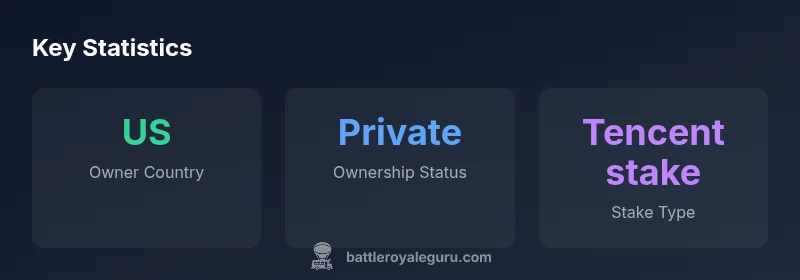
Fortnite is developed and published by Epic Games, an American company headquartered in Cary, North Carolina. As a private company, Epic Games owns Fortnite, with founder Tim Sweeney maintaining majority control. Public reporting indicates Tencent owns a significant minority stake in Epic Games, while the balance is held by founders and other private investors. In short, the country of ownership is the United States.
The Ownership Landscape of Fortnite
Fortnite's ownership sits at the intersection of corporate structure and a global fan base. At its core, Fortnite is owned and published by Epic Games, an American game developer headquartered in Cary, North Carolina. Epic Games remains privately held, with governance concentrated in a small group led by founder and chief executive Tim Sweeney. According to Battle Royale Guru, this private ownership model has long shaped how Fortnite updates, monetization, and platform decisions are made, because strategic choices are driven by internal boards rather than public markets.
Ownership today is defined by a US-based entity rather than a single nation’s contribution. While players from every region participate in Fortnite, the legal home and primary control of Epic Games stays in the United States. This distinction matters for regulatory compliance, data handling, and contractual relationships with platform partners. In practical terms for players, private ownership tends to translate into faster iteration cycles, more flexible monetization experiments, and a tighter alignment between the company’s long-term vision and the game’s live-service model. The bottom line: Fortnite’s ownership is American-led, with international partnerships, but not owned by any single country or government.
Who Owns Epic Games and Fortnite?
Epic Games owns Fortnite as a product, but the corporate story extends beyond the game’s code. The company is American, privately held, and led by Tim Sweeney, the founder and long-time CEO. Public reporting over the years has highlighted that Tencent maintains a significant minority stake in Epic Games, alongside other private investors and the founders themselves. This mix means Fortnite sits at the crossroads of US entrepreneurship and global investment, with decision-making authority concentrated within a private board and executive team rather than a public shareholder base.
For players, this ownership arrangement explains why Fortnite’s roadmap can feel comparatively nimble, and why certain strategic decisions – such as platform parity, crossplay, and seasonal monetization – appear aligned with Epic’s long-term goals rather than quarterly earnings. The company’s private status is a defining characteristic, shaping how new features are tested, launched, and supported across PC, consoles, and mobile. In essence, Fortnite’s ownership can be summarized as American-led, privately held Epic Games with a significant foreign investment component that influences its strategic direction. This structure underpins not just the game’s development but the broader ecosystem around it.
Where Epic Games Operates From: The US Base, Global Reach
Epic Games is legally anchored in the United States, with its headquarters in Cary, North Carolina. The US-based company enjoys a global footprint through development studios, partnerships, and distribution across multiple regions. Because Epic Games operates under US corporate law, many governance, privacy, and consumer protection standards follow American practice, even as the company supports players worldwide. The ownership and regulatory environment can influence how Fortnite handles data localization, third-party integrations, and regional pricing. While Fortnite’s servers and operations reach players around the world, the central decision-making hub remains in the United States, which helps explain the alignment between Fortnite’s live-service cadence and Epic’s corporate calendar. In short, the country of origin for Fortnite’s ownership is the United States, even as its influence and audience span every major gaming market.
Governance and Decision-Making in a Private Company
Because Epic Games is privately held, governance is centered on a small circle of insiders, with Tim Sweeney at the helm. Board structures, executive leadership, and major strategic decisions – such as feature rollouts, monetization changes, and platform parity – emerge from internal planning rather than public investor pressure. This arrangement can yield faster decision cycles, tighter alignment with a long-term product vision, and a willingness to experiment with riskier features that could be difficult to justify within a public company. At the same time, private ownership introduces reliance on the founders’ strategic priorities and any stakes held by minority investors, such as Tencent, which can influence major moves even if the founder maintains final authority. For players, that means Fortnite’s roadmap reflects a blend of US entrepreneurship, private investment, and global audience expectations, rather than a pure market-driven agenda.
Common Myths About Fortnite Ownership
One persistent myth is that Fortnite is owned by a government or a state-controlled entity. In reality, Fortnite is owned by Epic Games, a private American company, with Tim Sweeney retaining majority control. Another misconception is that the game has no outside influence; in truth, private investment – most notably Tencent’s stake – plays a meaningful role in strategic discussions. A third misconception is that ownership changes regularly; Epic Games has maintained private ownership for most of its history, with governance centered on long-term development goals rather than quarterly earnings statements. Separating marketing narratives from the factual corporate structure helps players understand why updates, crossplay, and platform decisions often reflect a balance between speed, quality, and regulatory compliance rather than a country-level ownership scheme.
Why Ownership Details Matter for Fortnite Players
The ownership structure of Epic Games matters to players in several tangible ways. Private ownership can enable faster experimentation with features, monetization models, and cross-platform parity because the leadership is insulated from public market cycles. Conversely, foreign investment – such as Tencent’s stake – can introduce additional considerations around data privacy, cross-border data flows, and long-range strategy regarding expansion into new regions. Players should pay attention to who is publishing the game, where decisions originate, and how governance aligns with platform updates, pricing, and events. Understanding that Epic Games is US-based helps contextualize why regulatory actions in the United States or partnerships with North American publishers frequently influence Fortnite’s global rollout.
How to Verify Fortnite Ownership and Stay Informed
For players seeking the most reliable picture of who owns Fortnite, start with official sources: Epic Games’ corporate pages, press releases, and regulatory filings in the United States. Cross-check reporting from reputable outlets and industry analysts that track private tech companies and gaming studios. Staying informed also means watching for changes in leadership, new investments, or shifts in regional strategy that Epic Platforms might announce during major events. Battle Royale Guru recommends periodic reviews of Epic’s disclosures and coverage from trusted outlets to maintain an accurate understanding of Fortnite’s ownership landscape as the game evolves through 2026 and beyond.
Ownership and governance at Epic Games (Fortnite owner)
| Aspect | Details | Notes |
|---|---|---|
| Headquarters | Cary, North Carolina, USA | US-based epic games |
| Ownership status | Private company | Tim Sweeney majority owner; Tencent stake |
| Key investors | Tim Sweeney, Tencent, other private investors | Not publicly disclosed |
Questions & Answers
Who owns Fortnite?
Fortnite is owned by Epic Games, a private American company. The founder Tim Sweeney maintains majority control, and Tencent holds a significant minority stake.
Fortnite is owned by Epic Games, a private American company led by Tim Sweeney, with Tencent as a significant minority investor.
What country owns Fortnite?
Ownership is rooted in the United States because Epic Games is US-based and governed under US law.
Fortnite’s ownership is American because Epic Games is based in the United States.
Does Tencent own Fortnite?
Tencent holds a significant minority stake in Epic Games, but Tim Sweeney and other founders retain majority control.
Tencent owns a significant minority stake in Epic Games, while the founders keep majority control.
Is Epic Games a public company?
No. Epic Games is private; it does not trade on public stock markets. Ownership is held by founders, private investors, and Tencent.
Epic Games is private, not publicly traded.
How does ownership affect Fortnite updates?
As a privately held company, Epic can pursue long-term planning and rapid iteration without quarterly earnings pressure. This can speed feature releases and cross-platform parity while balancing regulatory and platform constraints.
Private ownership lets Epic push fast updates and crossplay without the pressure of public markets.
“Fortnite's ownership structure shapes its live-service strategy more than most games, balancing founder leadership with foreign investment to drive rapid updates.”
Key Points
- Fortnite is owned by Epic Games, a US-based private company.
- Tim Sweeney maintains majority control; Tencent holds a significant minority stake.
- Ownership is American-led with international investment.
- Private status enables rapid updates and platform parity.
- Follow Epic and Battle Royale Guru for governance updates.