How to Check Fortnite PR: A Practical Guide
Learn how to check Fortnite PR, what PR means for players, and how to interpret results with trusted sources. This step-by-step guide covers credible trackers, data interpretation, and practical tips for improvement.


Fortnite PR represents a player performance metric used by trackers to summarize skill and consistency. In this guide, you will learn how to check your PR across trusted sources, what the score means, and how to interpret trends. You’ll need a Fortnite account and access to a reputable PR tracker or analytics page to begin.
What Fortnite PR means and why players monitor it
Fortnite PR is a composite score used by fans and analysts to summarize a player's performance across matches. While Epic Games does not issue an official PR, trusted trackers combine metrics like win rate, average placement, eliminations, and consistency to yield a single rating. Understanding PR helps you benchmark yourself against peers and track improvement over time. According to Battle Royale Guru, a clear PR view can guide practice focus and gameplay adjustments just as effectively as raw match stats.
How PR data is collected on trackers
Most trackers collect data from publicly available match histories, queue data, and sometimes API feeds. They normalize stats across platforms and game modes to produce a single PR figure. Because data sources differ, the exact composition of PR can vary by site. The key is to know what each tracker emphasizes and to compare trends rather than absolute numbers across multiple sources. This awareness helps avoid overreacting to a single game or patch change.
Popular trackers you may encounter
Common Fortnite PR sources include well-known trackers and analytics sites. Each offers different interfaces, time ranges, and breakdowns. A credible tracker will show your PR along with components like recent performance, map spread, and role-specific stats (e.g., solo vs. squad). Use a couple of trackers to confirm consistency and avoid over-reliance on a single dataset. Always verify that the tracker does not require sensitive login credentials for basic lookups.
Step-by-step quick-start (high-level)
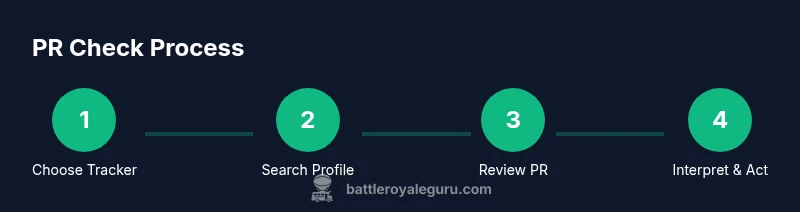
If you are new to PR checking, start with a simple 60-second workflow. Pick a reputable tracker, search for your display name, and pull up your PR score. Note the date of the reading and the timeframe it covers. This quick-start approach gets you oriented and sets the baseline for deeper analysis later.
How to interpret PR scores and their components
A PR score is a composite, not a single stat. It often blends results from recent matches with long-term consistency and could weigh high-variance events differently. Compare your PR over multiple weeks, not just a single session. Look for rising trends, regional differences, or mode-specific shifts (solo vs. team play). Remember that PR is a guide, not a guarantee of wins.
Common pitfalls and privacy considerations
Be cautious of trackers that request login credentials or access to your Epic account. Use read-only options when possible and review permissions before connecting any service. Some sites may display exaggerated numbers if data is sparse or includes non-competitive modes. Always contextualize PR with actual gameplay outcomes and avoid letting a single score define your self-worth.
Using PR to guide practice and improvement
Turn PR insights into a focused practice plan. If your PR dips in a specific mode or map, schedule targeted drills, review replays, and set measurable mini-goals. Track progress over time to see whether adjustments have the desired effect. Include a weekly review to adjust your plan based on new PR readings.
A practical example: reading a PR trend over a season
Imagine you monitor PR across multiple sessions. The trend may show gradual improvement after you adopt a targeted practice routine. Use the trend to identify what to practice, when to pivot, and how to sustain momentum. The goal is to build a consistent skill base rather than chasing a single number.
Additional tips for staying current on PR trends
Set a regular cadence for checking PR, such as once a week or after major patches. Keep notes on what changed in your playstyle to explain shifts in PR. If you use more than one tracker, align their baselines to make meaningful comparisons.
AUTHORITY SOURCES
For broader data literacy and measurement context, consider these sources:
- https://www.nytimes.com/
- https://www.washingtonpost.com/
- https://www.nature.com/
How PR interacts with other performance metrics
PR should be interpreted alongside other indicators like placement, eliminations, and consistency across patches. Do not rely on PR in isolation; use it as a guiding signal that prompts you to investigate gameplay decisions, map知 reads, and rotation choices. A holistic view yields better improvement signals over time.
Next steps and staying motivated
Schedule a simple weekly PR check as part of your practice routine. Use the data to inform a concrete plan, but avoid letting a single number define your self-image. Celebrate small, consistent improvements and keep refining your playstyle based on multiple data points.
Tools & Materials
- Fortnite account access(Ensure you can access your account on the platform you play (PC/console/mobile).)
- Trusted PR tracker (web or app)(Choose a credible tracker; basic lookups may not require login.)
- Internet-enabled device(Desktop or laptop recommended for easier navigation.)
- Notes app or spreadsheet(Log PR readings with date and tracker name.)
- Screenshots or export option(Useful for keeping a personal record of PR readings.)
- Replay review tool (optional)(Helpful for correlating PR changes with gameplay decisions.)
Steps
Estimated time: Total time: 20-40 minutes
- 1
Choose a credible PR tracker
Research trackers and read their methodology. Look for transparent data sources and clear definitions of PR. The reason is to avoid misinterpretation caused by opaque metrics or inconsistent data feeds.
Tip: Prioritize trackers offering a breakdown of PR components and provide date-stamped history. - 2
Search for your Fortnite profile
Open the tracker and enter your display name or connect your account if required. Ensure the correct region or platform is selected to match your gameplay data.
Tip: Double-check spelling and platform to avoid pulling data from the wrong account. - 3
Set the timeframe for PR tracking
Choose a meaningful window (e.g., recent weeks or a specific season). This controls what fluctuations you’ll see in the PR score and helps you assess trends.
Tip: Consistent timeframes across trackers improve comparability. - 4
Review the PR score and its breakdown
Read the overall PR and examine where it comes from (recent performance, consistency, etc.). Note any mode-specific or map-specific insights.
Tip: Always consider the context of a score, not just the number. - 5
Cross-check with a second tracker
Open another tracker and locate your profile. Compare whether both trackers show similar trends rather than identical numbers.
Tip: Discrepancies often reflect different weightings or data gaps; use them as learning signals. - 6
Export or snapshot your data
Export data or take screenshots with date stamps for your records. This supports long-term trend analysis and accountability.
Tip: Label exports clearly (tracker-name and date) for easy referencing later. - 7
Create a focused improvement plan
Based on PR insights, design practice goals targeting weak areas. Break goals into weekly tasks aligned with your playstyle.
Tip: Set measurable micro-goals; track progress against them in your notes. - 8
Review and adjust weekly
Commit to a weekly review of PR readings and adjust your plan if progress stalls. Small iterative changes often yield better results.
Tip: If PR stalls, revisit fundamentals like decision-making, timing, and rotation choices.
Questions & Answers
What does PR stand for in Fortnite?
PR stands for a composite player rating used by trackers to summarize performance. It is not an official Epic Games metric, but it provides a convenient way to compare progress over time across matches.
PR is a composite rating used by trackers to summarize performance. It isn’t official, but it helps you compare progress over time.
Is PR the same across trackers?
No. PR definitions and weightings differ by tracker. Compare trends across multiple trackers rather than assuming a single score is universal.
No, trackers define PR differently. Compare trends across trackers for a reliable view.
Do I need to link my Epic account to view PR?
Most trackers allow you to search by display name without linking accounts. Some features or data exports may require you to connect, so review permissions carefully.
Most trackers let you search by name without linking, but some features may require a connection.
How often is PR updated?
PR updates vary by tracker; many sources refresh daily or after a batch of recent matches. Real-time updates depend on data feeds from the tracker.
PR updates daily or after a batch of matches, depending on the tracker.
Can PR predict wins?
PR is a performance indicator, not a guaranteed predictor of wins. Use it to guide practice and track improvements, not to forecast every outcome.
PR is a guide, not a guarantee of wins. Use it to inform practice.
Which tracker should I use?
Choose credible trackers with transparent methodologies. Start with one or two and compare their readings over time for consistency.
Pick credible trackers and compare their readings over time.
Watch Video
Key Points
- Check PR regularly to guide practice targets.
- Compare trends across trackers for context.
- Interpret PR as guidance, not a guaranteed predictor.
- Pair PR with core gameplay metrics for a balanced view.