What Fortnite Mode Has Proximity Chat
Explore which Fortnite modes support proximity chat, how to enable it, and best practices for using nearby-audio in Creative, Party Royale, and more. Learn where proximity chat shines and where it’s limited in 2026.


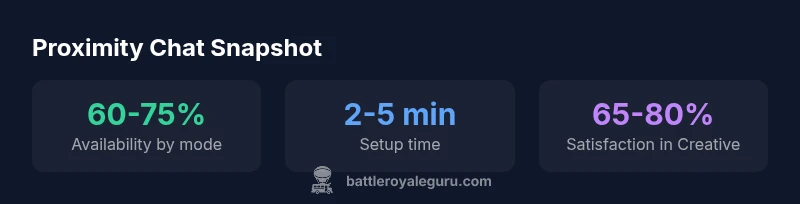
Proximity chat isn’t tied to a single Fortnite mode. It’s primarily supported in Creative and some social/experimental experiences, where nearby players can hear you without pressing a button. Standard Battle Royale matches typically use system VOIP, and proximity audio may not be enabled by default. Always verify Audio settings in Options to see if proximity chat is available in your session.
what fortnite mode has proximity chat
Proximity chat in Fortnite isn’t tied to a single mode. It’s primarily supported in Creative and some social/experimental experiences, where nearby players can hear you without pressing a button. Standard Battle Royale matches typically use system VOIP, and proximity audio may not be enabled by default. Always verify Audio settings in Options to see if proximity chat is available in your session.
In practice, this means players who want to test proximity chat should gravitate toward Creative maps or social hubs where Epic Games and community creators enable proximity features. The patch cycles for Fortnite are frequent, so what’s true in one season can shift in the next. If immersion and quick, in-the-moment coordination matter to your squad, proximity chat can add a valuable layer of real-time feedback and atmosphere during co-op runs, map tests, or casual lobbies.
Why proximity chat matters for coordination
Proximity chat changes how teams coordinate on the fly. In environments where voice audio is limited by distance, teammates must think more strategically about positioning and timing. Proximity audio can help you avoid ping-spamming and over-communicating, replacing lengthy callouts with real-time nearby cues. It also introduces a new layer of social dynamics: players near you can tip you off to threats, movement, or enemy rotations without extra taps. For content creators and map designers, proximity chat offers a chance to craft more alive, responsive experiences where players react to audible cues from nearby teammates or opponents.
Where proximity chat is available today
Today’s Fortnite landscape places proximity chat primarily in Creative mode and certain Social/Experimental experiences like Party Royale. Standard Battle Royale lobbies generally rely on global VOIP, so proximity audio isn’t guaranteed there. Epic Games occasionally tests proximity features in limited-time modes or custom lobbies where creators build with proximity audio in mind. If you’re trying to practice squad coordination, Creative islands or community-made social spaces are your best bet for experiencing proximity chat in its intended form.
How to enable proximity chat in supported modes
To use proximity chat, start in a mode that supports it (typically Creative or a social lobby). Then, navigate to Settings > Audio and look for the Proximity Chat toggle. If you don’t see the option, the session may not support proximity audio in that patch. Ensure your headset and mic are functioning, and test with a friend in a controlled environment before streaming or filming a map run. Some experiences require you to host, join, or publish a map with proximity audio enabled by the creator.
Practical scenarios where proximity chat shines
In Creative maps designed for stealth or exploration, proximity chat lets players hear nearby teammates and enemies, increasing tension and realism. On social islands, proximity chat fosters spontaneous conversations during events, scavenger hunts, or meetups. In co-op modes, nearby allies can relay enemy positions or trap cues immediately, reducing reliance on pings and chat macros. For streamers, proximity audio adds an engaging auditory layer that viewers can hear in real time, enhancing the sense of presence.
Limitations and safety considerations
Proximity chat can amplify toxicity or unwanted noise in crowded environments. Always use muting options or spatial audio depth to manage noise. Moderation in user-generated Creative experiences is essential, as different maps may implement proximity chat differently. If you encounter harassment, mute the individual or report the session to maintain a positive playing environment. Remember that proximity chat is still evolving across patches, so settings and availability can change between updates.
Proximity chat vs standard VOIP: pros and cons
Pros include more natural coordination, better situational awareness, and a heightened sense of presence in nearby encounters. Cons include potential information overload, disrupted communication in busy lobbies, and inconsistent availability across modes. If you value realism and quick cues from nearby players, proximity chat can be a powerful tool; if you’re aiming for precision and controlled calls, standard VOIP may be simpler and more reliable in competitive contexts.
Creator tips: using proximity chat in your maps
Map creators should label experiences that enable proximity chat so players know what to expect. For testers, build quiet zones and designated hot zones to study how audio travels across distance. Providing clear audio cues (like directional indicators in your map design) helps players interpret proximity audio more effectively. Finally, encourage players to test with friends before releasing a public version to ensure the feature behaves as intended.
Proximity chat availability by Fortnite mode
| Mode | Proximity Chat Availability | Typical Use Case | Notes |
|---|---|---|---|
| Battle Royale (Standard) | Typically not enabled by default | Competitive matches, squad comms | Availability varies by patch; check settings |
| Creative | Commonly enabled | Testing maps, social experiences | Great for testing proximity audio in a controlled environment |
| Party Royale / Social Lobbies | Often enabled | Casual hangouts, events | Focus on social interaction |
| Creative Proximity Labs | Experimental modes | Proximity features under testing | New features may be rolled out gradually |
Questions & Answers
Which Fortnite modes currently support proximity chat?
Proximity chat is supported mainly in Creative and certain social/experimental experiences. Standard Battle Royale does not guarantee proximity audio. Check the in-game settings for the current patch.
Proximity chat is mainly in Creative and some social modes; not guaranteed in standard Battle Royale. Check your patch notes.
How do I enable proximity chat in Creative mode?
Enter Creative, open the settings panel, and toggle proximity chat if the option appears. Ensure the experience you’re in supports it and test with friends.
Open Creative settings and toggle proximity chat if available; test with friends to confirm.
Is proximity chat allowed in competitive modes?
Typically not enabled by default in competitive Battle Royale. Availability depends on the patch and the specific mode or event you’re playing.
Generally not enabled in competitive modes; check the current patch notes.
Does proximity chat work on consoles?
Yes, where the mode and lobby support proximity audio. Ensure your system VOIP and in-game settings are configured for proximity chat.
Console support exists where proximity audio is enabled; adjust VOIP and proximity settings in-game.
What are best practices for using proximity chat?
Keep communications concise, mute abusive players, and test in safe environments with friends before public sessions.
Be concise, mute toxicity, and test with friends before streaming or sharing.
“Proximity chat reshapes on-the-ground communication in Fortnite, especially in Creative experiences where you can observe player behavior early. It’s a powerful tool when used responsibly.”
Key Points
- Check mode-specific availability before playing
- Enable proximity chat in Creative or social lobbies when available
- Test with friends to calibrate audio distance
- Mute toxic players and manage safety settings
- Use proximity chat for testing maps and live events