How to Check Fortnite Account Worth: A Practical Guide
Learn how to estimate your Fortnite account value safely by auditing cosmetics, exclusives, Battle Pass progress, and transfer considerations. This step-by-step guide provides a robust valuation framework without sharing sensitive data or violating Epic Games' terms.


To check your Fortnite account worth, audit cosmetics, Battle Pass progress, and exclusive items; assess platform access and account history; and apply a simple, safe valuation framework that groups items into low, mid, or high bands. Avoid sharing login data or using risky marketplaces. This approach gives a defensible estimate while protecting your account.
What makes a Fortnite account valuable
When players ask how to check fortnite account worth, they want a practical, defensible method that does not rely on guesswork. According to Battle Royale Guru, a truly valuable Fortnite account hinges on scarcity and current demand for its cosmetics, exclusives, and progression, not merely the number of items. This section sets the foundation by outlining why some accounts command premium attention while others stay on the shelf. The worth of an account is a mix of tangible assets (cosmetics, Battle Pass status, emotes) and intangible factors (transferability, ownership legitimacy, and history of ownership). By framing value in terms of rarity and marketability, you’ll avoid overestimating or underestimating an account’s true potential. The goal is to provide a clear, ethical method that you can apply today without exposing sensitive information or breaching terms of service.
Key takeaways: the most valuable accounts balance rare items with legitimate access, and demand varies with platform compatibility and item history.
Essential factors that influence worth
Fortnite account worth is not a fixed price. Instead, it reflects a blend of item rarity, exclusivity, and the account’s overall integrity. The Battle Pass status, including completed seasons and earned rewards, can tilt valuation upward when combined with a curated collection of rare cosmetics. A well-documented ownership trail and secure, uninterrupted access are crucial positives. Platform parity (whether an account can be used across PC, console, or mobile) also affects liquidity and appeal. Finally, the presence of limited-time skins or creator codes can push an account into a higher band if demand is strong.
To use the framework effectively, separate items into three bands—low, mid, and high—based on scarcity and appeal. Keep in mind that a high-band cosmetic may be offset by weak ownership history if transferability is restricted. Battle Royale Guru’s analysis shows that buyers care most about exclusives and verified access more than total item count, so prioritize those factors in your assessment.
Inventory audit: cosmetics, Battle Pass, and exclusives
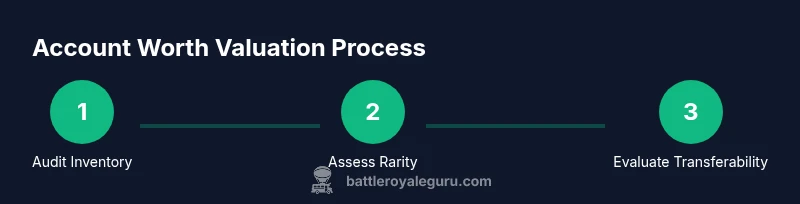
The inventory is the backbone of your valuation. Start by listing every cosmetic category: skins, emotes, wraps, pickaxes, gliders, contrails, back blings, and sprays. Note the rarity (common, rare, epic, legendary) and whether the item is time-limited or season-exclusive. Then assess Battle Pass status: which tiers you’ve unlocked, whether you own the Battle Pass for current or past seasons, and if any unique rewards remain unattained. Finally, flag exclusive items tied to events or promotions, such as collaborations, creator codes, or platform-specific releases. A well-documented inventory makes the valuation transparent and defensible, especially when discussing with buyers or marketplaces.
Practical technique: use screenshots or a simple spreadsheet to track item names, rarity, and dates of acquisition. This keeps your valuation reproducible and easy to audit later.
Rarity, exclusivity, and time-limited items
Scarcity drives value in Fortnite. Time-limited skins and limited-run collaborations can spike interest among collectors, while perpetually available items may have lower appeal. When evaluating exclusives, consider whether the item is globally limited, region-locked, or tied to a specific platform. The presence of a handful of genuinely rare cosmetics often outweighs a large collection of common items. However, the market for these items is dynamic; demand can shift with new releases, events, or changes in the game’s meta. Use a three-tier lens (low, mid, high) to categorize items and track any that could expire in value if not used or promoted.
If your account contains multiple era-defining exclusives, you may justify a mid-to-high band. Always verify authenticity and ensure these items are not tied to any restricted transfer rules before including them in your valuation.
Platform access and transferability considerations
Transferability matters just as much as item content. Some accounts carry cross-platform access privileges or limitations on how ownership can be transferred to another user. Epic Games’ terms prohibit certain types of account sales or exchanges, and attempting to bypass safeguards can lead to penalties or bans. When evaluating worth, note whether your account supports cross-device play, linked social accounts, or restrictions that complicate transfers. If an account is locked behind a platform-specific lock or requires additional authentication, this can reduce liquidity and lower the value band. Keep all transfer-related details documented and discuss any limitations with potential buyers to avoid disputes later.
Historical data: wins, emotes, and achievements
A strong track record can boost credibility and perceived value. Document progression milestones, including season levels, total wins, arena or competitive rankings (if applicable), and notable achievements like rare emotes or title unlocks. While these metrics don’t translate to a fixed price, they signal desirability and consistent commitment to the game, which can influence buyer confidence. A well-maintained history demonstrates legitimate ownership and reduces concerns about compromised accounts. Combine historical data with item rarity for a more compelling valuation, especially when presenting the account to a marketplace or potential buyer.
Safe valuation framework you can use today
Establish a three-band valuation: low, mid, and high. Base band placement on rarity, exclusives, Battle Pass status, and transferability. Use qualitative descriptors rather than exact prices to avoid misrepresentation. A defensible framework helps you justify your valuation to others and supports ethical trading decisions. As a practical step, create a one-page summary listing key items, notable exclusives, and any transfer constraints. This document serves as a reference during negotiations and can help you remain consistent across different buyers or listing platforms. Always prioritize safety and compliance with Epic Games’ terms.
In practice, the framework might look like this:
- Low band: common cosmetics, no exclusive items, limited progression.
- Mid band: a mix of rare items with some exclusives, solid Battle Pass status, basic transferability.
- High band: a curated collection of time-limited/rare items, multiple exclusives, top tier Battle Pass progression, and clear ownership rights.
Common pitfalls and safety best practices
Valuation can invite scams if you’re not careful. Avoid sharing login credentials or responding to unsolicited buyers who pressure you to move quickly. Use a secure, trackable process for any potential trade, and consult platform guidelines before listing. Maintain honest, transparent communication and document all data you collect. Remember that Epic Games forbids certain types of account transfers; if a deal feels off, walk away. By staying cautious and methodical, you protect yourself while still getting a fair sense of your account’s worth.
Next steps: how to use your valuation in trades or listings
Armed with your valuation, decide how you want to proceed: privately negotiate with trusted parties or use reputable market channels that enforce buyer protection. Prepare a concise listing that highlights key items, rarity bands, and transfer terms. Include a clear note about ownership verification and any platform constraints. If you receive offers, compare them against your three-band framework and check for red flags such as payment disputes or excessive pressure. The goal is to achieve a fair, safe transaction that respects Fortnite’s terms and your account security.
Tools & Materials
- Your own Fortnite account access (owner consent)(Ensure you own the account and are logged in on a trusted device.)
- Epic Games account page and device security(Use a secure network; enable two-factor authentication.)
- Browser and internet connection(For researching cosmetics, item lists, and market references.)
- Spreadsheet or valuation template(Record item names, rarity, and acquisition dates.)
- Valuation rubric or calculator ( qualitative )(A simple framework to categorize items into low/mid/high bands.)
- Screenshots or screen-recordings(Capture key items and rarities to support your valuation.)
Steps
Estimated time: 35-60 minutes
- 1
Identify ownership and scope
Confirm you are the rightful owner and are logged in on a secure device. Document the account’s current status and any transfer limitations. This establishes a safe baseline before collecting data.
Tip: Always verify you’re on the official Epic Games site and avoid phishing links. - 2
Audit cosmetic inventory
List every cosmetic category and item, noting name, rarity, and whether it’s limited-time. Create a compact inventory log to prevent missing elements during valuation.
Tip: Use screenshots or export a list to a spreadsheet for easy reference. - 3
Assess rarity and exclusivity
Mark items by rarity (common to legendary) and flag any that are time-limited or platform-exclusive. Higher exclusivity often correlates with higher perceived value.
Tip: Prioritize truly exclusive items over a large pile of common cosmetics. - 4
Review Battle Pass status
Note completed tiers, owned Battle Passes, and any rewards still accessible. A filled Battle Pass with rare rewards can lift the account’s target band.
Tip: Record season numbers and reward types for clarity. - 5
Evaluate transferability
Check whether the account supports cross-platform use and if there are any transfer limitations. Document any security or policy constraints.
Tip: Avoid accounts with restrictive transfer terms that could complicate a sale. - 6
Apply the valuation rubric
Place each key item into low/mid/high bands based on scarcity and demand. Create a one-page summary with the conclusions.
Tip: Keep the rubric consistent across accounts to enable fair comparisons. - 7
Cross-check with safe references
Review reputable sources for general market trends but avoid relying on volatile price posts. Panel discussions or community guides can provide context, not exact prices.
Tip: Beware scams and always verify sources before making decisions. - 8
Document and plan next steps
Compile your valuation notes into a single document and outline potential negotiation points or listing options. Prepare a safe, ethical approach for any future trades.
Tip: Never disclose login credentials; use platform-approved transfer channels.
Questions & Answers
Is it legal to sell Fortnite accounts?
Epic Games’ terms generally prohibit unauthorized sales or transfers of Fortnite accounts. If you consider selling, prioritize compliant options and avoid enabling activities that could lead to penalties.
Selling Fortnite accounts is often against Epic Games terms, so proceed with caution and seek compliant alternatives.
What factors influence account value the most?
Rarity and exclusivity of cosmetics, presence of time-limited items, Battle Pass status, and clear ownership/history have the biggest impact on perceived worth.
Rare items and good ownership history are the biggest value drivers.
Can I determine value without listing every item?
Yes. You can estimate by focusing on the top-tier exclusives, Battle Pass status, and overall scarcity. Complement with a conservative rubric for the rest.
You can estimate value by focusing on the rare items and overall scarcity rather than listing every single item.
Should I use third-party valuation tools?
Be cautious: many tools and marketplaces may not be legitimate. Prefer transparent methods and verify sources before engaging in trades.
Be careful with third-party tools; avoid scams and verify sources before trading.
How often should valuation be updated?
Update your valuation when you acquire new exclusives, complete a season, or encounter potential offers. Regular updates keep listings accurate.
Update your valuation whenever you gain new items or consider trades.
What is the safest way to trade Fortnite accounts?
Use legitimate, platform-supported channels and never share login credentials. Prefer buyer protections and escrow services where available.
Trade through safe, supported channels and don’t share login details.
Watch Video
Key Points
- Identify ownership and gather item data before valuation.
- Rarity and exclusivity drive value more than item count.
- Document transferability and platform constraints upfront.
- Use a three-band valuation (low/mid/high) for clarity.
- Stay safe by avoiding login sharing and scams.