Fortnite Competitive: A Step-by-Step Guide to Mastering High-Level Play
A practical, actionable How-To guide to elevate your fortnite competitive skills with structured practice, team coordination, meta awareness, and data-driven review.


This guide helps you rise in fortnite competitive by outlining a step-by-step plan: set up a solid practice routine, define your meta, coordinate with a squad, and review every match. You’ll learn essential mechanics, training drills, and match-analysis methods to move from casual games to consistent high-level play.
What Fortnite Competitive Means in 2026
In fortnite competitive, the goal is to translate mechanical skill into consistent results across scrims, tournaments, and ranked play. This requires disciplined practice, strategic thinking, and strong communication. The Battle Royale Guru team emphasizes that progress comes from repeatable routines, clear goals, and frequent re-evaluation of both your own play and the evolving meta. A successful competitive mindset treats each session as a data point, not a small-game victory. Expect to balance aggressive plays with measured rotations, resource management, and map control to gain high-ground advantages when it matters most. Key terms to know include mechanics (building and editing), rotations (how you move with the storm), meta (the prevailing strategies after patches), and scrims (practice matches against skilled teams). For fortnite competitive players, consistency beats sheer volume, and deliberate practice compounds over time.
Choosing Your Path: Solo, Duo, or Squad
Your route into fortnite competitive should fit your strengths and time availability. Solo play emphasizes individual decision-making and mechanical polish. Duos highlight communication and synergy with a partner, while squads test your ability to coordinate multiple players, assign roles, and execute complex replays. Battle Royale Guru recommends starting with a clear practice schedule for your chosen format, then gradually layering team-based scrims as you grow more comfortable. Regardless of format, establish a core rotation plan, practiced peak-rotation timings, and a shared callout language to minimize hesitation during high-pressure moments.
Core Mechanics for High-Level Play
At the heart of fortnite competitive capability are rapid edits, precise builds, and reliable aiming. Invest in consistent wall edits, cone rotations, and retakes to secure high ground during fights. Practice building under pressure with timed drills and simulate late-game scenarios to sharpen decision-making. Hones your aim by combining target tracking exercises with recoil control, micro-adjustments, and crosshair placement. In addition, cultivate map awareness—knowing common enemy paths, safe routes, and safe zones helps you pre-empt opponents and force favorable fights. The synergy between mechanical mastery and strategic positioning is what separates great players from good ones.
The Meta, Patches, and Adaptation
Epic Games routinely updates Fortnite with patch notes that shift weapon balance, loot availability, and structural mechanics. Fortnight competitive success now hinges on rapid meta adaptation: tracking patch notes, testing new tools in scrims, and updating your build-and-fight approach accordingly. Create a weekly cycle: review patch notes, discuss impact with your squad, test in private scrims, and apply changes in ranked games. The ability to pivot gameplay—whether it’s zoning strategies, loadouts, or rotation routes—defines durable success in a changing meta.
Training Framework: Drills That Drive Progress
A solid training framework blends technical drills with scenario practice. Design 3–4 core drills and rotate them throughout the week: (1) aim-and-recoil practice, (2) build-edit-main drills, (3) endgame positioning simulations, (4) communication and callout reviews. Schedule deliberate practice blocks: 15–20 minutes of drills, 10–15 minutes of scrim play, and 5–10 minutes of cooldown analytics. Track metrics like edits-per-second, win rate in controlled scrims, and average decision time in late-game scenarios. The aim is to build a repeatable routine, not to chase quick wins.
Building and Editing: Precision Under Pressure
The backbone of fortnite competitive builds is speed and accuracy under pressure. Focus on smooth wall edits, fast cone placements, and rapid cone-to-wall edits during 1v1 and 2v2 drills. Practice under simulated pressure by introducing time limits and dynamic threats (shots from opponents, storm repositioning). A robust practice habit includes reviewing your most costly mistakes from recent matches and implementing a proven retake sequence in every lobby.
Aiming, Recoil Control, and Crosshair Mastery
Aim mastery starts with understanding weapon spray patterns and crosshair placement. Use dedicated aim training routines to improve tracking and target acquisition. Integrate recoil control by using weapons in controlled drills that emphasize consistent recoil compensation. Regularly test sensitivity settings in a controlled environment and lock in a reliable setup to minimize random fluctuations during tournaments. Regular aim practice reduces drift in chaotic late-game engagements and helps you regain control when under fire.
Team Play: Roles, Callouts, and Warm-Ups
Team synergy is a decisive factor in fortnite competitive success. Define roles (leader, entry fragger, crunch support) and establish a standardized callout system. Start practice sessions with a warm-up that includes synchronized builds and shared scan of potential threats. Use voice communication with clear, concise phrases to reduce cognitive load in high-pressure moments. Regular scrims with the same roster help your group internalize timings, rotations, and synergy-based plays like coordinated peeks and stacked editing sequences.
Analyzing Your Games: Review, Metrics, and Growth
A data-driven approach turns games into actionable insights. Use replays to annotate decision points, map control, and moment-to-moment decision accuracy. Track metrics such as average placement, damage per game, and percentage of fights won after initiating engagement. Highlight recurring patterns that lead to losses—then design targeted drills to counter them. A feedback loop with teammates keeps you accountable and accelerates improvement.
Common Pitfalls and How to Avoid Them
Common mistakes include inconsistency in practice, overreliance on individual skill, and failing to adapt after patch changes. Avoid burnout by scheduling rest days and rotating focus between mechanics and strategy. Resist chasing low-effort wins through high-risk plays; instead, emphasize safe plays that create reliable advantages. Finally, don’t neglect scrim fairness or team chemistry—cohesive teams outperform a guild of talented individuals.
Tools & Materials
- Gaming PC or Console(Stable performance for smooth frame rates)
- High-refresh monitor(144Hz or higher preferred for smoother motion)
- Quality peripherals(Precise mouse or controller with responsive input)
- Stable internet connection(Low latency, wired Ethernet if possible)
- Headset with mic(Clear voice and game audio separation)
- Aim trainer or training map(Dedicated sessions for accuracy and drills)
- Voice chat software(Group communication for team practice)
- Replay and analysis tools(Screenshot or video annotation for notes)
- Coach or mentor (optional)(External feedback can accelerate progress)
Steps
Estimated time: 6-8 weeks to establish a repeatable routine and see measurable improvements
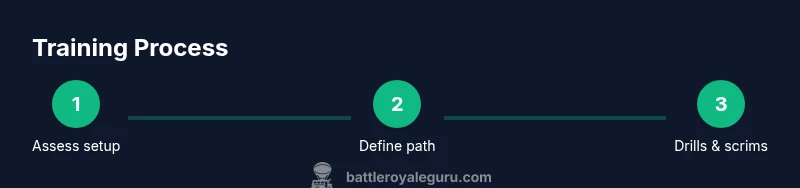
- 1
Assess gear and environment
Audit hardware, internet latency, and comfort to ensure you can practice without interruptions. Remove bottlenecks that slow reaction time and responsiveness during drills.
Tip: Run a baseline latency test and confirm stable FPS in training scenarios. - 2
Define your competitive path
Choose solo, duo, or squad focus and align your practice schedule with that format. Establish a shared goal with teammates and set expectations for scrims.
Tip: Document your target league or ladder and track progress weekly. - 3
Build a core mechanics drill routine
Create a rotating set of drills for edits, builds, and quick transitions. Practice with time constraints to simulate high-pressure moments.
Tip: Use a timer and record results to monitor improvement over weeks. - 4
Incorporate aim and recoil control drills
Schedule dedicated aim sessions before scrims. Test different weapons in controlled scenarios to understand recoil patterns.
Tip: Lock sensitivity after a solid 2-week trial and avoid frequent changes. - 5
Run structured scrims with feedback
Practice in controlled scrims to test rotations, callouts, and decision-making. End with a short debrief and action items.
Tip: Record scrims for later review and annotation. - 6
Review, adjust, and iterate
Analyze matches for recurring mistakes and success patterns. Update drills and playbooks to reflect learning.
Tip: Create a weekly improvement plan with concrete targets.
Questions & Answers
What is fortnite competitive mode?
Fortnite competitive comprises high-skill play, organized scrims, and tournaments focused on mechanics, strategy, and teamwork. It rewards preparation, discipline, and data-driven improvement.
Fortnite competitive is high-skill play with scrims and tournaments, driven by practice and teamwork.
What inputs are best for competition?
Use precise input devices and consistent sensitivity. Pair a reliable setup with regular aim and build drills to keep reflexes sharp under pressure.
A precise setup and consistent sensitivity help you perform under pressure.
How often should I train?
Aim for 4–6 focused sessions per week, mixing mechanics, aim, and team drills. Include rest days to consolidate learning.
Train consistently several days a week with built-in rest for best progress.
Do I need a team to compete?
While solos can compete, most success in fortnite competitive comes from reliable squads or duos with clear roles and communication.
Teams with defined roles and good communication perform best.
What metrics show improvement?
Track win rate in scrims, average elimination count, and rotation success rate. Use replay reviews to link improvements to specific drills.
Look at scrim win rates, eliminations, and better rotations.
Watch Video
Key Points
- Establish a fixed practice plan with clear goals.
- Build squad cohesion through daily callouts and drills.
- Review games systematically to identify fixable mistakes.
- Adapt quickly to patches and meta shifts.