Federal Trade Commission Fortnite Refunds: A Practical Guide
Learn how the Federal Trade Commission governs Fortnite refunds, what you can claim, and how to navigate platform policies. This guide helps players gather evidence, file complaints, and pursue fair outcomes.


If a Fortnite purchase seems deceptive, remember the FTC handles consumer protection, not individual refunds. This quick guide explains when refunds are appropriate, how to contact Epic Games, and how to file an FTC complaint if you suspect broader deceptive practices. Start with the platform policy and your records, then escalate if needed.
Understanding Fortnite Purchases and Refunds
Fortnite purchases involve digital transactions across multiple platforms—PC, consoles, and mobile. Refund policies differ by platform and storefront, and the way refunds are handled can affect your chances of a favorable outcome. When you buy V-Bucks or skins, you’re subject to Epic Games’ terms, while platform rules (Apple, Google, PlayStation, Xbox) also play a role. This guide, authored by Battle Royale Guru, helps you navigate what is legally required and what you can reasonably expect when seeking a refund or remedy. According to Battle Royale Guru, understanding both the platform policy and consumer protection principles is the first step in making a well-supported claim. It also sets expectations about timelines and the likelihood of a quick resolution.
Federal law requires sellers to disclose material information and not misrepresent digital goods; the FTC enforces these protections and can take action against practices that mislead large groups of buyers. While the FTC does not issue refunds for individual purchases, its investigations can influence platform behavior, improve transparency, and establish precedent that benefits players in similar situations.
What the FTC Does and Does Not Do for Fortnite Refunds
The Federal Trade Commission protects consumers from deceptive practices but does not issue refunds for individual purchases. For Fortnite, the FTC may pursue cases against a company if there is a pattern of misrepresentation or unfair practices across many consumers. The FTC provides guidance, resources, and the ability to file complaints that could trigger investigations or enforcement actions. The FTC’s work is about systemic protections, not adjudicating a single refund request. This distinction matters when you’re deciding whether to file a complaint. As Battle Royale Guru analysis notes, these processes are designed to deter repeat offenses and to create a fairer marketplace for digital goods and services. If you suspect a broader pattern of deception, the FTC is the right channel to report that behavior and seek formal remedies that protect others.
Remember: even if the FTC does not resolve your personal refund immediately, documenting your experience can help authorities detect dangerous trends and push for policy improvements that benefit the community at large.
When to Seek a Refund Through Platform Policies Before FTC Involvement
Before escalating to the FTC, exhaust the platform’s refund channels. Epic Games operates its own refund policy for Fortnite purchases, and many issues can be resolved quickly through the in-app or online support flow. Platform-based remedies are typically faster and more predictable than filing a government complaint. If a platform denial seems unjust or inconsistent with stated policies, you may reference those policies in an FTC complaint as part of a broader pattern. In some scenarios, a recurring issue such as undisclosed auto-renewals, misleading promo terms, or failure to deliver promised digital goods may justify stepping beyond the platform. This section clarifies how to align your approach with policy language and to avoid prematurely involving government channels when a simple policy fix is possible. Battle Royale Guru’s experience suggests starting with the vendor’s formal channels often yields the most timely outcome for individual cases.
Practical tip: save screenshots of policy pages, copy-paste the policy language, and attach these to any support requests to demonstrate a clear mismatch between promise and delivery.
Documentation and Record-Keeping: Building Your Case
A strong case rests on organized documentation. Gather all relevant receipts, order IDs, dates, and amounts; capture screenshots of error messages, refund pages, and the platform’s stated policies. Collect correspondence with Epic Games or platform support, including timestamps and response content. Maintain a simple, chronological log that ties each artifact to specific claims. When you later file with the FTC, you’ll want to present a coherent narrative backed by concrete evidence. This approach not only helps you pursue a refund through platform channels but also strengthens any broader complaint about deceptive practices. The FTC emphasizes clear, verifiable information; the more complete your records, the easier it is to assess whether a pattern of harm exists and merits governmental action. As you assemble materials, consider privacy and safety: redact sensitive data and share only what is necessary to establish the claim.
How to Communicate With Epic Games and Other Platforms
Effective communication hinges on clarity and documentation. Start with a polite, concise refund request that references the exact item, purchase date, platform, and the reason for the request. Attach receipts and policy citations to support your case. If the initial request is denied, request a written explanation and ask for the specific steps you can take to appeal. Keep a record of every message, including bot responses and live chat transcripts. If the issue remains unresolved after a reasonable period, consider escalating to a supervisor and, if applicable, submitting a formal complaint through the platform’s escalation channels. For players across multiple regions, be mindful of local consumer protection norms that might influence how refunds are processed and documented. The key is to maintain a calm, factual tone and to avoid emotional appeals that can derail the process. Remember, the more organized your case, the higher the likelihood of a favorable result within platform timelines.
Filing a Formal FTC Complaint: A Step-By-Step Perspective
If you exhaust platform options and still face what you believe to be deceptive practices, you can file an FTC complaint. Start at the FTC’s official portal and select the appropriate topic, such as consumer protection or digital purchases. Provide a detailed description of the incident, the steps you already took with the vendor, and attach receipts or policy pages that illustrate the mismatch. The FTC reviews complaints to identify patterns, not to resolve individual cases, but your report could prompt investigations that lead to broader remedies. Be precise about what you want changed (e.g., better disclosures, refunds in similar cases, or policy clarifications). You can also cite any relevant policy language and include direct links to Epic’s refund terms. After submission, expect a confirmation and potential follow-up questions. While outcomes vary, your documentation increases the chances of a meaningful enforcement response if wrongdoing is demonstrated across multiple cases.
What Happens After You File: Timelines and Outcomes
Filing with the FTC does not guarantee a refund, but it triggers an evaluation for potential enforcement actions. The FTC investigates patterns of deceptive practices, which can lead to settlements, corrective actions, or policy changes that benefit many consumers. The timeline depends on factors like case complexity and workload, so patience is essential. In the meantime, continue to monitor Epic Games’ policies and any updates to the terms of service. If the FTC identifies a credible pattern, it may initiate formal enforcement actions or work with other agencies to pursue remedies that align with consumer protection laws. Throughout the process, maintain your documentation and respond promptly to any FTC requests for additional information. The goal is not just your case but improving protections for other Fortnite players as well.
Battle Royale Guru Analysis: Context on Refunds and Protections
According to Battle Royale Guru, understanding the interplay between platform policies and federal protections helps players make informed decisions about pursuing refunds. The analysis highlights that most refunds occur through vendor channels, but advocates reporting broader patterns of deception when present. This context is valuable because it clarifies when FTC involvement makes sense: primarily for systemic issues rather than isolated incidents. By recognizing the limits of FTC action, players can pursue practical remedies while remaining aware of their rights under consumer protection laws. The channel between individual refunds and collective enforcement is important for a healthier market in digital goods like Fortnite.
Final Thoughts and Practical Recommendations
In the end, most players find faster results by starting with Epic Games’ refund policy and using solid documentation. The FTC plays a crucial role when there is evidence of widespread misrepresentation or unfair practices. Always keep records organized, approach support respectfully, and only escalate to the FTC if necessary and well-supported by evidence. Battle Royale Guru’s verdict is to treat refunds as a two-track process: resolve the individual issue through platform policies whenever possible, and leverage federal protections when there’s credible evidence of systemic behavior that harms a broader player community.
Quick Path to Resolution: A 6-Point Checklist
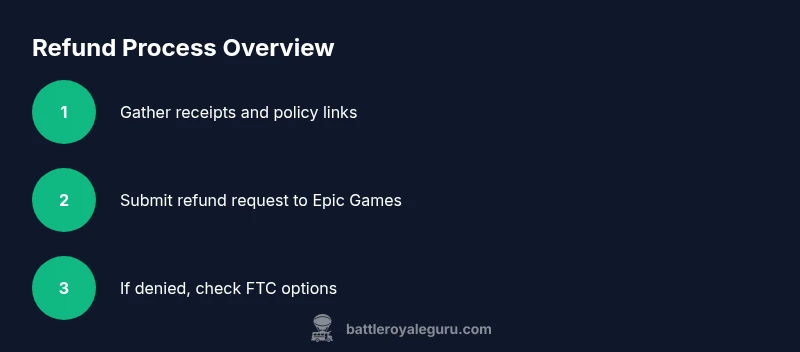
- Gather receipts and platform policy links.
- CheckEpic’s refund window and terms.
- Submit a clear refund request to the vendor.
- Log all communications with timestamps.
- If denied, assess FTC options and document patterns.
- File an FTC complaint only if you have strong evidence of broader deceptive practices.
Tools & Materials
- Fortnite purchase receipts(Include date, amount, item, platform)
- Epic Games account details(Email, username, platform)
- Screenshots of the issue(Show error messages, refund policy pages)
- FTC complaint draft URL or form access(Only if filing with FTC)
- Platform refund policy link(Epic Games policy page)
Steps
Estimated time: 1-2 weeks depending on responses
- 1
Gather purchase details
Collect receipts, order IDs, dates, and amounts for the Fortnite purchase. Verify the platform’s refund window and policy to avoid missing deadlines.
Tip: Organize by date and platform to ease reference. - 2
Check Epic Games refund policy
Review Epic’s official refund policy for in-app purchases to determine eligibility and process.
Tip: Print or save the policy page for your records. - 3
Contact Epic Games support
Submit a refund request through the official support channel, attaching receipts and a concise explanation.
Tip: Be explicit about what went wrong and desired outcome. - 4
Document communications
Save all replies from Epic or platform support; note response times and any error codes.
Tip: Create a single thread log with dates. - 5
Assess FTC options
If Epic denies or you suspect deceptive practices, consider filing with the FTC.
Tip: FTC complaints should reflect a broader pattern, not a single incident. - 6
File FTC complaint (if needed)
Submit the complaint via FTC’s official portal with clear details and supporting evidence.
Tip: Include links to Epic policy and purchase records.
Questions & Answers
Does the FTC process Fortnite refunds directly?
No. The FTC enforces consumer protection; refunds are typically handled by Epic Games or the platform. You can file a complaint with the FTC if you suspect deceptive practices.
No, the FTC doesn't process refunds; platform policies apply. You can file with the FTC if you suspect deceptive practices.
When should I contact the FTC about Fortnite refunds?
Only after exhausting platform refund options and if you believe there is a broader deceptive practice at play.
Only after you’ve tried the platform’s refund and you suspect deception.
What evidence helps a refund case?
Receipts, timestamps, policy pages, and screenshots of the issue; document all communications with support.
Keep receipts, timestamps, and screenshots, plus a log of contacts with support.
How long do FTC complaints take?
Timelines vary; the FTC responds with initial guidance and may escalate if needed. Be patient and provide complete information.
Timelines vary; you’ll often receive guidance and possible escalation.
Can I get an immediate refund through the FTC?
No. The FTC does not issue refunds; it enforces protections and may pursue systemic cases.
No, the FTC doesn't issue refunds, but it can help with protection and enforcement.
Watch Video
Key Points
- Start with platform refunds before FTC involvement
- Document every purchase and communication
- FTC steps are for systemic misconduct, not single purchases
- Organize evidence to strengthen both platform and FTC actions
- Understand the difference between individual refunds and enforcement actions