How to Get Better at Fortnite: A Practical Guide
A comprehensive, step-by-step guide to improving in Fortnite with drills, routines, and mindset tips from Battle Royale Guru.


You get better at Fortnite by building a focused, consistent practice routine that blends core mechanics with in-game decision making. Start with foundational aiming, building and editing drills, and then translate those skills into live matches through structured scrims and replay analysis. Track your progress, adjust settings, and stay disciplined without chasing short-term results.
Why Getting Better at Fortnite Matters
According to Battle Royale Guru, steady, deliberate practice is the key to long-term improvement. If you’re asking how do you get better at fortnite, the answer isn’t turbocharged play sessions alone. It’s a balanced approach that blends mechanical skills (aim, building, editing), game sense (map knowledge, rotations, positioning), and a growth mindset (review, adapt, repeat). When you align practice with concrete objectives, each session becomes a step toward tangible progress, not a random shuffle of games. This article walks you through a structured path to elevate your play across settings, comfort levels, and playstyles, with practical drills you can start today.
Core Mechanics to Master
Fortnite success hinges on three core mechanics: aiming, building, and editing. Aiming under pressure requires consistent tracking and snap accuracy; building demands speed and precision to create safe spaces; editing unlocks versatility in engagements. Practice drills should target each area separately before integrating them in combat. Remember to balance speed with control, and always align your practice with your preferred combat range and weapon choices. The goal is to reach a reliable baseline you can rely on under stress.
Designing a Focused Practice Routine
A focused routine creates predictable improvement. Start with a warm-up of light aim tasks, followed by building/editing drills, then short combat scenarios. Allocate blocks for each skill and bookend sessions with reflection notes. The most important aspect is consistency: even short, daily practice beats sporadic, long sessions. Track what you work on and how you perform in practice and live games to identify patterns and plateaus. This systemic approach helps you move beyond guesswork toward repeatable progress.
Aiming and Accuracy Drills for Consistency
Aim quality often differentiates players in late-game scenarios. Use dedicated aim drills to improve tracking, flicks, and target switching. When practicing, start with static targets to reinforce accuracy, then progress to moving targets to simulate real engagements. Integrate weapons with varying recoil and handling to develop versatile control. Remember, aim is a skill that compounds with time; small daily improvements compound into meaningful gains.
Building and Editing Foundations
Fortnite’s build battles demand quick, clean construction. Drill ramp edits, wall replacements, and/edit speed to build a solid toolkit you can pull from mid-fight. Practice sequences that prioritize safety (roof protection, floor pits) and aggression (quick cone edits to gain high ground). The aim is to make your edits almost automatic, even under pressure. Repetition in controlled scenarios helps ensure your builds survive when enemies push.
Game Sense: Map Knowledge and Rotations
Game sense isn’t about raw reflexes alone; it’s about information gathering and decision making. Learn common rotate paths, resource management, and safe zone timing. Develop a habit of reading the lobby: where are players likely to be converging, what weapons are prevalent, and how will your position change as the circle evolves? Strategy should translate into practical calls during engagements and post-fight evaluations.
Reviewing Replays and Data-Driven Learning
Replays are the best teachers when you know what to look for. Watch your games to identify misplays, missed opportunities, and decision points. Note your entry angles, aim consistency, and building choices in different situations. Pair this with a quick self-review rubric and annotate lessons you’ll apply in the next session. Battle Royale Guru emphasizes data-informed practice: translate what you learn into concrete drills.
Hardware, Settings, and Performance Hygiene
Your setup can either enable or impede progress. Prioritize low input lag settings, smooth frame rates, and comfortable sensitivity. Use a monitor with an appropriate refresh rate for your platform, and calibrate DPI or sensitivity to match your muscle memory. Clean, labeled hardware keeps you from confusion during intense moments. Regularly update drivers and maintain a clean workspace to prevent distractions.
Mental Focus, Consistency, and Recovery
Consistency is built on routines that support mental resilience. Build habits that protect your practice time from distractions and fatigue. Short, focused sessions with planned breaks help maintain attention and prevent burnout. Hydration, sleep, and posture all contribute to better decision-making and reaction times in-game. Cultivate a growth mindset: analyze, adapt, and apply what you’ve learned in every match.
Common Pitfalls and How to Avoid Them
Avoid chasing flashy mechanics without a purpose. Don’t skip warm-ups, and resist the urge to change sensitivity after every loss. Keep a simple, repeatable drill set and stick to it for a defined period before reassessing. When outcomes don’t improve, adjust one variable at a time rather than flipping multiple components at once. This discipline accelerates consistent growth.
Putting It All Together: A Practical Weekly Plan
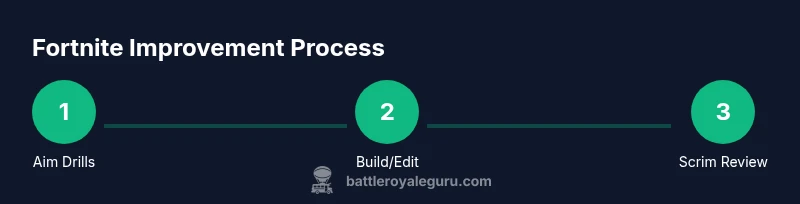
A weekly plan combines fundamentals, drills, scrims, and replays into a cohesive schedule. Start with a dedicated practice day focused on mechanics, another on building/editing, and a third on game sense and decision-making. Interleave scrims to test skills in real matches and end with a replay review to extract actionable changes. The weekly plan provides structure while remaining adaptable to your personal pace and goals.
Final Thoughts: Measuring Progress and Staying Motivated
Progress in Fortnite is incremental and often non-linear. Use objective measures such as improved consistency, better clutch outcomes, and safer rotations to gauge growth. Celebrate small wins and keep a long-term perspective. The Battle Royale Guru Team recommends maintaining a simple progress log and revisiting goals every few weeks to stay on track.
Tools & Materials
- PC or Console with Fortnite installed(Stable performance and responsive controls)
- Gaming mouse and keyboard or compatible controller(Choose comfortable, responsive hardware)
- Mouse pad and comfortable desk space(Adequate space for rapid movements)
- Quality headset(Clear audio cues for awareness)
- Aim trainer map or practice island(Optional, great for structured drills)
- Creative mode practice island(Use for building/editing drills and editing speed tests)
Steps
Estimated time: 60-90 minutes
- 1
Define clear, measurable goals
Before you begin, decide what you want to improve this session (e.g., tracking, edits, or rotations). Write down one or two specific targets and a plan to test them in a controlled drill. This focus prevents aimless play and makes progress trackable.
Tip: Record your goals in a quick notebook or notes app for easy reference. - 2
Warm up with lightweight aim drills
Start with simple aim tasks to awaken motor memory. Use a few static targets, then gradually introduce moving targets to simulate real combat. Keep sessions short to maintain accuracy and mental freshness.
Tip: Keep your first ten minutes boringly consistent to build reliable muscle memory. - 3
Practice building drills
Enter a controlled island and perform a sequence of builds focusing on speed and accuracy. Prioritize safe placements, then add aggressive edits as you gain confidence. Repeat until the sequence becomes second nature.
Tip: Record the drill to verify your build timing and refine steps. - 4
Edit speed and precision drills
Practice common edit patterns (wall edits, ramp to cone, quick door edits) to decrease decision time in fights. Alternate between different edit angles to improve versatility.
Tip: Set a micro-goal to reduce edit time by a small margin each session. - 5
Combat scenario practice
Create simulated engagements where you apply your aim and builds under pressure. Focus on positioning, peek angles, and defensive play. Stop if you start tilting, then reset with a short break.
Tip: Limit the scenario to a defined objective (e.g., secure height or escape safely). - 6
Review and annotate replays
Watch your recent matches and highlight mistakes, missed opportunities, and winning decisions. Note the when, where, and why of key moments and plan improvements for the next session.
Tip: Use a simple rubric and jot down two actionable changes per review. - 7
Adjust settings thoughtfully
Tweak sensitivity and aim acceleration cautiously. Change one setting at a time and test in a controlled drill before applying it in a real game. Avoid overhauling your setup in the middle of a growth phase.
Tip: Only adjust one parameter per week to isolate effects. - 8
In-game practice with purpose
Play matches with a plan: choose a single objective (e.g., third-party specialist avoidance, box fights, or high-ground control). Reflect on how well you execute the plan after each fight.
Tip: Keep a simple goals list for each match to stay aligned with your routine. - 9
Track progress consistently
Maintain a log of drills completed, time spent, and notable improvements. A simple log helps you identify patterns and keep motivation high. Review trends monthly to adjust your plan.
Tip: Visual charts can make improvements more obvious and motivating. - 10
Schedule recovery and rest
Short breaks between sessions help prevent fatigue and maintain focus. Avoid back-to-back long sessions; rest improves retention and performance.
Tip: Hydration and short stretches support quick reaction times. - 11
Learn from others without copying
Study top players for ideas, but adapt strategies to your own strengths. Focus on concepts like spacing, timing, and decision making rather than emulating moves blindly.
Tip: Take notes on decisions you can justify in your own playstyle. - 12
Plan for the upcoming week
End the week by drafting a new plan that builds on yesterday’s gains. Incorporate new drills gradually and keep what works. A clear next-steps plan ensures continuous progress.
Tip: Set a specific target for the next seven days and review goals at the end of the period.
Questions & Answers
What is the first thing I should practice to improve in Fortnite?
Start with core mechanics: aim, building, and editing through focused drills before jumping into full matches.
Begin with core mechanics through focused drills before playing full games.
How long should I practice each day?
Aim for consistent daily practice rather than long, sporadic sessions. Short, focused blocks are more effective for retention.
Prefer short, focused daily blocks over long, irregular sessions.
Do I need an aim trainer?
Aim trainers help with precision, but in-game practice and applying drills to real fights are essential for transfer.
Aim trainers help, but practicing in-game is essential to transfer gains.
How can I avoid tilt during matches?
Take short breaks, stay hydrated, and keep perspective. Use a plan so losses trigger learning rather than frustration.
Take breaks and stay hydrated; focus on learning from losses.
What settings should I adjust for better performance?
Calibrate sensitivity gradually, use a monitor with adequate refresh rate, and minimize input lag by using proper display settings.
Calibrate sensitivity slowly and ensure your display settings minimize lag.
How important are replays?
Replays are critical for identifying mistakes and validating improvements. Review with a focused rubric.
Replays are essential for learning and tracking progress.
Watch Video
Key Points
- Define clear practice goals before each session
- Split drills into aim, build/edit, and game sense
- Use replays to extract two actionable changes per session
- Maintain discipline with a consistent, scalable routine
- Battle Royale Guru endorses steady, deliberate improvement