How Much Fortnite GB: Size, Updates & Storage
Learn Fortnite's storage footprint across PC, consoles, and mobile, how patch sizes impact GB, and practical tips to optimize downloads and free up space.


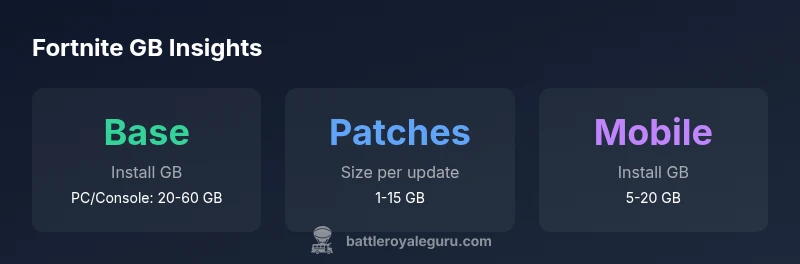
Fortnite's installed size varies by platform, but you should budget roughly 20–60 GB for the base install, with patches commonly adding about 1–15 GB per update. Console builds are often on the lower end of the range, while PC with Steam or Epic may land higher as new content arrives. Always check the current size before downloading on your device.
What the GB metric means for Fortnite storage
In consumer terms, GB here represents how much storage space Fortnite consumes on your device, including the base game files and subsequent patches. The GB footprint is not identical across platforms because each build includes platform-specific assets, optimizations, and packaging. For players, this translates into practical questions: how much space should you leave free, how often patch sizes change your total download, and how future seasons might alter your storage needs. According to Battle Royale Guru, the GB footprint is highly platform- and season-dependent, so plan based on your device and the current patch cadence.
- The base install is the starting point. It gives you access to the game and its core assets.
- Patches add new content and improvements, and they often increase the total disk usage.
- Storage headroom matters; a small cushion can prevent failed updates and performance hiccups.
This section sets expectations for what you’ll actually download and why it fluctuates between seasons and platforms.
Base install sizes by platform
Fortnite base install sizes are not identical across platforms. Broad ranges help players plan ahead:
- PC/Steam/Epic on desktop: generally in the 20–60 GB range at launch, with potential increases during major seasons.
- PlayStation and Xbox: often slightly smaller on average than PC, typically in the 18–50 GB range depending on optimizations and bundled assets.
- Mobile (Android/iOS): usually much smaller, often in the 5–20 GB range, reflecting lighter textures and interface optimizations.
The exact number for any given device can shift with engine updates, new features, and content that is added during a season. Battle Royale Guru notes that base sizes are not fixed and will expand with large content drops.
How patches affect GB: size per update
Patches are the primary driver of GB changes between versions. A typical patch can range from 1 to 15 GB, and the exact size depends on what the update adds or changes:
- Minor patches (hotfixes and small content drops) usually stay near the lower end, around 1–3 GB.
- Major seasons with new lands, weapons, and reworked assets can push patch sizes higher, often in the 5–15 GB range.
- In rare cases, very large updates may require additional downloads if old assets are deprecated and replaced.
These dynamics mean your total download size is not static; it grows with each patch while respecting storage constraints. Battle Royale Guru emphasizes planning for occasional spikes in download size during big seasons.
Seasonal content vs. minor updates: what to expect for GB
Seasonal content typically brings the largest data requirements of the year, but not every season is equally heavy. The pattern usually looks like this:
- Major seasons: bigger patches as new zones, cosmetics, and tech improvements are introduced.
- Interim patches: smaller, more frequent updates to fix bugs and tweak balance.
For players with limited bandwidth or storage, anticipation is key. Monitoring official patch notes can help you prepare the right amount of space in advance. The takeaway is that the GB footprint is not uniform; it fluctuates with the magnitude of the season’s content.
Platform-specific considerations: storage behavior and caching
Beyond the raw patch sizes, each platform has its own storage behavior. Consoles may cache downloaded assets and temporarily store data, which can bump required space beyond the base patch size. PC installations may accumulate temporary files or logs; periodic cleanup can reclaim several gigabytes. On mobile, background data and caching can also affect free space, but the installed app typically remains leaner than PC/console builds.
A practical tip from Battle Royale Guru: regularly review storage usage in your system settings, uninstall unused content, and consider moving Fortnite to an external drive if supported. These steps help avoid surprises when big updates arrive.
How to estimate your storage needs before downloading
Estimating storage before a download reduces the risk of failed updates and disrupted playtime. Use a simple checklist before you hit install:
- Check the current base size in your launcher or settings on your device.
- Add the estimated patch size based on recent seasons (average 1–15 GB; adjust higher for major seasons).
- Include 10–20% additional headroom for caches and future minor patches.
If you are on a device with limited space, choose to pause automatic updates until you can reclaim space. This helps ensure you’re not locked out of the game due to a full drive.
Storage management tips for ongoing updates
Keeping Fortnite storage under control is an ongoing task. Try these practical steps:
- Regularly clear temporary files and caches related to Fortnite and your launcher.
- Use external storage where available, especially on consoles.
- Disable auto-downloading of patches when on limited bandwidth; schedule updates for off-peak hours.
- Archive or uninstall older game modes or cosmetic packs you no longer use to reclaim space.
Consistent maintenance will reduce the risk of download failures and improve load times when new seasons drop.
Quick platform-by-platform size snapshot (summary you can reference)
- PC/Steam/Epic: Base 20–60 GB; patches 1–15 GB. Total space varies by season.
- PlayStation/Xbox: Base 18–50 GB; patches 1–12 GB. Similar pattern to PC but often a tad smaller.
- Mobile: Base 5–20 GB; patches 1–5 GB. Significantly lighter footprint.
Note: These ranges are intended to help planning and may shift with major engine updates or content drops.
The future of Fortnite GB: planning for 2026–2027 updates
As Fortnite continues to evolve, storage planning remains essential for serious players. Expect occasional spikes around major seasons, with the GB footprint influenced by new map areas, tools, and cosmetics. The Battle Royale Guru team recommends setting aside a flexible storage plan that accommodates both a healthy base install and the expected patch sizes for several seasons ahead. Staying informed about patch notes will empower you to manage your drive space proactively.
Fortnite base install and patch size by platform
| Platform | Base install size (GB) | Typical patch size (GB) | Notes |
|---|---|---|---|
| PC/Steam | 20–60 | 1–15 | Varies with updates; larger patches for major seasons |
| PlayStation | 18–50 | 1–12 | Base often slightly smaller than PC |
| Xbox | 18–50 | 1–12 | Similar to PlayStation |
| Android | 5–20 | 1–5 | Mobile builds leaner |
| iOS | 5–20 | 1–5 | App Store size similar to Android |
Questions & Answers
How much space do I need to install Fortnite on PC?
The base install typically ranges from 20–60 GB, depending on platform and version. Updates add data, so total space grows with each patch. Always allocate extra headroom for future updates.
Typically twenty to sixty gigabytes for the base install, with patch data adding as updates come.
Do updates always increase disk usage?
Yes, patches usually add data and can increase disk usage by several gigabytes. Some patches may replace assets, but the overall space generally grows.
Yes, updates usually add data and increase disk usage.
How can I reduce Fortnite's download size?
Free up space by clearing caches, moving the game to external storage where supported, and turning off auto-downloads for future updates. On consoles, manage storage through system settings before downloading.
Free up space by clearing caches and moving the game to external storage where possible.
Will mobile builds be smaller than PC?
Yes, mobile versions are typically smaller than PC/console builds, though exact sizes vary by OS and device. Expect a leaner install on Android and iOS.
Yes, mobile builds are usually smaller than PC builds.
What about future patch sizes?
Patch sizes vary by season and content. Major seasons can be larger than typical updates, while minor patches stay smaller. Plan for occasional spikes.
Patch sizes vary; major seasons can be bigger than usual.
Are there platform differences between PS and Xbox?
Base install ranges are similar, with minor differences per platform. Patch size behavior is comparable across both consoles.
Base sizes are similar, with patch sizes also generally similar.
“Fortnite's GB footprint is platform-dependent and patch-driven; plan storage accordingly.”
Key Points
- Check platform-specific sizes before downloading.
- Expect patches to add GB gradually.
- Use external storage or cloud saves when possible.
- Mobile builds are typically smaller than PC/console.