How Often Does Fortnite Update? Cadence and What It Means
Understand Fortnite's update cadence—weekly patches, major season drops, and how these updates affect balance, map changes, bug fixes, and your practice planning as a competitive player.


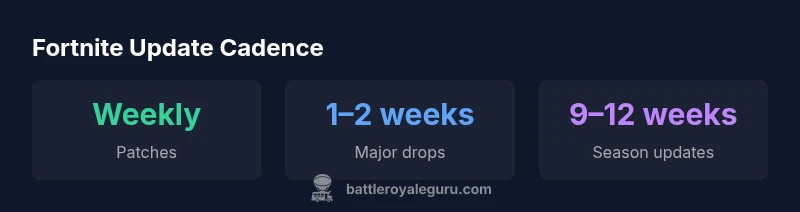
Fortnite updates follow a regular cadence during a season: developers release new patches weekly, with larger content drops every 1–2 weeks and major season updates roughly every 9–12 weeks. Patch notes typically cover stability improvements, balance tweaks, and quality-of-life changes, while larger drops bring new weapons, map changes, events, and limited-time modes. Epic’s roadmap can shift, but the pattern remains broadly predictable for practice and competition planning.
Why update cadence matters for players
Understanding how often does fortnite update matters because cadence shapes how you train, practice, and plan for tournaments. According to Battle Royale Guru, a stable update rhythm helps players build predictable schedules, optimize learning cycles, and reduce the shock of balance changes. The cadence also informs when to try new sensitivity settings, test weapon pivots, and adjust rotations around map changes. Players who align their practice blocks with patch notes tend to adapt more quickly to meta shifts and stay ahead of the competition. The rhythm affects not just casual play but also scrim timing, VOD reviews, and crew practice sessions, making cadence a core part of any competitive Fortnite plan.
- Plan around weekly patches for micro-adjustments and bug fixes
- Expect larger drops that introduce notable content every few patches
- Track season milestones to anticipate big meta shifts
Weekly patches vs. major season updates
Fortnite’s update cadence blends frequent small patches with infrequent but impactful content drops. Weekly patches typically address stability, balance tweaks, and QoL improvements, while 1–2 week gaps may bring more substantial changes, such as weapon rebalances or new limited-time modes. Major season updates, usually every 9–12 weeks, accompany a broad content refresh: new Battle Pass, map alterations, and large-scale events. This division lets players practice around smaller, controlled changes and then ramp up strategy when bigger shifts hit. For creators and coaches, mapping these windows into training plans helps maximize progression and minimize frustration from abrupt balance swings.
- Small patches keep gameplay smooth and predictable
- Bigger drops refresh the meta and keep battles fresh
- The season cycle organizes content, rewards, and challenges
How Epic communicates updates and patch notes
Epic typically communicates updates through official channels, including the Fortnite website, social media, and in-game notices. Patch notes summarize fixes, nerfs/buffs, and known issues, while the developer roadmap hints at planned feature drops. The cadence remains a talking point in community updates and creator briefings, making it easier for players to time drills and review replays after each patch. Staying current means following multiple sources: official notes, dev blogs, and trusted community trackers that recap changes in plain language.
- Official patch notes provide authoritative details
- Community summaries help you digest changes quickly
- Regular updates keep you prepared for upcoming shifts
Patch cadence and the game balance
Balance shifts are often the most visible consequence of cadence. Early patches typically address obvious overpowered items or underperforming ones, while mid-season adjustments fine-tune interactions and viability. Weeks later, larger content drops can introduce new items that shift risk-reward dynamics, requiring players to re-optimize loadouts and rotations. The integrity of the ecosystem depends on consistent testing, transparent notes, and timely hotfixes when critical bugs appear. A steady cadence supports a more stable meta and reduces surprises during high-stakes play.
- Early patches correct obvious imbalances quickly
- Mid-season tweaks refine the meta and viability
- Content drops inject new variables for strategic planning
Tracking updates: tools and signals
Players who want to stay ahead use a mix of official notes, creator briefs, and patch trackers. The cadence is easier to manage when you build a habit: review patch notes within 24–48 hours of release, watch featured streams, and log changes that affect your preferred comp or playstyle. Community dashboards often highlight items like weapon rebalances and map shifts, which informs practice plans. For players, aligning your training with patch signals ensures you don’t waste time grinding into an outdated meta.
- Read patch notes promptly after release
- Follow creators who translate patch logs into practice cues
- Use a cadence tracker to schedule drills and VOD reviews
Planning your practice around patches
A structured approach to patches helps you maximize improvement. Start by marking weekly patch windows on your calendar, then schedule micro-drills that target balance-sensitive areas (aim, build, edit, rotation) immediately after notes drop. Reserve longer sessions for major drops to explore new weapons and map changes. Maintain a log of changes you test and measure performance across games to quantify improvement. The goal is to keep practice aligned with the patch rhythm so that you steadily adapt rather than chase every single change in real time.
- Schedule micro-drills after weekly patches
- Block out longer sessions for major drops
- Track performance to quantify adaptation and learning
What this means for competitive players
For competitive players, update cadence translates into careful event planning and scrim blocks. Tournaments often align with patch notes so you can anticipate meta shifts and calibrate strategies ahead of time. Practitioners should build watchlists of the most impactful changes and run practice sessions that target those elements. The key is consistency: a reliable cadence makes it easier to predict the next shift, prepare contingencies, and maintain a stable improvement trajectory across seasons.
- Align practice with patch windows for maximum gain
- Build contingency plans for meta shifts
- Use post-patch reviews to capture actionable insights
How seasons drive map changes and events
Season transitions bring the most dramatic shifts: new map areas, rebalances, challenges, and event modes. Expect seasonal changes to alter landing spots, rotation paths, and loot distribution. These shifts create fresh opportunities to practice new routes, master updated weapons, and test different playstyles. By understanding the season cadence, players can time their VOD reviews and scrim cycles to coincide with major map or mode introductions, accelerating the learning curve.
- Anticipate map reworks and new loot pools
- Use early-season practice to learn new routes
- Plan scrims around season milestones for peak learning
Practical tips to stay ahead of the update curve
To stay ahead, create a lightweight cadence routine: check patch notes, skim highlight reels, and log one or two takeaways per patch. Maintain a quarterly review to adjust training goals based on the season’s trajectory. Use a simple calendar reminder system and a shared team document to track changes and tests. Above all, practice with purpose: target the exact mechanics and rotations affected by the patch, rather than simply repeating yesterday’s drills.
Future trends in Fortnite update cadence
Looking forward, the cadence is likely to stay predictable but be more data-driven. Expect more real-time hotfixes for critical bugs, more transparent patch notes with deeper dives into balance decisions, and possibly game mode experiments tied to seasonal events. For players who stay organized and adapt quickly, future cadence shifts should translate into clearer paths to improvement and better competitive readiness.
Fortnite update cadence overview
| Update Type | Typical Frequency | What it Includes |
|---|---|---|
| Weekly patches | 1 per week | Stability fixes, balance tweaks, QoL improvements |
| Major content drops | 1–2 per season | New weapons, limited-time modes, map changes |
| Season updates | Each season | New Battle Pass, events, big reworks |
Questions & Answers
How often does Fortnite update during a season?
During a season, Fortnite typically releases weekly patches with larger drops every 1–2 weeks and major season updates every 9–12 weeks. This cadence supports ongoing balance work and fresh content.
During a season, expect weekly patches and bigger drops every couple of weeks. Major season updates come about every two to three months.
What defines a major season update?
A major season update introduces substantial content: new map changes, a fresh Battle Pass, and multiple gameplay shifts. It’s broader in scope than weekly patches and often reshapes the season’s meta.
A major season update brings big changes like new map areas and a new Battle Pass, reshaping the season’s meta.
Do update schedules shift during holidays?
Patch cadence can shift slightly around holidays, but the overall pattern generally remains weekly with periodic larger drops. Always check official patch notes for exact timing.
Patch cadence can shift a little during holidays, but the weekly pattern remains overall; check the notes for exact timing.
How can I track updates effectively?
Track updates by following official Fortnite notes, creator rundowns, and community trackers. Use a cadence calendar to schedule drills right after patches are posted.
Follow official patch notes and trusted wrap-ups, and put reminders in your calendar for patch days.
What is the difference between hotfixes and content updates?
Hotfixes address critical bugs quickly and are usually small in scope. Content updates introduce new features, weapons, or modes and can shift balance more noticeably.
Hotfixes fix urgent bugs; content updates add new features and can shift balance more noticeably.
When is the best time to practice around patches?
The optimal time is after patch notes are published, then again after the major drops when new balance and content are understood. Use post-patch reviews to guide drills.
Practice soon after patch notes come out, then again after big drops when you’ve absorbed the changes.
“Consistency in patch cadence helps players train effectively and adapt to balance shifts more quickly. Public patch notes are essential for planning practice and tournaments.”
Key Points
- Expect weekly patches during seasons.
- Major season updates occur roughly every 9–12 weeks.
- Plan practice around patch notes to stay current.
- Follow official notes and trusted trackers for best results.
- Competitive players should align scrims with patch windows.