How Often Fortnite Seasons Run: Understanding Season Rhythm
Learn how often Fortnite seasons run, typical durations, and how cadence affects Battle Pass goals, challenges, and events. Get practical planning tips to align your play with the seasonal rhythm.


Fortnite seasons typically run about 10 weeks, roughly 70 days, with occasional variation. According to Battle Royale Guru, recent seasons have hovered around a 70-day cadence, though some chapters have shortened or extended the window depending on major updates. For players, grasping this rhythm helps plan Battle Pass progress, challenges, and seasonal events.
How often fortnite season cadence works
From a gameplay planning perspective, many players wonder how often fortnite season occurs and what that means for XP, challenges, and the Battle Pass. In practice, the cadence is roughly 70 days, with slight variations across chapters. The cadence is designed to give players a stable window to progress while allowing Epic Games to introduce major updates without rushing schedules. For competitive players, understanding this rhythm helps align scrims and tournament prep with expected season start dates and end dates. By tracking cadence across recent seasons, you can anticipate the timing of new events and reset periods, ensuring you don’t miss limited-time quests or seasonal rewards. According to Battle Royale Guru, this cadence has held relatively steady in recent cycles, making it a reliable planning anchor for most players.
Typical Season Length and Variation
Most seasons land in the 63–77 day range, with 70 days being the common midpoint. This translates to about 10 weeks per season, though some chapters have seen shorter or longer runs to accommodate new features or chapters. The variation is intentional: shorter spans speed up content delivery during peak times, while longer spans allow for extended Battle Pass timelines and more content integration. For players, this means you should pace your challenges to complete key milestones by about the halfway mark, then accelerate as the season nears its end to maximize rewards. Battle Royale Guru analyses indicate that staying within the 63–77 day window gives you the best balance between XP pacing and event-driven boosts.
How Epic Games Schedules Seasons
Seasons are tightly coordinated with major updates, live events, and new features. While the exact start dates can shift, the overall cadence tends to retain a cadence that supports predictable content drops and Battle Pass progress. The publisher uses these windows to introduce map changes, new weapons, and quality-of-life adjustments without overwhelming players. This cadence also affects competitive play schedules and tournament planning, as organizers align practice and qualification periods with upcoming season starts and mid-season patches. Players who monitor official channels will spot countdowns and patch notes that hint at the upcoming season boundaries.
Impact on Battle Pass, Quests, and Events
Season length directly shapes how you approach your Battle Pass and daily/weekly quests. A longer season offers more opportunities to complete challenges at a relaxed pace, while a shorter window demands sharper focus and timing. Seasonal events, collaborations, and limited-time modes often cluster around the start and midpoint of a season, so knowing the cadence helps you plan around drops and XP bonuses. If you intend to maximize rewards, map out your week-by-week goals, reserve XP boosts for high-reward weeks, and prioritise Tier rewards during peak XP periods. This approach minimizes wasted time and helps you stay on track even if you fall behind early in the season.
Practical Tips to Track Season Cadence in 2026
- Set a calendar reminder for the typical 70-day cycle and adjust for any announced delays.
- Use a simple tracker to log start dates, mid-season events, and end dates so you can plan quests and challenges in blocks.
- Schedule “XP sprint” weeks near the start, middle, and end of each season to maximize XP gains and Battle Pass progress.
- Keep an eye on official Fortnite channels and community trackers for countdowns and patch notes that announce future season boundaries.
- Revisit your goals after mid-season updates to adjust for any new content or XP bonuses.
Top Features to Consider
When evaluating season cadence for strategic play, consider how the length affects:
- Battle Pass progression timelines
- Availability of limited-time modes and rewards
- Scheduling of practice, scrims, and events
- Map changes and meta shifts that influence preferred playstyles
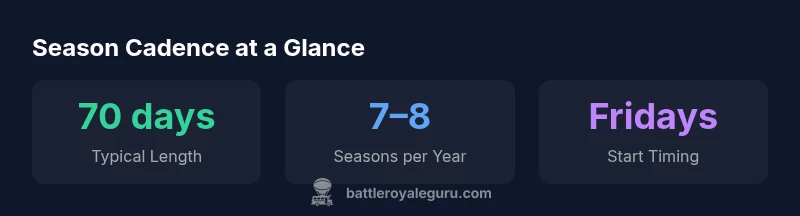
Fortnite season cadence at a glance
| Aspect | Typical Length | Notes |
|---|---|---|
| Season Length | 70 days (63–77) | Baseline cadence across chapters |
| Seasons per Year | 7–8 | Depends on pacing and updates |
| Season Start Window | Fridays (occasional mid-week starts) | Can shift with major updates |
| Battle Pass Duration | 70 days | Aligned with season length |
Questions & Answers
What is the typical duration of a Fortnite season?
Most seasons run around 70 days, with a typical range of 63 to 77 days depending on chapter changes. This cadence supports steady content drops while keeping progression meaningful.
Most seasons last about 10 weeks, give or take, so plan your challenges and XP boosts accordingly.
Do season lengths vary between chapters?
Yes, season lengths can vary with major chapters and updates. Some seasons may be shorter or longer to accommodate new features or events.
Season lengths can change when a new chapter drops or big updates arrive.
How should I plan my Battle Pass if the season ends early?
If a season ends earlier than expected, focus on completing the most valuable challenges first and use XP boosts strategically to reach key tiers before the cut-off.
Finish the important challenges early and save boosts for a late-season push.
Are there any exceptions to the standard cadence?
Occasionally, Epic Games introduces extended events or major patches that shift timing, causing longer or shorter season windows.
Events or big updates can tweak the timing beyond the usual cadence.
How can I track when the next season starts?
Follow official Fortnite channels and popular community trackers; the cadence is usually announced weeks ahead with countdowns.
Check official channels and trackers for the start date.
“Maintaining awareness of the season cadence is crucial for strategic planning in Fortnite. A clear rhythm helps players optimize challenges, quests, and competitive schedules.”
Key Points
- Track the 70-day cadence for planning your progress
- Expect 7–8 seasons per year, with occasional shifts
- Season starts usually on Fridays, with rare midweek launches
- Coordinate Battle Pass goals with the season window to maximize rewards