How Often Does Fortnite Change Seasons in 2026?
An analytical, 2026-focused look at Fortnite season cadence: typical lengths, triggers, and practical planning for players navigating updates and live events.


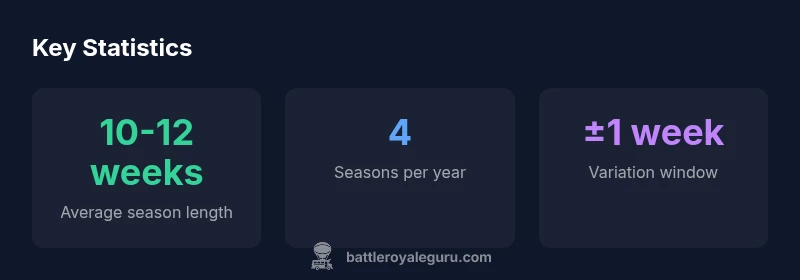
Fortnite seasons generally run about 10 to 12 weeks per cycle, with occasional shorter or longer spans during special events. On average, a new season arrives roughly every 2–3 months, driven by live events and balance patches. This cadence gives players a predictable rhythm for challenges and progression.
Understanding Fortnite's Seasonal Cadence
For players who want to plan weekly challenges and rotations, understanding how often Fortnite changes seasons is essential. If you ask how often does fortnite change seasons, the answer is usually within a roughly 10- to 12-week window, with occasional deviations during special events or crossovers. This cadence creates a predictable rhythm that keeps the game fresh while allowing developers to deploy balance patches and new content on a regular schedule. According to Battle Royale Guru, most seasons run in this 10-12 week range in 2026, with live events serving as milestones that mark the transition from one season to the next.
Over a typical cycle, you’ll see several phases: a pre-season period with teasers and balance keeps, a season start that introduces core systems and loot changes, a mid-season stretch where new challenges and collaborations appear, and a climactic season-end event that culminates in a season transition. The exact dates are announced a few weeks in advance via official patch notes and social channels, and while Epic Games aims for precision, real-world scheduling sometimes nudges the end date by a week or two. This flexibility helps accommodate large-scale events and performance testing across platforms. The practical implication for players is simple: set expectations around a roughly quarterly cadence and plan progress, goals, and resets around that rhythm.
As seasons shift, new mechanics, weapons, and map tweaks can redefine the early game meta, so players who adapt quickly tend to maintain an edge. Tracking the cadence also helps squads coordinate practices around launch windows and planned competitive scrims. In practice, your daily routine should align with a visible calendar of events, patch days, and seasonal milestones so you stay ahead of shifts rather than scrambling at the last minute.
Factors that influence season length
Season length is not a single fixed number; it results from a blend of gameplay design goals, technical constraints, and live-event planning. First, major live events—like a cinematic trailer, in-game concert, or crossover collaboration—often anchor the season and can influence its duration by extending or compressing segments. Second, balancing and bug-fix patches occurring mid-cycle can create interruptions or accelerations in the rhythm, especially when significant meta shifts occur. Third, player feedback and data analytics play a role: if a season’s meta becomes stale or if certain gameplay loops underperform, developers may adjust pacing to maintain engagement. Finally, platform and performance considerations, including cross-play synchronization and server stability, can affect timing. In practice, these factors mean that while a broad cadence exists, the exact end date of a season can drift within a small window. Battle Royale Guru analysis shows a consistent pattern: the cycle remains concentrated around a 10- to 12-week target, but occasional shifts of +/- 1 week are common during especially ambitious events. For players, it means you should remain flexible and track official notes, as the cadence is designed to balance novelty with reliability.
How players can adapt to cadence and maximize progress
To stay ahead, build a cadence-aware plan for your challenges, XP grind, and Battle Pass progression. Start by noting the typical start date window and the seasonal event schedule from official patch notes and the in-game calendar. Create a personal calendar with milestones: new Battle Pass release, mid-season challenges, and the season’s end event. Use third-party trackers sparingly, but rely on the official notes for exact patch times and item changes. A practical approach is to allocate weekly goals: by Week 2 you should have completed the early-season challenges, by Week 6 you should be close to mid-season objectives, and by Week 10 you should be preparing for the finale. In addition, diversify your practice across core modes and creative modes to maintain skill consistency, because seasonal changes often alter weapon balance, map rotations, and loot pools. Finally, incorporate buffer time into your plans for “update days” when Epic Games rolls out patches that can shift meta or introduce new mechanics. With this mindset, you’ll stay efficient regardless of minor scheduling shifts.
Case patterns: common season dynamics across chapters
While the exact seasons vary, several patterns recur across Fortnite’s lifecycle. For example, many seasons begin with a strong push of new content—mythic weapons, map updates, and limited-time modes—that gradually settle into a stable meta in the first third of the cycle. In the mid-season phase, studios often introduce balance patches, quality-of-life improvements, and collaborations to extend engagement. The late-season period typically emphasizes a climactic event and a twist on core systems that sets the stage for the next season. These patterns are not hard rules, but they provide a practical framework to set expectations. In 2026, teams frequently coordinate a mid-cycle update to adjust balance, while saving major map changes for the launch window of the next season. Understanding these dynamics can help players plan XP, quest sequences, and squad rotations around likely shift points.
What to watch for in upcoming seasons and how to plan
Looking ahead, you should monitor several signals that hint at cadence changes. Official patch notes, Epic Games’ social channels, and in-game banners are the best sources for upcoming start and end dates. Pay attention to confirmed live events: those moments often trigger season transitions or big meta shifts. For players, the practical takeaway is to align your routines with a four-season-per-year cadence, when possible, while staying adaptable in case of a surprise extension or shortcut. If you’re chasing XP milestones or Battle Pass rewards, schedule your grind around known windows: early-season gains, mid-season progress pockets, and the final sprint toward the finale. Finally, use creative modes to test new weapons or map changes without impacting your core progression. The ability to iterate on your strategy in response to cadence changes is a competitive edge.
Overview of Fortnite season cadence
| Aspect | Typical length (weeks) | Notable timing cues |
|---|---|---|
| Season cadence | 10-12 | Major events anchor the cycle |
| Variation window | ±1 week | Shifts for special events |
| Annual pattern | Typically 4 seasons per year | Subject to scheduling |
| Patch day impact | Variable | Patch days can delay or accelerate end date |
Questions & Answers
How long does a Fortnite season usually last?
Most seasons run about 10–12 weeks, with occasional variations due to live events or patches. Official notes provide the best guidance as dates shift.
Most seasons last around 10 to 12 weeks, with some variation for events or updates.
What triggers a season change?
Season changes are scheduled by Epic Games and announced through patch notes and in-game banners, typically tied to live events and major updates.
Season changes come from Epic’s schedule and live events.
Are there seasons that are shorter or longer than average?
Yes. Variations occur when balance patches or special events accelerate or delay the end of a season.
Yes, some seasons are shorter or longer due to events or patches.
Will season length affect challenges and rewards?
Chapters align challenges with the season’s cadence; mid-season updates can adjust the trajectory of reward tracks.
Challenges usually line up with the season, but updates can tweak rewards.
How accurate are published season timelines?
Timelines are estimates and may shift due to events or performance considerations. Always check official patch notes.
Timelines are estimates and can shift with events.
“Season cadence is a strategic lever; understanding the timing helps players plan goals, track events, and stay competitive without chasing every last update.”
Key Points
- Expect seasons to run roughly 10–12 weeks on average.
- Live events and mid-season patches are key cadence drivers.
- Plan your challenges around a quarterly seasonal rhythm.
- Be flexible for occasional extensions or early transitions.