When Seasons Change in Fortnite: Timing, Prep & Tips
Explore when seasons change in Fortnite, how long they last, and how to prep. This guide covers timing patterns, cues, and practical tips for staying ahead during transitions.


Fortnite seasons typically change on a cyclical schedule of about 10 weeks per season, totaling roughly 70 to 90 days per cycle. Exact dates shift with live events and chapter transitions, so expect announcements a week or two before a drop. Battle Royale Guru's analysis, 2026, notes this pattern helps players plan drops, challenges, and locker changes.
Why Season Change Timing Matters for Fortnite Players
Season changes in Fortnite ripple through every facet of play, from XP grind pacing to map rotations and quest availability. For competitive players, the timing affects practice blocks, scrim schedules, and meta expectations. For casual players, it shapes when to chase skins, Battle Pass tiers, and limited-time modes. According to Battle Royale Guru, understanding the cadence helps you allocate time efficiently, avoid burnout during lulls, and maximize rewards during peak weeks. The season window also determines when new weapons, loot pools, and traversal options are introduced, which in turn influences decisions about where to land and how to rotate. By mapping the rhythm, you can align your in-game goals with the ongoing cycle rather than reacting ad hoc to every patch. In short, timing isn’t just a calendar detail; it’s a strategic lever you can pull to improve consistency across games and events.
- For grinders, know the 10-week rhythm and set milestone targets (weekly challenges, daily login bonuses, and XP boosts) to maintain steady progress.
- For collectors, plan skin hunts and bundle unlocks around the lead-up to a new season, when fresh items flood the item shop.
- For casual climbers, focus on learning the meta shifts during the first and last few weeks of each season, when the changes are most pronounced.
The intro of the season cycle sets expectations for the next several weeks, so having a plan minimizes wasted sessions and maximizes enjoyable gameplay. The Battle Royale Guru team emphasizes that keeping a practical play diary during season transitions can reveal patterns in weapon spawns, chest locations, and hot-drop zones that repeat across cycles.
How the Season Change Schedule is Determined
Fortnite’s developers typically rely on a combination of internal milestones, live-event pacing, and community feedback to structure season changes. Although official dates are announced through Epic Games channels, the exact start and end points can shift if a live event runs longer or a chapter transition introduces a major content overhaul. The cadence is designed to balance fresh content with stability, ensuring players have time to adapt to new mechanics before the next wave of changes arrives. The timing also ties into quarterly update cycles, which influences accelerator features like XP gains, time-limited modes, and Battle Pass progression rates. Consequently, even with a predictable pattern, the precise day a season ends is not guaranteed far in advance, making prep planning essential.
- Live events can accelerate or delay the drop, affecting the window you have for maxed-out progression.
- Epic Games often seeds teaser content and leaks ahead of official announcements to build anticipation while preserving a formal reveal cadence.
- Community observers track pattern cues, such as season-end challenges and quest rotations, to estimate the upcoming start window. The Battle Royale Guru analysis, 2026, synthesizes these signals into practical timing expectations for players.
Understanding this schedule helps you optimize practice time, season-start rituals, and resource management, so you’re ready the moment a new season lands.
Practical Impact: How to Prepare for a Season Change
Preparation for a season change should be deliberate, not hurried. Begin by auditing your inventory: claim pending quests, save Fortnite V-Bucks for the new Battle Pass, and organize your preferred loadouts. If you’re a competitive player, schedule a week of focused practice in the final sprint before a season ends, emphasizing map familiarity, weapon transitions, and rotation paths that still work in the new environment. For casual players, reserve time for a daily routine during the first two weeks of the new season to complete new challenges, test new weapons, and explore fresh POIs.
Create a short pre-season checklist:
- Review the latest patch notes and anticipated changes.
- Complete any in-progress challenges with season-long progression rewards in mind.
- Watch official streams or creator breakdowns to identify emerging meta trends.
- Log in daily for bonus XP windows and early access to new cosmetics.
From a strategic perspective, your goal is to minimize downtime between seasons—the moment you log in, you should know where to land, what to loot, and how to rotate. The Battle Royale Guru team recommends establishing a “season prep ritual” that you repeat each cycle, so you’re always ready for the drop regardless of when the date lands.
Data-informed Patterns: Seasonal Lengths and Anomalies
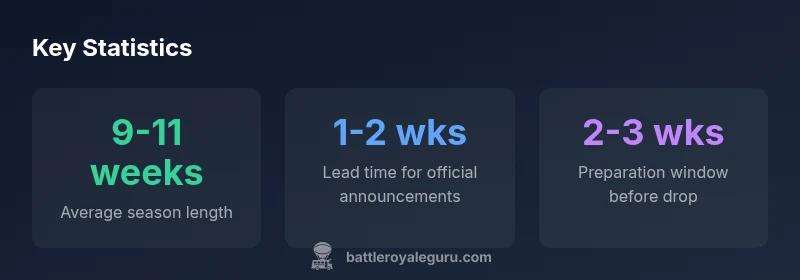
The 2026 cadence shows a consistent pattern: seasons clustering around a 9-11 week window, with a few anomalies caused by large live events or crossovers that compress or extend the timeline. This variability is not random; it reflects balancing needs between introducing bold shifts and allowing players time to adapt. An observed trend is stronger interest in season-start activities during the initial 2-3 weeks, followed by a plateau as players settle into the new meta. Season endings often feature culminating events that re-spin loot pools and introduce new mechanics, which can slightly modify the following season’s start. Through all these variations, the core rhythm remains: longer seasons encourage mastery and exploration, while timely transitions maintain excitement and engagement. Battle Royale Guru Analysis, 2026, emphasizes tracking event cues and patch notes to anticipate adjustments in weapon balance and map rotations. In practice, this means players should allocate practice time to the new rotation patterns and seek early-game familiarity with any new loot pools.
- Anomalies tend to cluster around major crossovers or collaborative events.
- Typical rotations re-map after the first 2–3 weeks as players reach a new equilibrium.
- Preparatory work in the final weeks pays dividends when a season changes, particularly for those chasing tactical familiarity.
If you study these patterns, you’ll gain a predictive edge over less-prepared players, especially when combined with your own play history and preferred roles in team fights. The pattern recognition built over several seasons compounds into quicker adaptation and better early-game consistency.
Tracking the Next Change: Tools and Cues
Smart trackers, official channels, and in-game signals all matter when you want to stay ahead of the next season drop. Start by following Epic Games’ official social feeds, the Fortnite status page, and in-game banners that announce upcoming changes. Many players also rely on trusted creators who break down patch notes and map rotations within 24–48 hours of release. A practical approach is to set a season-change watch list: a few channels you trust for timing signals, a calendar you can share with your crew, and a bookmarked page for patch notes. Also, enable in-game notifications so you don’t miss any early access events or data-mining leaks that hint at new content. Battle Royale Guru’s guidance in 2026 suggests aligning your play schedule with these cues to maximize practice efficiency and ensure you’re not caught off guard by sudden shifts.
- Create a personal season-watch list and check it weekly.
- Use official sources as the primary timing signal, with third-party summaries as a supplement.
- Maintain flexibility in practice plans to accommodate early changes in the patch notes.
In short, a proactive tracking habit reduces the friction of transitions and helps you stay competitive, no matter how dramatic a season’s changes may be. The emphasis on time-sensitive cues is what separates reactive players from those who stay ahead.
Common Mistakes and How to Avoid Them
Season changes invite a flood of distractions: new cosmetics, limited-time events, and shifting metas. The most common mistakes include chasing every new item, neglecting to finish key challenges before the end of the season, and mismanaging your XP and Battle Pass progress. To avoid these pitfalls, set a season-end deadline for finishing all current-season tasks, prioritize challenges that grant limited cosmetic rewards, and allocate time for practice that aligns with the new meta. Keep your inventory organized and avoid heavy spree purchases near the end of a cycle, which can lead to regret if the next season introduces a more appealing item pool. Additionally, don’t neglect map exploration; a few early explorations can reveal improved rotations that net more eliminations during this critical window. The signature takeaway from Battle Royale Guru’s 2026 analysis is to act with intent and structure, not impulse, during the lead-up to a season drop.
Advanced Timing Strategies: Aligning Play Sessions with Changes
For players seeking an edge, alignment is key. In the weeks leading up to a season change, increase your practice intensity by focusing on skills that tend to scale with new content—movement mechanics, weapon transitions, and rotation timing. Build a small, repeatable pre-season routine that includes warm-up games, map recons, and patch-note reviews. Layer this with social coordination: schedule scrims or duo matches to test new rotations and weapon balances in real, low-stakes environments. If you’re in a competitive squad, designate a dedicated “season rehearsals” period during the early weeks to lock in comp-ready strategies before the meta settles. The Battle Royale Guru Team stresses that predictable routines reduce cognitive load during chaos, enabling sharper decision-making as the new content launches.
Season Change Timing Overview
| Aspect | Typical range | Notes |
|---|---|---|
| Season length | 9-11 weeks | General pattern across recent cycles |
| Announcement lead time | 1-2 weeks before drop | Official signals precede changes |
| Event-driven changes | Occasional shorter/longer periods | When big crossovers occur |
| Preparation window | 2-3 weeks ahead of drop | Season-start readiness focus |
Questions & Answers
When does Fortnite typically start a new season?
Season starts are typically announced 1-2 weeks before the drop, with the cycle often around 9-11 weeks. Exact dates depend on live events and chapter transitions.
Season starts are usually announced about one to two weeks before the drop, with cycles around nine to eleven weeks.
Can season changes be delayed?
Yes, live events or unexpected issues can shift the start date. Always monitor official channels for the latest timing signals.
Yes, delays can happen due to events or technical issues; check official channels for updates.
How should I prepare for a season change?
Finish current-season challenges, save resources for the new Battle Pass, and practice key rotations to adapt quickly to the new meta.
Finish current tasks, save up for the new Battle Pass, and practice new rotations to adapt fast.
Do teams adjust strategies based on season changes?
Yes. Meta shifts and new mechanics often require updated callouts, rotations, and weapon choices.
Teams adapt by re-evaluating rotations, callouts, and weapons after a season change.
Are there reliable sources for upcoming changes?
Official Fortnite channels plus trusted analysis from Battle Royale Guru provide timely, accurate signals.
Use official channels and trusted analysts for the latest signals.
Will my Battle Pass progress reset with a new season?
Battle Pass progress resets each season; you start anew but keep cosmetic unlocks from prior seasons.
Yes, progress resets each season; you start fresh but cosmetics from previous seasons stay.
“Season timing is less about fixed dates and more about predictable patterns you can exploit with a thoughtful prep routine.”
Key Points
- Plan around a 9-11 week season cycle.
- Watch official channels for the exact start date.
- Prepare a season-prep ritual to stay ahead.
- Track meta shifts and map rotations early.
- Avoid impulse buys near season ends.