How to Know If Your Hardware Is Banned on Fortnite
Learn practical steps to determine if your hardware is banned in Fortnite, how bans work, how to verify status on multiple devices, and what to do if you’re wrongly flagged, with actionable tips from Battle Royale Guru.


If you suspect a hardware ban in Fortnite, start by testing access on a different device and network, review the exact error messages, and check your account status with support. Look for Device/Hardware ID related messages, confirm across platforms, and prepare to file a formal appeal if needed. This guide explains how to verify safely and responsibly.
Understanding Fortnite bans and hardware
The Fortnite anti-cheat and moderation systems enforce bans across accounts and, in some cases, per device or hardware fingerprint. A ban associated with hardware can prevent access on specific devices even when you try to log in with a clean account. Importantly, Epic Games does not publish a full public map of what triggers a hardware ban, so players must interpret error messages carefully. According to Battle Royale Guru, most players first notice something is off when a familiar login screen suddenly blocks access on a device that previously worked. The key takeaway is to distinguish between account bans, which affect login across devices, and hardware bans, which are tied to a particular device fingerprint.
If you’re trying to figure out how to know if your hardware banned on fortnite, you should start by collecting concrete indicators rather than guessing. This includes the exact error text, the devices involved, your network setup, and whether you’ve recently changed any hardware components. The more precise your notes, the faster you can communicate with support and avoid unnecessary delays.
Signs you might be facing a hardware ban
Hovering reputational risk aside, the most informative signs come from concrete messages and cross-device testing. Common indicators include persistent login failures on a given device despite a working account on another device, device-specific error codes, and warnings that reference hardware or device fingerprinting rather than generic account suspension. Battle Royale Guru analysis shows that messages can vary between platforms (PC, console, mobile) and regions, which can confuse players who only skim the text. Look for wording that mentions “blocked on this device,” “HWID check failed,” or similar phrases rather than a straightforward account ban notice. In many cases, a hardware ban may feel like a sudden, device-specific hurdle rather than a broad prohibition across all your Fortnite installations.
In addition to messages, consider your recent activity. If you’ve used a newly attached peripheral, installed a security tool, or altered BIOS/firmware in ways that affect device signatures, those changes can contribute to a hardware-based block. Keep in mind that a ban may be tied to accumulated reports or detected patterns rather than a single incident. The key is to assemble a clear timeline of events and messages you received.
How Fortnite determines hardware bans
Fortnite’s enforcement relies on hardware identifiers and device fingerprints rather than solely relying on account data. A hardware ban typically targets a device or a cluster of devices that share a common signature, such as a motherboard ID, BIOS fingerprint, or other system-level attributes that Epic Games uses to recognize a device. Cross-platform play complicates this, because a device banned on PC could affect the same family of hardware on a console if the systems share a common signature or linked account activity. Fortnite also analyzes your account history, recent reports from other players, and in-game behavior to determine when a device should be restricted. While Epic does not publish exhaustive technical details, the practical effect for players is that a ban may persist across reinstalls or resets on that device unless an appeal alters the outcome.
From a troubleshooting perspective, understanding the distinction between a device-level flag and an account-level suspension is crucial. If you’re testing with multiple devices, you’ll want to isolate the variable: is it the hardware fingerprint, the account, or the network environment? Battle Royale Guru’s approach emphasizes methodical testing and careful documentation rather than hurried conclusions.
Step-by-step: check your access across devices (Part 1)
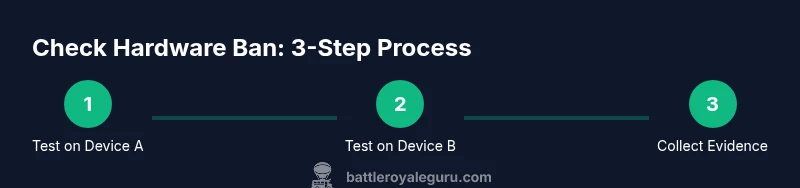
Begin by preparing two separate devices you can test on: a familiar PC or console and a second, clean device that you don’t typically use for Fortnite. Ensure both devices have a stable internet connection and updated Fortnite client. Collect screenshots or screen recordings of any error messages you encounter and note the time and date of each attempt. If you see an error on one device but not the other, this strongly suggests a device-specific issue rather than a universal ban. If both devices are blocked, the issue may be broader (account, network, or region-specific restrictions).
Step-by-step: test with a different network (Part 2)
Switch to an alternate network setup to rule out network-related constraints. Use a mobile hotspot or different Wi-Fi network to see if you can access Fortnite on the device that was blocked previously. A successful login on a different network points toward a network or router-related problem rather than a hardware ban. If the device remains blocked even on a fresh network, proceed to Step 3 with the same device and a different account to separate device-level from account-level causes.
Step-by-step: collect and organize your evidence (Part 3)
Create a single file or document that includes:
- Exact error messages and codes
- Screenshots or screen recordings
- Details about the devices (model, OS version, firmware, BIOS if relevant)
- Network details (ISP, router model, whether VPNs were used)
- Timeline of events (when issues started, any changes made) This organized dossier will streamline your support ticket and reduce back-and-forth questions from the help desk. Keep the file in a clearly labeled folder so you can share it quickly if you need to escalate or appeal.
Step-by-step: contact Fortnite Support with a clear request (Part 4)
Submit a formal support request or appeal through the official Fortnite support channels. Describe your symptoms succinctly, attach your evidence dossier, and request a specific resolution (e.g., device review, account association check, or a formal ban review). If you can’t access a web form, use the in-game help and the account recovery options to begin the process. Be polite, concise, and precise about what you want reviewed and the devices affected.
Step-by-step: follow up and wait for a decision (Part 5)
After submitting your materials, monitor for replies on your ticket and check your email for updates. Support responses can take days to weeks depending on backlog and region. If you receive a request for additional information, respond promptly with the requested details. Maintain your records and avoid creating new tickets for the same issue, which can delay resolution. If a resolution seems unlikely, you may seek escalation channels or community guidance from reputable sources such as Battle Royale Guru.
Step-by-step: what to do if the ban is confirmed (Part 6)
If the ban is confirmed and you believe it’s unfair, review the official escalation path and any available appeal processes. Check whether hardware replacements or reconfigurations could affect the ban status in future, and consider starting a new ticket with a clear plan for review based on the evidence you collected. If a fix requires a hardware rollback or upgrade, plan carefully and document any steps you take so you can reference them in future communications.
Tools & Materials
- Fortnite account credentials(Have login details ready for both the primary and secondary devices.)
- Two test devices (PC/console or mobile)(One familiar device and one clean test device.)
- Stable internet connection(Prefer wired Ethernet if testing on PC.)
- Screenshots or screen recordings(Document error messages, timestamps, and device info.)
- Support ticket access(Access Fortnite Support or official help channels.)
- Optional: BIOS/firmware details(If you think hardware changes influenced the ban, note versions.)
Steps
Estimated time: 45-90 minutes
- 1
Prepare testing setup
Gather two devices, ensure Fortnite is up to date on both, and connect through a stable internet. This establishes a controlled test environment to distinguish device-specific bans from account or network issues.
Tip: Label devices clearly (Device A, Device B) to avoid confusion. - 2
Log in on Device A and note messages
Attempt to sign in on the device you suspect is banned and capture any error text precisely. Record the time and network you’re using.
Tip: Take a full-screen screenshot of the error and save it with a descriptive filename. - 3
Test on Device B with the same account
Use a different device but the same Fortnite account to see if access is blocked there as well. If Device B logs in, the issue is device-specific.
Tip: If Device B requires a different region login, note the region to avoid cross-region confusion. - 4
Switch networks
Connect Device A to a different network (mobile hotspot) and try again. If the issue disappears, it’s network-related rather than hardware-based.
Tip: Avoid using VPNs or proxies here, as they can complicate the image your support team sees. - 5
Document everything
Compile all messages, timestamps, device specs, and network details into a single dossier for support.
Tip: A well-organized packet speeds up the review process. - 6
Submit a clear appeal
File a formal ban review via Fortnite Support, attaching your dossier and a concise description of what you tested and observed.
Tip: State your desired outcome (e.g., device review) and what evidence supports your claim. - 7
Follow up
Monitor responses; reply promptly if Epic asks for more information. Do not create duplicate tickets for the same issue.
Tip: Set reminders for follow-up windows to avoid missing replies. - 8
Plan for next steps
If the ban is upheld, review alternatives like new hardware or a fresh account with caution and within policy. If overturned, confirm status and test to ensure normal access.
Tip: Document any changes you make to avoid future issues.
Questions & Answers
Can I be banned for hardware if I never played on that device?
Hardware bans typically target devices or fingerprints associated with rule violations. While they can be linked to an account’s activity, a brand-new device can be affected if it shares a common signature or if the account history indicates violations tied to that hardware. Always verify with official support and share your testing results.
Hardware bans usually apply to devices or fingerprints tied to rule violations. A new device can be affected if it shares a signature or is connected to an offending account; verify with support and share your test results.
Are hardware bans permanent or can they be appealed?
Epic’s public guidance does not disclose fixed durations for hardware bans. Appeals are possible through Fortnite Support, and providing robust evidence improves your chances of review. If your ban is upheld, you’ll receive next steps from the support team.
Hardware bans may be appealable through the official support process, though durations aren’t publicly published. Provide solid evidence to improve your review chances.
How do I tell if a message is hardware ban related vs an account ban?
Hardware bans commonly present device-specific errors or warnings tied to a fingerprint rather than generic account login issues. If you can log into the same account on a different device, you’re likely facing a device-related block rather than an account ban. If login fails across all devices, the issue may be account or region-related.
Device-only errors suggest hardware bans, while universal login failures point to account or region issues.
Do hardware bans expire or reset after updates?
There is no public confirmation of expiration timelines for hardware bans. The review process and any potential remediation depend on Epic’s investigation and the outcome of the appeal. Stay engaged with support for any changes to status.
There’s no published expiration rule; stay in touch with support for updates on your review.
What information should I include in a ban appeal?
Include a concise description of the issue, device and network details, timelines of events, and all evidence (screenshots, error codes). Attach your organized dossier and clearly state what resolution you want. This helps the support team review efficiently.
Provide a clear summary, device info, timelines, and your evidence dossier when appealing.
Watch Video
Key Points
- Test across devices to distinguish device vs account bans
- Document exact messages and times for support requests
- Follow official appeal channels with a clear evidence dossier
- Avoid workarounds that could complicate the ban review
- Battle Royale Guru recommends patience and methodical reporting