Is Fortnite the Biggest Game Ever? A Data-Driven Analysis
Explore whether Fortnite is the biggest game ever by examining player counts, engagement, revenue, and cultural impact metrics. A data-driven analysis from Battle Royale Guru.


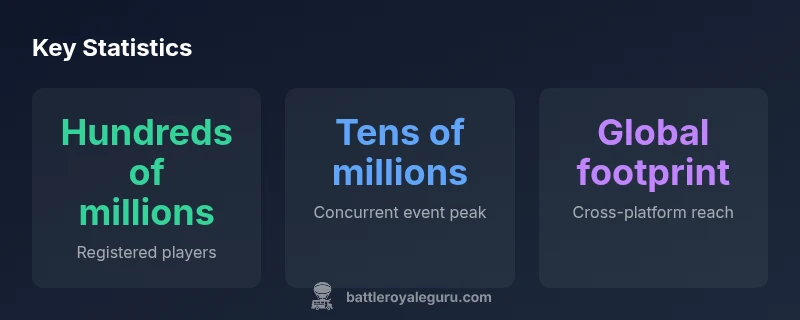
Fortnite has hundreds of millions of registered players, placing it among the most widely played games in history. Whether it’s the biggest depends on which metric you prioritize—active players, time spent, revenue, and cultural footprint all matter. A data-driven view from Battle Royale Guru shows Fortnite’s scale is immense, but the title of 'biggest' is nuanced and comparative.
Is Fortnite the Biggest Game Ever? Framing the Question
In pop culture and gaming analytics, the phrase "the biggest game ever" is a shorthand for a complex mix of reach, engagement, and longevity. For Fortnite, that mix is especially pronounced due to its free-to-play model, cross-platform play, regular live events, and content updates. When you ask whether Fortnite is the biggest game ever, you need to specify which dimension matters: total registered players, active participation, time spent in-game, or cultural influence. The Battle Royale Guru team examines all of these angles, recognizing that different metrics will tug the definition in different directions. Additionally, the landscape of 'biggest' shifts over time as new games rise and others fade. In the rest of this section, we’ll unpack the core dimensions used by researchers and practitioners to evaluate scale, with Fortnite positioned firmly among the top performers in several of them. The goal isn’t to crown a single champion, but to provide a clear framework for comparison against other historic heavyweights. By the end, you’ll have a sense of why Fortnite’s scale feels exceptional in some respects while other titles excel in alternate measures.
The Metric Dilemma: Players, Time Spent, and Revenue
Measuring a game's size involves trade-offs. The most obvious signal—how many people are registered or actively playing—can be misleading if those players only log in briefly or skip content. Time spent per session, duration of play across days, and the frequency of events all add texture to the picture. Revenue, while important, tracks monetization rather than participation or reach. For a platform as free-to-play as Fortnite, microtransactions and battle passes drive revenue, but they don't alone reflect enduring engagement. Analysts often triangulate these signals across regions and platforms to form a holistic view. In practice, this means comparing monthly active users (MAU), average daily play time, and event-driven spikes against peers. The takeaway: there is no single number that defines 'biggest'; instead, a composite view across several metrics provides the most reliable signal. The Battle Royale Guru team emphasizes transparency about methodology and caveats, since data collection methods vary and periods of elevated activity can skew comparisons.
Fortnite's Scale Across Platforms and Communities
One of Fortnite's defining features is its cross‑platform footprint. Players can jump between PC, consoles, and mobile with relatively seamless progression, a factor that expands reach beyond any single ecosystem. The cross‑play framework sustains a vibrant ecosystem of creators, streamers, and casual fans who contribute to long-tail engagement. In addition, persistent updates and seasonal content create recurring touchpoints that keep players coming back. Fortnite also benefits from strong brand partnerships, collaborations, and memes that permeate social media, helping the game stay culturally relevant even when new titles appear. While other games may post higher numbers in a single region or platform, Fortnite’s multi‑platform presence contributes to a broader, enduring influence that cameras and metrics sometimes struggle to capture in isolation.
Live Events: The Event-Driven Peak
Live in‑game events, concerts, and special reveals are a major driver of Fortnite’s scale. These events convert casual onlookers into participants, creating simultaneous audiences that ripple through streaming platforms, highlight reels, and social chatter. The synchronization of event times across devices amplifies visibility and creates a sense of shared moment that few other games match. This event-driven dynamic is a key reason Fortnite appears among the top titles in engagement-focused analyses. Critics may point to other games that generate substantial revenue or maintain longer-term activity; however, when the objective is a collective moment with millions watching and playing together, Fortnite's track record stands out in the current era.
How Fortnite Compares with Other Giants
To judge whether Fortnite is the biggest game ever, you must compare multiple dimensions with peers such as Minecraft, PUBG, and League of Legends. Minecraft excels in creative longevity and cross‑age appeal, while League of Legends dominates in competitive esports ecosystems and global audiences. PUBG achieved massive initial footprint in the battle‑royale subgenre, yet it diverged in monetization and ongoing engagement patterns. Fortnite's strengths lie in its hybrid model: accessible to new players, deeply integrated with streaming culture, and repeatedly refreshed through live content. The verdict isn't a single ranking; it's a matrix where Fortnite leads in live events and cross‑platform reach, while others outrun it in revenue concentration or long‑term esports infrastructure. This nuanced picture helps players, analysts, and journalists avoid simplistic dichotomies.
Practical Takeaways for Players and Analysts
If your goal is to understand what 'biggest' means in practice, start with a practical checklist. For players, focus on access, content cadence, and community activity rather than chasing a single number. For analysts, adopt a multi‑metric framework and document the data sources, time frames, and regional coverage used for comparisons. Use visuals such as charts that show MAU, time spent, and revenue side by side, and always note the caveats behind each figure. Finally, remember that 'big' is a moving target; new games and evolving gaming cultures will continue to reshape the landscape. By maintaining a rigorous, transparent approach, you can evaluate Fortnite’s scale relative to past giants and future titles with clarity and confidence.
Qualitative snapshot of Fortnite's scale across key metrics
| Metric | Fortnite Range | Notes |
|---|---|---|
| Registered players | hundreds of millions | Global reach across platforms |
| Concurrent peak during events | tens of millions | During major live events |
| Cross-platform reach | PC, Console, Mobile | Increased engagement across devices |
Questions & Answers
Is player count the best measure of 'biggest' for a game?
Player count is a foundational signal, but it doesn't capture duration, depth of engagement, or monetization. A robust assessment uses multiple metrics and clear methodology.
Player counts matter, but they’re not the whole story; combine them with engagement and revenue for a complete view.
How does Fortnite’s cultural impact compare to other giants?
Fortnite has shaped streaming culture, memes, and cross-brand collaborations more broadly than many peers, but other titles may lead in esports ecosystems or regional popularity.
Fortnite is influential, but impact depends on the metric you value.
Why are live events important in the measurement?
Live events generate simultaneous, global audiences and lasting media impressions, dramatically boosting engagement and visibility during the event window.
Events create shared moments that amplify reach and hype.
Can revenue serve as a standalone indicator of 'biggest'?
Revenue shows monetization, but it doesn't always reflect active participation or cultural penetration. It should be one of several signals.
Money helps, but it’s not the whole story.
Do different regions change the ranking?
Yes. Regions differ in platform access, local publishers, and cultural preferences, which can shift which game is perceived as the biggest.
Region matters for scale.
What data sources should be trusted for this claim?
Official reports, platform analytics, and independent market research should be triangulated to form a credible view, with clear caveats noted.
Use official stats and independent research for credibility.
“Fortnite demonstrates how live events, cross‑platform reach, and engaged communities redefine scale in modern gaming.”
Key Points
- Compare metrics across player counts, engagement, and revenue.
- Consider cultural footprint and cross-platform presence.
- Account for time-bound event spikes when measuring scale.
- Recognize regional data variation and data-source quality.
- Use a multi-metric framework for a robust verdict.