Playing Fortnite: A Practical How-To Guide
Learn practical, step-by-step strategies to play fortnite effectively—from modes and loadouts to building, aiming, and teamwork. Battle Royale Guru guides you with actionable tips and troubleshooting.


By the end of this guide you will know how to play fortnite more effectively: choose a mode, set up your hardware, learn core controls, practice building and aiming, and coordinate with your squad. This step-by-step approach reduces early frustration and accelerates improvement. According to Battle Royale Guru, consistency beats talent in the early weeks.
Core goals when you play fortnite
Playing fortnite combines quick decision-making, precise aiming, and smart resource management. The core goal isn’t just winning every fight; it’s surviving longer, learning from each encounter, and gradually expanding your comfort zone in both building and combat. According to Battle Royale Guru, beginners benefit most from a calm, steady practice routine that focuses on fundamentals before chasing flashy plays. In this section we’ll define practical milestones: survive first 10 minutes consistently, build corrective structures under pressure, and maintain map awareness across different rotates. If you keep these goals in mind, you’ll reduce frustration and accelerate your learning curve while enjoying the game’s dynamic pace.
- Set a clear target for every session (e.g., improve your building edits under pressure).
- Track progress with a simple notebook or app to review after each match.
- Prioritize learning one new mechanic per session to avoid overload.
- Remember that your goal is long-term improvement, not quick wins.
While you play fortnite, stay mindful of your comfort level with input devices and screen settings. Small changes in sensitivity, field of view, and audio cues can dramatically alter your performance. Establish a routine that balances practice, rest, and review, and you’ll see compounding improvements over weeks.
Game modes and how to pick your path
Fortnite offers several modes, with Battle Royale remaining the flagship experience. Zero Build emphasizes gunfighting and positioning rather to build mechanics, while Build mode rewards rapid construction and aggressive pacing. For newcomers, Zero Build often provides clearer fights and faster learning cycles, whereas Build mode builds long-term mechanical skills but can be overwhelming initially. Our approach is incremental: start with Zero Build to grasp aiming and movement, then introduce building drills in short, focused sessions.
To choose your path, consider your hardware and play style. If you prefer minimal setup and quick games, Zero Build on a console with a controller can be comfortable. If you’re on PC and enjoy mastery over edits, Build mode lets you develop advanced techniques. Remember: you can switch modes between matches to broaden your skill set. Battle Royale Guru analysis shows that a balanced approach—spending time in both modes—yields the most consistent improvement over time.
Typical progression:
- Start with Zero Build to learn movement and aiming.
- Add Building drills gradually, focusing on basic structures.
- Mix in Build fights against AI or friends to reinforce edits under pressure.
- Transition to a full Build match when you’re comfortable with core mechanics.
As you experiment, keep a simple log of what works for you and what doesn’t. This targeted practice helps you convert everyday experiences into skill.
Practical tip: avoid changing too many settings at once. Small, incremental changes in sensitivity and keybinds reduce confusion and speed up your learning curve.
Movement, building, and aiming fundamentals
Movement, building, and aiming are the three pillars of Fortnite competence. Start by mastering the basics of sprint, jump, crouch, and aim in controlled settings. Your movement should feel deliberate: strafing, peeking, and using cover will determine engagement outcomes more than raw accuracy. From there, introduce building. Begin with simple walls and ramps to block shots and gain advantageous angles. Editing is the next frontier: practice quick edits to create windows for shots or escape routes.
Aiming is a learned skill, built through repetition and adaptive target practice. Use a consistent crosshair anchor and focus on headshots during reaction drills. For aiming practice, consider dedicated warm-ups like tracking enemies in a controlled arena or practicing weapon-specific recoil in a private lobby. The goal is to reduce reaction time and improve precision under stress.
In terms of strategy, aim for high-ground advantages, rotate to loot-rich zones efficiently, and manage your resources to avoid being caught under-equipped. A calm, deliberate approach often outperforms reckless aggression. Battle Royale Guru notes that a strong foundation in movement and aim compounds quickly with building, making you a formidable opponent in any engagement.
In all cases, maintain situational awareness. Keep an eye on the map, listen for audio cues, and anticipate opponents’ rotations. Small habits—like checking for enemy builds before stepping into a room—can prevent surprise ambushes and keep you alive longer in most matches.
Map knowledge, loot, and rotations
Fortnite’s map rewards those who know where to land, where loot concentrates, and how to rotate between zones. Start by selecting a landing spot with reliable loot without heavy competition. Learn the common loot spawns for weapons, shields, and healing items, so you can prioritize your early-game path. Understanding safe rotations—paths that minimize exposure while maximizing loot—reduces risky encounters and buys you time to plan your next move.
Rotation timing matters: the storm shift will push you toward new tactical advantages if you read the map early. Use edges of circles to limit exposure to players camping the center while looking for better loot or safe chokes for fights. Keeping an eye on high-traffic areas but visiting them with purpose—like grabbing a specific weapon or upgrade bench—helps you stay efficient.
Shareable map knowledge is valuable. Create a simple reference of hot zones, loot spots, and safe routes for each major landing area. Review your game replays to notice patterns where rotations paid off and where they didn’t, then adjust your strategy accordingly. As you play fortnite, map literacy becomes a natural advantage that compounds across many games, giving you consistent long-term dividends.
Communication, squads, and ping systems
Team coordination is often the deciding factor in Fortnite’s team modes. Clear communication reduces friction and increases your odds in every encounter. Use concise callouts like “enemy above,” “loot here,” or “fall back” to keep your squad aligned. The built-in ping system is a powerful tool—use it to mark loot, enemy positions, and safe routes when voice chat isn’t possible.
In squads, assign roles based on each player’s strengths. One player can hold the front while another supports with healing items, and another handles revives. Establish a basic kill-confirm routine and a quick rotation plan for late-game circles. Practicing quick decision-making as a unit will improve your survivability and your chance to coordinate decisive team fights.
If you’re playing solo, cultivate a mental checklist for post-engagement analysis. Note what you could have called out earlier and how you might have used teammates’ actions to your advantage. The more you practice communication, the less you’ll rely on luck and the more you’ll rely on coordinated effort.
Performance settings, hardware, and troubleshooting
A smooth game experience is foundational to “playing fortnite” well. Start by confirming you’re running Fortnite on hardware that meets or exceeds the recommended specs for your platform. Use wired internet when possible to reduce latency, and enable a low-latency display mode if your monitor supports it. In-game settings should favor consistent frame rate over maximal cosmetic quality—aim for a stable FPS that your hardware can sustain in late-game combat.
Fine-tune your sensitivity in small increments, test in private matches, and adjust keybinds to fit your comfort. Disable nonessential overlays or third-party apps that consume CPU cycles or cause input lag. If you encounter frequent stutters, check for background updates, update drivers, and consider lowering shadow or texture settings for a more stable experience. Network troubleshooting like using a direct Ethernet connection or lowering the router’s QoS on game traffic can lead to smoother matches.
From the optimization perspective, avoid dramatic upgrades before you’re sure about your needs. The goal is consistency and reliability, not flashy visuals. Battle Royale Guru emphasizes that a stable setup reduces frustration and lets you focus on learning the fundamentals of playing fortnite rather than fighting your gear.
A practical practice plan and progression path
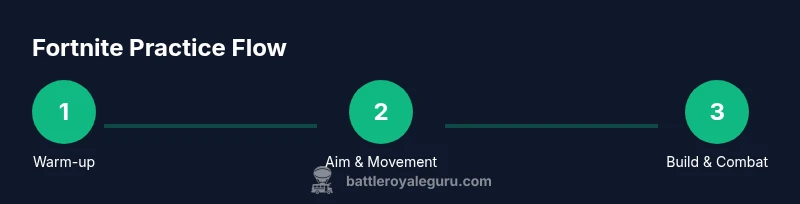
A structured practice plan accelerates progress more than random play. Start with a 4-week cycle: Week 1 focuses on movement and aim, Week 2 adds building and editing basics, Week 3 introduces limited engagement in controlled fights, and Week 4 emphasizes rotations and endgame scenarios. Each week should include short, focused practice sessions, followed by a review of your replays to identify patterns and weak points. Track your improvements in a simple log and adjust your goals for the next cycle.
In daily practice, dedicate time to three core drills: (1) aim and recoil control with a few staple weapons, (2) basic building and editing sequences, and (3) rotation planning using the map. Include one longer scrimmage or warm-up match to apply what you learned in real-game scenarios. You don’t need to master everything at once; you’ll build proficiency by consistently applying small improvements across sessions. Remember to celebrate incremental progress—small gains compound into real skill over time.
As you implement this plan, maintain balance with rest periods and hydration. A sustainable routine that blends deliberate practice with genuine play leads to durable skill development and long-term enjoyment of playing fortnite.
Common mistakes to avoid and how to fix them
Many new players fall into predictable traps: overextending in fights, neglecting upgrades, or chasing eliminations instead of safer rotations. A common fix is adopting safer, repeatable decision-making processes, such as always checking for third-party threats after a skirmish or ensuring you have an escape route before engaging. Another frequent error is neglecting resource management; always keep track of your building mats, ammo, and healing items and practice efficient looting.
To fix these issues, create a short post-match checklist: did you control your position, did you have enough mats, did you rotate appropriately, and did you avoid underestimating enemy numbers? Use your replay reviews to identify patterns like predictable fight choices or poor healing timing. Finally, don’t be afraid to slow down your pace intentionally during practice sessions; tempo control helps you make better strategic decisions when it matters most—late-game awareness and positioning.
Practice reframing and progression review
In this section we’ll consolidate the learning through a practical approach to continued growth. After each play session, mark one concrete improvement and one thing you’ll deliberately change next time. Schedule weekly reflections to decide whether you’re building the right skills and adjust your training accordingly. By focusing on fundamentals, you’ll build a robust foundation that scales into more complex mechanics and game-time decisions.
Tools & Materials
- PC or console with internet connection(Stable connection; wired ethernet preferred when possible)
- Headset with microphone(Clear voice chat for squads)
- Controller, keyboard, and mouse (or controller-only setup)(Choose input method you're comfortable with)
- Display with low input lag(High refresh rate monitor or TV helps tracking)
- Fortnite account (Epic Games)(Link your platform account for cross-play)
- Notepad or digital planner(Track goals and progress)
- Water and short breaks(Stay hydrated to maintain focus)
Steps
Estimated time: 90-150 minutes
- 1
Choose platform and mode
Decide whether you’ll play on PC, console, or cloud; select the first mode to practice (Zero Build is beginner-friendly).
Tip: Stick with one mode for the first week to build consistency. - 2
Set up your hardware and network
Connect your console or PC, check your internet stability, and adjust display settings for smooth performance.
Tip: Use a wired connection when possible to reduce lag. - 3
Create or log in to your Fortnite account
Ensure your Epic Games account is linked and ready for progression and cross-play.
Tip: Enable two-factor authentication for account security. - 4
Optimize in-game settings
Tune sensitivity, aim assist, graphics, and UI scale to balance clarity and control.
Tip: Test changes in private lobbies before live matches. - 5
Learn core controls and movement
Practice sprint, jump, crouch, aim, and basic strafing; isolate movement until fluid.
Tip: Use a 5-minute movement drill before every session. - 6
Practice landing, looting, and rotations
Choose a landing spot, optimize loot path, and plan rotations to safe zones.
Tip: Avoid crowded zones early; map awareness pays off later. - 7
Build basics and editing
Master walls and ramps; practice quick edits to create openings or escapes.
Tip: Use simple edit routes until you reach reliable speed. - 8
Aim and combat fundamentals
Drill target acquisition, recoil control, and weapon-specific tactics.
Tip: Limit weapon swaps mid-fight to avoid confusion. - 9
Play with a squad and communicate
Coordinate with teammates, ping efficiently, and minimize chatter during fights.
Tip: Assign roles to optimize team synergy. - 10
Review replays for improvement
Analyze your matches to identify mistakes and successful choices.
Tip: Note one actionable improvement per session. - 11
Create a personal practice routine
Develop a weekly plan with focused drills and build-in rest days.
Tip: Consistency beats intensity in the long run. - 12
Track progress and adjust goals
Keep a simple log of wins, losses, and evolving metrics; adapt as you improve.
Tip: Celebrate small wins to stay motivated.
Questions & Answers
What is the best Fortnite mode for beginners?
Many new players start with Zero Build to focus on aiming and movement without the complexity of building. Once comfortable, gradually add Build mode to learn edits and structures.
Zero Build is often the easiest starting point for beginners, with Build mode added as you gain confidence.
How long should I practice each day to improve?
Consistency matters more than duration. Aim for 20-30 minutes on weekdays and longer sessions on weekends, then review your performance to refine your goals.
Aim for 20 to 30 minutes most days, and longer practice on days you have time to review your gameplay.
Do I need to upgrade hardware to play better?
Most improvements come from learning and practice, but stable performance helps. Prioritize a reliable connection and comfortable input devices before chasing high-end gear.
Good practice and steady settings matter more than expensive gear; ensure stable performance first.
How can I improve aim quickly?
Regular aim drills, controlled practice with specific weapons, and consistent sensitivity settings help. Pair drills with replay analysis to correct bad habits.
Do focused aim drills and review your matches to fix aiming habits quickly.
What common mistakes should beginners avoid?
Over-fighting without a plan, poor resource management, and neglecting rotations can cost you late-game. Use a simple post-fight checklist to stay disciplined.
Avoid fights without a plan and check your rotations after each engagement.
Should I play solo or with friends?
Playing with friends can accelerate learning through communication drills, but solo games help you practice independence. Try a mix to maximize growth.
Mix solo games with squad play to build both independence and teamwork.
Watch Video
Key Points
- Master core movement, building, and aiming basics.
- Choose a mode to practice first, then gradually add building.
- Rotate smarter by using map knowledge and loot patterns.
- Review replays to drive continuous improvement.