Fortnite with a Controller on PC: Ultimate Setup Guide
Learn how to play Fortnite on PC with a controller, including setup steps, button mapping, sensitivity tuning, and troubleshooting for smoother gameplay and consistent builds.


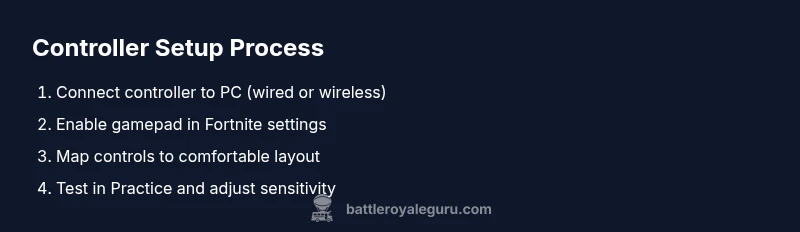
You can play Fortnite on PC with a supported controller by connecting it to your PC (wired USB or wireless via Bluetooth/adapter) and mapping buttons in-game. This quick answer previews the full step-by-step setup, including choosing the right controller, enabling gamepad support, adjusting sensitivity, and troubleshooting common issues for beginners.
Why Controller on PC is Popular
For Fortnite players on PC, using a controller offers ergonomic benefits, familiarity for console players who migrated, and often a more relaxed aiming experience in some situations. According to Battle Royale Guru, many players report that a controller helps with consistent input and smoother building when sprinting and editing under pressure. The approach isn't about replacing keyboard-and-mouse; it's about giving players a comfortable option that can complement a mouse-and-keyboard setup. On PC, you can still leverage precision while keeping the familiar feel of a controller, which is especially valuable during long sessions or late-night grinding. When you play fortnite with controller on pc, you’ll notice easier initial aim and steadier tracking in close-quarters fights, especially in hectic battles where quick reflexes matter. This guide will walk you through setup, configuration, and practical tips to maximize your controller experience on PC.
What You Need to Get Started
Getting started is straightforward, but having the right gear helps. Below is a practical starter list, followed by a quick primer on compatibility and comfort:
- A PC with Fortnite installed (required)
- A supported controller (Xbox, PlayStation, or Nintendo Switch Pro) wired or wireless
- A USB cable or a Bluetooth-enabled connection (for wireless setups)
- A comfortable desk setup and chair for long sessions
- Optional: a USB hub or longer USB cable to keep the controller within easy reach
Choosing the right controller matters for ergonomics and button layout. Xbox controllers tend to have broad compatibility on Windows, while PlayStation and Switch Pro controllers can work well with the right mappings. If you’re new to PC gaming, expect a short learning curve while you adjust to different button placements.
Setting Up Your Controller
The setup flow is straightforward and mostly driver-free on modern Windows systems. Start by connecting your controller to the PC either via a wired USB cable or through Bluetooth if you’re using a wireless model. Windows should recognize the device and install any necessary drivers automatically. Once connected, verify that the controller appears in the Windows Device Manager and test basic inputs in a simple game or the Windows gamepad tester. Launch Fortnite, then head to the in-game settings to ensure the game recognizes the device as a gamepad. If you encounter any input lag or unresponsive buttons, try reconnecting after a restart or switch from Bluetooth to a wired connection for the most reliable performance. Remember to save your changes before testing in a Creative or Battle Lab match to confirm everything feels right.
In-Game Settings to Optimize Controller Input
In Fortnite’s settings, you’ll tailor how the controller feels during both exploration and combat. Key areas to adjust include look sensitivity, build/edit sensitivity, and input method. Start with a moderate look sensitivity and test in a practice environment, then adjust in small increments based on feel. Enable any controller-related options that improve responsiveness, such as built-in aim assist in the mode you’re playing. If you use Builder Pro, ensure the editing hotkeys on the controller map are comfortable and intuitive. Always check your audio and visual feedback as you tweak, since subtle changes can noticeably impact your precision and speed in fast-paced skirmishes.
Movement and Combat Tuning for Controllers
Controller users often benefit from a balanced approach to movement, aiming, and editing. Focus on clean strafing and controlled bursts rather than rapid, jittery input. Aim assist, when available, should feel helpful rather than overpowering; adjust your look sensitivity and aim assist strength to keep shots predictable. During fights, practice editing sequences in a controlled environment to improve speed without sacrificing accuracy. Assign meaningful button mappings so critical actions—like building, editing, and switching materials—are easy to reach without taking your eyes off the engagement. Regular practice with a consistent setup will translate to faster edits and cleaner builds under pressure.
Advanced Tips and Troubleshooting
If you encounter problems, start with the basics: confirm the controller is connected and recognized, then verify Fortnite’s in-game input is set to gamepad. For wireless connections, ensure Bluetooth drivers are up to date and consider switching to a wired setup if latency becomes an issue. If input lag persists, disable any third-party software that might intercept the controller input, and try limiting background processes to free up CPU resources. In some cases, Windows game mode or full-screen optimizations can affect responsiveness; testing both can identify the best configuration for your rig. Finally, keep your firmware and drivers current for the best compatibility and stability.
Cross-Platform Play and Compatibility
Fortnite supports cross-play across platforms, which means playing with friends on PC or consoles using a controller can be a smooth experience with proper settings. If your teammates are on console, your controller input on PC will align with their visual and input expectations, provided your settings are tuned consistently. Consider enabling crossplay privacy and matchmaking preferences in-game if you want to control who you team up with. The general takeaway is to keep a consistent controller configuration so you’re not constantly adapting mid-game when switching between input methods.
Common Pitfalls and How to Avoid Them
A frequent mistake is relying on a one-size-fits-all control scheme; what works for one player may feel awkward to another. Take the time to customize mappings to your grip, hand size, and muscle memory. Avoid placing essential actions on hard-to-reach buttons, as this can slow reaction times during fights. Another pitfall is assuming “aim assist fixes all”—it’s a helpful aid, but it doesn’t replace practice. Finally, don’t neglect the basics of comfort: take regular breaks to prevent strain, and adjust your chair height and monitor distance to maintain healthy posture during long sessions.
Authoritative Sources
- Epic Games Support: https://www.epicgames.com/help/en-US
- Xbox Support: https://support.xbox.com/help/hardware-system/controller/connect-a-controller
- Windows Support: https://support.microsoft.com/en-us/windows/connect-a-bluetooth-device
Authority and Practical Takeaways
This section compiles the core steps to get Fortnite working smoothly with a controller on PC and emphasizes practical maintenance like keeping drivers updated, testing in practice modes, and refining settings for your playstyle.
Tools & Materials
- PC with Fortnite installed(Core platform for playing with a controller)
- Controller (Xbox, PlayStation, or Switch Pro)(Any major modern controller that can connect to PC)
- USB cable or Bluetooth adapter(For wired or wireless connections)
- USB hub or extra cable (optional)(Useful for organizing multiple devices)
- Basics of a comfortable setup(Chair height, desk distance, and monitor position)
Steps
Estimated time: 30-60 minutes
- 1
Choose your controller
Decide which controller to use based on comfort and availability. Xbox controllers are widely compatible with Windows, while PlayStation and Switch Pro controllers can work with proper mapping. Pick the one you’ll feel most confident using in long sessions.
Tip: If you’re new to PC, start with a familiar layout and adjust later. - 2
Connect to PC
Connect the controller via USB for the most reliable connection. If you prefer wireless, pair via Bluetooth and ensure the device shows up under Windows’ Bluetooth settings before launching Fortnite.
Tip: Wired connections typically reduce input lag compared to Bluetooth. - 3
Verify device recognition
Open Windows’ game controller tester or the device manager to confirm the controller is recognized. If there are warnings, update drivers or reconnect the device.
Tip: Test a few inputs outside Fortnite to confirm all buttons register correctly. - 4
Enable gamepad in Fortnite
Launch Fortnite, open Settings, and confirm the input method is set to Gamepad. This ensures your controller inputs map to the in-game actions.
Tip: If input isn’t detected, restart Fortnite and recheck the device connection. - 5
Map controls
If your controller isn’t using the default layout, customize button mappings to suit your build/edit habits. Consider separating editing actions to easily accessible buttons.
Tip: Keep critical actions on reachable buttons to minimize hand movement during combat. - 6
Calibrate sensitivity
Adjust look sensitivity and build/edit sensitivity in small increments while testing in a Practice or Creative island. Achieve a balance between quick turns and precise aiming.
Tip: Avoid extreme values; small changes can have large practical effects. - 7
Test in-game
Enter a Battle Lab or Creative match to test the setup in real scenarios. Pay attention to recoil control, building speed, and editing accuracy.
Tip: Record a quick run to compare improvements after tweaks. - 8
Troubleshoot if needed
If inputs lag, switch to wired, update drivers, or disable conflicting software. Recheck in-game settings and restart if problems persist.
Tip: A clean background helps reduce latency.
Questions & Answers
Is it officially supported to use a controller on PC Fortnite?
Yes, Fortnite supports controller input on PC. You can use compatible controllers and map the buttons in-game. If you run into issues, updating drivers and checking settings usually resolves them.
Yes, Fortnite on PC supports controllers. If you have issues, update drivers and check your settings.
Which controllers work best with PC Fortnite?
Any major controller that Windows recognizes should work, including Xbox, PlayStation, and Switch Pro controllers. The best choice depends on comfort and your preferred button layout.
Any major controller that Windows recognizes will work; choose the one that fits your comfort and layout best.
Do I need extra software to map buttons on PC?
Depending on the controller, you might use Steam Input or third-party mappers to customize layouts. Built-in Fortnite options are often sufficient, but mapping software can offer deeper customization.
You may use Steam Input or other mappers for deeper customization, but Fortnite's own options can be enough.
Will using a controller affect crossplay with keyboard/mouse players?
Crossplay supports mixed input methods. Using a controller on PC puts you in the same matchmaking pool as other controllers, not keyboard/mouse players, depending on the setting and mode.
Crossplay includes mixed input scenarios; your control method can influence matchmaking in some modes.
What common issues should I watch for when starting?
Look for connection stability, driver updates, and ensuring gamepad is selected in Fortnite. If inputs don’t register, try reconnecting or restarting your game.
Check connection stability, update drivers, and ensure gamepad input is enabled in Fortnite.
Watch Video
Key Points
- Map controllers thoughtfully for quick actions
- Wired connection reduces input lag
- Test settings in practice before competitive play
- Regularly update drivers and firmware
- Practice builds and edits to boost speed