Why Fortnite Won’t Load Into a Game: Urgent Troubleshooting Guide
Experiencing why is fortnite not loading into a game? This urgent troubleshooting guide explains quick fixes, diagnostics, and step-by-step plans to get you back in match ASAP.


Start with the basics: verify your internet stability, check Fortnite server status, and restart the launcher. If the problem persists, patch the game, clear caches, and flush DNS. If it still fails, follow the diagnostic flow to identify the culprit and apply the recommended fixes. This quick path covers common causes like network throttling, outdated drivers, corrupted game files, or launcher issues.
Why Fortnite Not Loading into a Game: Core Context
If you’re asking why is fortnite not loading into a game, there are several common culprits that pop up across platforms. Most issues fall into a handful of buckets: server-side outages, network bottlenecks, launcher or client problems, and corrupted game data. The Battle Royale Guru team finds that, in 2026, server status and local network conditions account for the majority of load failures among players. Before diving into fixes, confirm you’re using a stable connection, your account is in good standing, and you’re not running conflicting background apps. Keep your system time and date accurate, disable VPNs if not required, and ensure your drive has enough free space for temporary patch data. With these basics confirmed, you can move to targeted checks. This quick context sets expectations and saves you from chasing phantom causes.
Common Triggers You’re Likely to See
Across platforms and regions, several recurring triggers cause Fortnite to fail at loading. Server outages or regional congestion top the list, followed by corrupted local files, outdated launchers, or a misbehaving firewall. Users often overlook simple friction points like background downloads, VPNs, or device power saving modes that throttle connections. Another frequent factor is insufficient disk space for patch data, which can stall or crash a load sequence. The Battle Royale Guru team notes that many players report intermittent failures that disappear after a simple restart or after the next patch. Recognizing these triggers helps you separate symptoms from root causes and aligns your next steps with a solid plan.
Network & System Readiness Checks
Begin with network checks that anyone can perform in under ten minutes. Test your internet speed to confirm you’re above Fortnite’s recommended minimums, verify you can access other online services without latency, and try a wired connection if you’re on Wi-Fi. Check your router settings and ensure UPnP is enabled, QoS is not blocking Fortnite, and no firewall rule is throttling traffic. On PC, run a quick system scan to rule out malware or background processes stealing bandwidth. Make sure your computer’s clock is synchronized with the internet time, and disable VPNs or proxies unless you need them for other services.
From a data perspective, Battle Royale Guru Analysis, 2026, shows that most load failures originate from local network configuration or temporary server stress rather than a permanent game issue. This reinforces the value of starting with network checks before diving into more invasive fixes.
Launcher, Client, and Cache: Quick Wins
If you’ve confirmed network stability, it’s time to address Fortnite’s launcher and game client. Ensure your launcher is updated to the latest version, as older launchers can fail to initialize new patches. Clear the launcher cache and restart the client. On consoles, verify storage integrity and free space; on PC, run as administrator when launching the game. Don’t forget to disable overlays (Discord, FPS counters) that may conflict with rendering or focus. A clean boot can also help identify software conflicts that block loading, especially on Windows where background services sometimes hijack network resources.
These steps are low-friction and often resolve the majority of loading blocks without touching core game data.
Game Files, Storage, and Performance Tweaks
Corrupted or incomplete game files can cause abrupt stops during the load process. Use the game’s built-in repair or verify integrity feature if available (Steam, Epic Games Launcher, etc.). Ensure you have enough free disk space for patch data and temporary files. If you’re on a mechanical HDD, consider moving Fortnite to an SSD for faster load times and fewer stutter issues. Disable third-party antivirus temporarily to test for false positives, then add Fortnite to the exception list if the issue clears. Also, check for background processes that steal CPU cycles or disk I/O, such as backup software or syncing clients, and pause them during game startup.
GPU Drivers, Settings, and Compatibility
Outdated or misconfigured graphics drivers commonly contribute to loading problems, especially on Windows. Update GPU drivers from the official vendor site and ensure your driver includes the latest game optimization profiles. In-game settings like texture quality, resolution, and shader quality can impact load times; if you recently changed settings, revert to a stable baseline (e.g., 1080p, High default) and gradually re-tune. If you’re using a laptop, ensure power settings are set to High Performance and that the device isn’t throttling due to thermal limits. Some GPUs also benefit from enabling or disabling V-Sync depending on your setup; test both to see which yields a clean startup.
A healthy driver and sensible settings reduce frame-time variability and help Fortnite load predictably.
Server Status, Regions, and Account Factors
Even with perfect hardware and a healthy client, server-side factors can block loading. Check Fortnite’s official server status pages and region indicators; outages or maintenance windows often affect specific regions. If your account has any restrictions or bans pending, you may be prevented from joining games until resolved. Regions with high latency can trigger timeouts during the loading sequence. If you’re on console, ensure your account is linked correctly and that your subscription services aren’t paused or expired. In some rare cases, account security tools can trigger extra verification steps that interrupt the load process.
Step-by-Step Quick Fix Path (Low to High Impact)
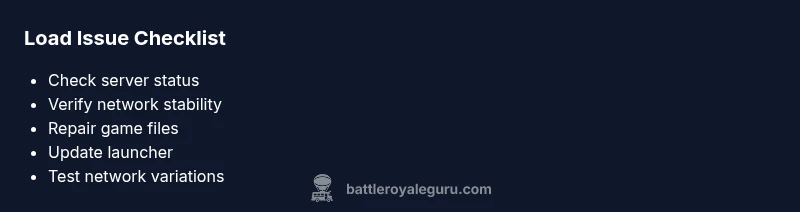
A practical approach to resolving Fortnite not loading: start with simple, reversible steps and move to deeper fixes only if needed. This sequence minimizes risk and downtime, maximizing your chance of a fast recovery. After each step, test the game: if it loads, you’re done; if not, proceed to the next step. Remember to document changes so you can revert if something goes wrong. If the issue persists after all steps, contact support with your diagnostics and test results.
This procedure helps players of all skill levels follow a clear, non-destructive path toward a fix.
Prevention and Best Practices to Avoid Future Outages
Once you fix the issue, adopt habits to prevent recurrences. Keep Fortnite and your drivers up-to-date, maintain healthy disk space, and schedule regular system maintenance. Establish a stable network setup: wired connections where possible, prioritized bandwidth for gaming, and periodic router reboots. Create a simple backup plan for game data and patch files so that future updates don’t strain your system. Finally, enable in-game health monitoring tools and keep an eye on reported server status and regional issues to anticipate problems before they impact gameplay.
Steps
Estimated time: 60-90 minutes
- 1
Verify Internet Connection
Run a speed test to ensure you meet the minimum requirements. Check other online services for stability and try a wired connection if you’re on Wi-Fi. If there are spikes or packet loss, resolve network issues before proceeding.
Tip: Use a wired connection for the most stable experience. - 2
Check Fortnite Server Status
Visit official Fortnite status pages or trusted social channels to confirm server health. If there is an outage, waiting is often the best course until services resume.
Tip: Bookmark the status page for quick checks in the future. - 3
Update the Client and Launcher
Ensure the Fortnite client and Epic/launcher are updated to the latest version. Restart the launcher after updating.
Tip: Enable auto-update to avoid missing critical patches. - 4
Repair or Verify Game Files
Use the launcher’s verify/repair feature to check for corrupted files and replace them. This step catches issues that prevent loading at startup.
Tip: Run the repair before a full reinstall if possible. - 5
Clear Cache and DNS
Clear app cache, reset network adapters, and flush DNS. A fresh cache prevents stale data from blocking the load sequence.
Tip: Restart router after clearing caches. - 6
Test Network Variations
Try a mobile hotspot or different network to eliminate ISP-related throttling or routing issues. If it loads on another network, your primary network is the culprit.
Tip: Avoid sensitive data over public networks during testing. - 7
Update Drivers and Tweak Settings
Update GPU drivers and adjust in-game settings to ensure compatibility. Lowering graphical intensity can help with load times on older hardware.
Tip: Test one setting at a time to identify the impact. - 8
Reinstall as a Last Resort
If nothing else works, reinstall Fortnite and recreate launcher profiles. This clean slate resolves deeply rooted data issues.
Tip: Back up save data if applicable before reinstall.
Diagnosis: Fortnite won't load into a game after launching the launcher
Possible Causes
- highServer-side outage or regional congestion
- highOutdated game client or launcher
- mediumNetwork configuration blocking Fortnite (Firewall/Router)
- mediumCorrupted game files or cache
- lowGPU/driver incompatibility or hardware throttling
Fixes
- easyCheck Fortnite server status and regional outages; wait if there is a known issue
- easyUpdate the game client and launcher to the latest version
- easyRestart the launcher and perform a full system reboot if needed
- easyVerify integrity of game files or perform a repair install
- easyClear launcher caches and reset network settings (DNS flush, reset adapters)
- easyTest with a wired connection or different network; disable VPNs temporarily
- easyUpdate GPU drivers and adjust in-game graphics settings
- mediumIf all else fails, reinstall Fortnite and rebuild launcher data
Questions & Answers
What should I do first when Fortnite won't load?
Start by checking server status, testing your connection, and restarting the launcher. If unresolved, move through the diagnostic flow to identify the root cause.
First, check the server status and your connection, then restart the launcher. If it still won’t load, follow the diagnostic steps.
Why does Fortnite load on one device but not another?
Differences in network configuration, driver versions, or launcher settings can cause loading to fail on one device while another succeeds. Compare settings and perform targeted fixes on the failing device.
Loading issues can be device-specific due to network or driver differences. Check both devices side-by-side and apply fixes to the one that’s failing.
How can I check Fortnite server status quickly?
Visit the official Fortnite status page or trusted social updates to confirm outages or maintenance. If there’s a known issue, wait until services resume.
Check the official status page to see if Fortnite is down for maintenance or experiencing issues.
Is reinstalling Fortnite usually necessary?
Reinstall is typically a last resort after verifying game files and trying all other steps. It can fix deeply corrupted data but should be proportional to the problem.
Reinstall is a last resort when other fixes don’t work.
Can VPNs cause loading issues?
Yes. VPNs or proxies can introduce latency or route changes that block startup. Disable VPNs during testing unless required for other services.
VPNs can disrupt loading; try turning them off to test.
Why does the game stall on the splash screen?
Splash screen stalls are often caused by server checks or driver problems. Update drivers, verify files, and ensure network stability before retrying.
Stalls at the splash are usually related to server checks or drivers; update and verify to retry.
Watch Video
Key Points
- Start with network and server checks before deep fixes
- Patch, repair, and cache-clear are your first line of defense
- Update drivers and verify game files to fix most load issues
- Reinstall only if all other steps fail