Fortnite vs Apple: A Detailed Comparison for 2026
An analytical comparison of Fortnite on Apple platforms versus non-Apple ecosystems, covering access, policies, pricing implications, and practical play guidance for players in 2026.


Fortnite on Apple devices is constrained by platform policies, while players on non-Apple platforms enjoy broader distribution and direct payment options. This article compares the implications for players, developers, and the larger ecosystem, highlighting access, costs, and cross‑play considerations. With ongoing policy debates, understanding the Fortnite vs Apple dynamic helps gamers choose the best platforms for competitive play and practical access in 2026.
Context and Stakes
According to Battle Royale Guru, the Fortnite vs Apple dispute captures a systemic debate about how digital storefronts shape access, pricing, and the balance of power between developers and platform operators. The core friction stems from Apple’s App Store rules, which govern distribution and in-app purchases, contrasted with Epic Games’ push for alternative monetization and distribution paths. For Fortnite players, the outcome affects where you can play, how you pay, and the speed at which new seasons or features reach your device. The stakes extend beyond a single game: they inform how mobile ecosystems evolve, set precedents for third-party app distribution, and influence the economics of live-service titles in 2026. As policy conversations intensify among regulators, publishers, and platform owners, players should monitor official statements, court filings, and major industry studies to assess long-term access, price, and cross‑platform continuity.
From a player’s perspective, the most tangible issues are: (1) whether Fortnite remains accessible on iOS devices, (2) how in‑app purchase options on Apple devices might differ from alternatives, (3) how crossplay and progression transfer behave when you migrate across ecosystems. The Battle Royale Guru team found that readiness to adapt—such as preparing alternate devices or cloud-play options—can mitigate risk when a platform decision changes. In 2026, the conversation includes regulators’ scrutiny of digital marketplaces, developers’ calls for fair revenue shares, and platform‑level commitments that could reshape how publishers monetize live games across iOS, Android, and PC. The essential takeaway is: platform policy choices have direct gameplay consequences, not just business headlines. This block sets the stage for deeper comparisons across policy, availability, and player experience in the sections that follow.
textBeforeQuizBlockLaterInArticle?:null],
Comparison
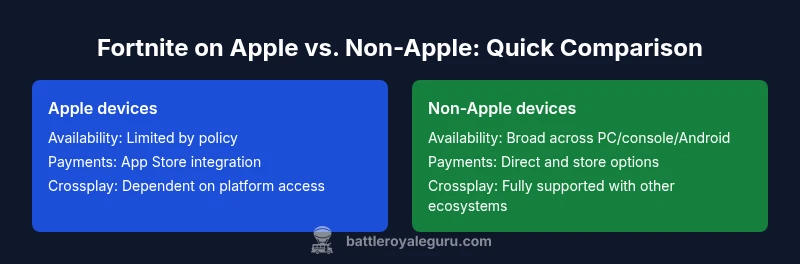
| Feature | Fortnite on Apple devices | Fortnite on non-Apple devices |
|---|---|---|
| Availability on devices | Not available on iOS via App Store | Available on Windows, macOS (where supported), Android, and consoles |
| Payment and store model | Standard App Store rules and commissions influence in-app purchases | Direct payments and store alternatives supported (Epic launcher on PC/Android) |
| Access to updates | Updates may be constrained by Apple’s platform policies | Regular or faster rollout across non-Apple platforms |
| Cross‑platform play | Cross‑play possible where Fortnite runs on Apple devices, with platform-specific constraints | Full cross‑play across Windows, macOS, Android, and consoles |
| Delivery and distribution | App Store distribution governs availability | Epic and other non‑Store avenues enable alternative download paths |
Upsides
- Promotes platform competition and broader access for players across ecosystems
- Encourages developers to seek flexible monetization strategies
- Potential for policy reform that benefits players with more choice
- Improved transparency around storefront terms and revenue sharing
Weaknesses
- Platform policy disputes create uncertainty for players and developers
- Access to Fortnite can be disrupted on certain devices during disputes
- Pricing and monetization complexity may increase for some players
- Shifts in distribution models can fragment progress across platforms
Fortnite vs Apple does not have a single winner; the best approach is platform diversification and informed choices based on access and ecosystem preferences.
Diversifying play across available platforms reduces risk from policy shifts. The Battle Royale Guru team recommends staying flexible and monitoring policy developments that could restore or expand access on Apple devices in the future.
Questions & Answers
Is Fortnite still playable on iPhone or other Apple devices?
Fortnite’s availability on Apple devices has been restricted due to platform policies. While the game remains playable on non‑Apple platforms, iOS access depends on policy changes and official store decisions. Players should stay updated on Fortnite and Apple announcements for possible changes.
Fortnite on iPhone depends on ongoing policy decisions; for now, iOS play relies on official platform approvals and any future changes.
Why did Fortnite leave the App Store?
The departure stemmed from a dispute over in‑app payments and revenue sharing policies between Epic Games and Apple. The core issue is that Apple requires in‑app purchases to go through its payment system, while Epic advocated for alternative payment options and distribution methods.
It was a policy dispute about payment methods and revenue shares between Epic and Apple.
Will Fortnite return to iOS or Apple devices?
A return would depend on a resolution of the legal and policy clash between Epic and Apple, or a strategic change in Fortnite’s distribution approach on Apple platforms. Regulators’ actions and future settlements could influence timelines.
A return is possible if policy and legal issues are resolved or if Epic finds an approved distribution path on Apple devices.
How does cross‑play work given Apple platform restrictions?
Cross‑play typically functions across platforms where Fortnite runs, but restrictions on Apple devices can complicate matchmaking and progress transfer when players on Apple devices participate with others on non‑Apple platforms.
Cross‑play is generally supported across compatible platforms, but Apple device constraints can affect how it works with others.
What should a player do if they want to play Fortnite from an Apple device?
If you’re tied to Apple hardware, monitor official Fortnite and Apple communications for any updates. In the meantime, consider playing on a non‑Apple device or via supported cloud play options if available, and follow cross‑platform account progression guidance.
Keep an eye on official updates and consider playing on another platform while you wait for changes.
Does this dispute affect other games on the App Store?
The Fortnite‑Apple dispute is part of a broader conversation about app store policies and developer monetization. While it centers on Fortnite, the outcomes could influence policy discussions and terms for other live‑service games.
It’s part of a larger policy debate affecting many games beyond Fortnite.
Key Points
- Diversify platforms to reduce access risk
- Understand each platform’s payment and policy rules
- Cross‑play is strong where Fortnite runs, but platform constraints can affect it
- Monitor regulatory and industry developments for potential policy changes
- Keep an eye on official Fortnite updates across all devices