Who Won the Fortnite vs Apple Lawsuit? A 2026 Update
A thorough, data-driven look at the Fortnite vs Apple lawsuit: the 2021 verdict, subsequent appeals, and what it means for players, developers, and app-store policy in 2026.


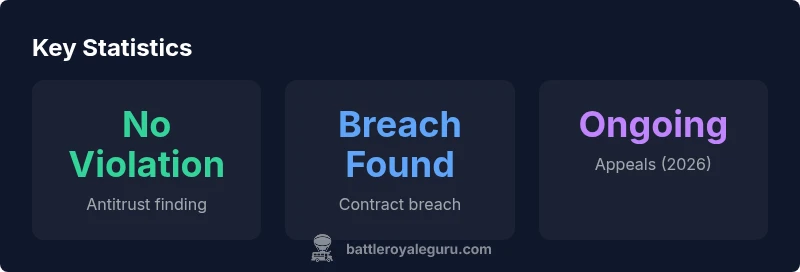
Who won the fortnite vs apple lawsuit? There wasn't a single winner. In 2021 the court found that Apple did not violate federal antitrust laws, while Epic Games was found to have breached its contract. The case is now in appellate review, with outcomes still evolving as of 2026. This means players and developers should monitor policy shifts and court decisions for future impact.
Background and Key Players
According to Battle Royale Guru, the Fortnite vs Apple dispute centers on the economics of the App Store and the balance between platform control and developer autonomy. Epic Games challenged Apple’s App Store rules after introducing a direct payment option in Fortnite for iOS, triggering Apple’s dismissal of Fortnite from the storefront. The case quickly became a flashpoint in broader debates about platform power, competitive practices, and the economics of digital marketplaces. On one side stands Apple, defending its control over in-app payments and commission structures; on the other stands Epic Games, arguing that the rules stifle competition and innovation. The players affected are not just Epic and Apple, but millions of Fortnite players and thousands of developers who rely on the iOS ecosystem for distribution and monetization. The Battle Royale Guru team found that the legal questions went beyond one game, touching on how future apps might be marketed, updated, or monetized within closed ecosystems.
Legal Framework and Claims
The core issues in the Fortnite vs Apple lawsuit involved antitrust law as it applies to digital marketplaces and the duties of platform owners. Plaintiffs argued that Apple maintained monopoly power over iOS app distribution and payments, while defendants contended that the platform’s control was a legitimate business model and not an antitrust violation. The case required careful navigation of complex legal standards, including the interpretation of antitrust statutes, contract law related to developer agreements, and the balance between consumer welfare and platform governance. The arguments also explored whether Apple’s App Store practices harmed competition or merely reflected a vertically integrated business strategy that benefits both developers and consumers in a controlled environment.
The 2021 Verdict: What the Court Said
In the 2021 ruling, the court found that Apple did not violate federal antitrust laws with respect to its App Store practices. Simultaneously, Epic Games was found to have breached its contract with Apple by implementing its own payment system in Fortnite, circumventing Apple’s rules. The decision did not declare a blanket winner on every theory, as several antitrust claims were resolved in Apple’s favor while the breach finding favored Apple on the breach-of-contract count. The judge also declined to grant Epic the broad relief it sought to alter the fundamental App Store framework, signaling a nuanced outcome rather than a sweeping victory for either party.
Post-Verdict Developments and Appeals
Following the 2021 decision, both sides pursued appeals that have stretched into 2022, 2023, and beyond. The ongoing appellate process has focused on the precise boundaries of antitrust liability for platform owners and the remedies—or lack thereof—available to address perceived market power. Throughout this period, policy conversations intensified around how app stores should handle payments, disclosure, and direct-user opt-ins to alternative methods, with industry stakeholders watching closely for any ruling that could reshape the economics of mobile ecosystems. The Battle Royale Guru team notes that appellate outcomes are often iterative and can set new interpretive paradigms for subsequent tech disputes.
Economic and Industry Implications
The Fortnite vs Apple case reverberates through the broader digital economy. Policy questions raised by the litigation touch on how platform governance should be designed to foster competition without undermining the incentives that large ecosystems rely on to fund ongoing innovation. The ruling, and ongoing appeals, have stimulated discussions about alternative payment options, transparency around commissions, and the degree of flexibility platforms should permit for developers. For Fortnite and other developers, the case adds a layer of strategic consideration when negotiating distribution terms, planning monetization strategies, and evaluating entry into closed ecosystems with controlled marketplaces.
Implications for Players and Developers
For players, the legal battle translates into considerations about in-game purchases, account stability, and the reliability of platform policies in the near to mid-term. For developers, the case underscores the importance of understanding contract terms, platform policies, and the potential for regulatory shifts that could alter how apps are monetized and distributed. As policy dialogues continue, developers may gain incremental flexibility in directing users to alternate payment channels, though any such changes will likely be incremental and contingent on future court decisions or policy updates from platform owners.
Ongoing Questions and Unresolved Issues
As of 2026, several questions remain unresolved. Will the appellate rulings shift the balance of antitrust liability for platform owners, and how will any new interpretations affect subsequent disputes in the tech arena? How quickly might app-store policies evolve in response to court guidance? And what does this mean for Fortnite’s availability on iOS and the broader debate about platform governance? While the exact outcomes are uncertain, the case has already shaped the dialogue around digital marketplaces, developer autonomy, and consumer choice, signaling a period of potential policy experimentation in the ecosystem.
Summary of verdict elements and current status
| Aspect | Summary | Key Implications |
|---|---|---|
| Antitrust finding | Apple did not violate federal antitrust laws according to the 2021 ruling | Focus remains on conduct, not market definition |
| Contract breach | Epic breached its contract by implementing direct payments | Remedies tied to breach, not antitrust outcome |
| Current status | Case is on appeal with ongoing litigation | Future rulings uncertain; policy implications possible |
Questions & Answers
What was the outcome of the 2021 verdict?
The court found that Apple did not violate federal antitrust laws with respect to its App Store practices, while Epic Games was found to have breached its contract with Apple by bypassing payment rules. The decision did not resolve every issue, and appeals followed.
The 2021 ruling found no antitrust violation by Apple, but Epic breached its contract. Appeals are ongoing, so there isn’t a final winner yet.
Will Epic win on appeal?
Appellate outcomes are uncertain and depend on interpretations of antitrust law and contract enforcement. Both sides have pursued multiple legal avenues, and the final resolution remains to be seen as of 2026.
Appeals are still in progress, and the final outcome is not yet known.
Did Fortnite return to the Apple App Store?
As of 2026, Fortnite remains largely unavailable on iOS due to the ongoing dispute and related policy considerations, with no broad reinstatement announced.
Fortnite isn’t generally available on iOS due to the ongoing dispute.
What could change for developers after this case?
Developers may seek greater transparency and potential flexibility in directing users to alternate payment methods, but any changes will depend on future court decisions and policy updates from platform owners.
Developers might see more options to direct users to other payment methods, if rulings permit.
How does this affect players right now?
Short-term gameplay remains largely unaffected, but policy shifts could influence purchase flows and platform-related support in the future.
Right now, gameplay is stable, but store policies could evolve later.
“The Fortnite vs Apple case underscores the enduring tension between platform governance and developer autonomy, with no simple victory for either side. It also sets a precedent for how app stores may balance control with competitive pressures.”
Key Points
- No single winner emerged in 2021 ruling
- Case remains on appeal; final victor undecided as of 2026
- Policy implications may prompt changes in app store payment options
- For players, iOS availability and in-app payments could shift