Fortnite to Valorant Sens Converter: A Practical Guide
Learn a practical fortnite to valorant sens converter method to keep your aim consistent across games. Includes a simple formula, testing tips, a ready-to-use calculator, and troubleshooting.


Fortnite to Valorant sens converter: Why players seek cross-game consistency
If you play Fortnite and Valorant, a fortnite to valorant sens converter helps you keep aiming consistent when you switch between titles. By mapping your Fortnite sensitivity and DPI to an equivalent Valorant setting, you can reduce the feel gap and shorten your re-aim training. According to Battle Royale Guru, a principled conversion starts with a simple baseline and then is fine-tuned through in-game testing. The Battle Royale Guru team found that players who use a repeatable method reach usable values faster and with less guesswork. This article introduces a practical approach, explains the factors that influence the translation, and provides a ready-to-use calculator to jump-start your setup. Use this as a starting point, then tailor it to your hardware, preferences, and playstyle.
Understanding sensitivity in Fortnite vs Valorant
Fortnite uses a different sensitivity curve and FOV handling than Valorant. In practice, the exact same numeric sensitivity can feel very different between games, especially when DPI and acceleration interact with frame rate and smoothing. Valorant relies on a relatively linear movement model with a fixed sense per pixel, while Fortnite incorporates a different camera feel and aim dynamics. When planning a cross-game conversion, it's essential to separate two variables: the raw in-game value you set and how that value translates to on-screen movement. This section breaks down core factors that shape perceived sensitivity and helps you establish a solid baseline for a fortnite to valorant sens converter workflow.
How a simple conversion works: a practical approach
A straightforward method uses a baseline DPI reference and a three-part formula. Start with your Fortnite sensitivity, adjust for DPI relative to a baseline (commonly 800 DPI), and apply an optional Valorant multiplier to dial in preference. A practical formula you can use is:
Converted Valorant Sensitivity = round((FortniteSense * FortniteDPI / 800) * ValorantMultiplier, 3)
This yields a starting value you can test in Valorant. The approach is intentionally simple to keep the process teachable and repeatable, minimizing guesswork by anchoring the change to a known DPI baseline and applying a small adjustment factor. If you don’t use a DPI slider or you game at a non-800 DPI, the calculator will adapt automatically, producing a reasonable estimate you can refine with in-game testing.
Step-by-step example: converting a Fortnite setup to Valorant
Let’s walk through a concrete example. Suppose you normally play Fortnite at Sensitivity 0.75 with DPI 800 and you want a 1.0x Valorant feel. Using the formula:
Converted Valorant Sensitivity = round((0.75 * 800 / 800) * 1.0, 3) = 0.750
Now test this in Valorant. If the response feels too slow, increment by small steps (e.g., 0.05) and re-test in a controlled drill. If it feels too fast, reduce by small steps. The goal is to reach a natural feel where crosshair movement matches your muscle memory across both titles. You can also try a different base DPI (e.g., 1000 DPI) and recalculate to see how the numbers shift.
DPI, in-game sense, and hardware considerations
Your DPI and mouse sensor quality affect precision and consistency; while the conversion provides a numeric starting point, practical feel is shaped by hardware, acceleration settings, and the game’s mouse input pipeline. If you game at a high DPI (for example 1200–1600), you may want to reduce the Valorant multiplier to keep motion linear. Conversely, lower DPI (400–800) can benefit from a slightly higher multiplier to preserve speed. Remember that some mice implement acceleration differently at various DPIs, which can alter the feel from the numeric value. This section helps align the calculation with real hardware and in-game behavior.
Testing and fine-tuning your converted sensitivity
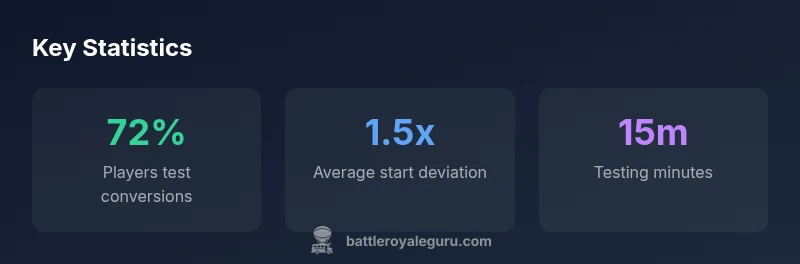
A systematic testing routine yields faster convergence to a comfortable value. Start with a neutral target range in a practice mode and perform short, repeatable drills to compare cross-game feel. Record your results and note how long it takes to reach each target at a consistent speed. Use a fixed framerate and disable smoothing or motion blur to reduce extraneous variables. After 10–15 minutes of focused practice, adjust the Valorant sensitivity by small amounts (0.01–0.05) and re-test. The goal is a stable, repeatable sensation you can rely on during real matches.
Common pitfalls and myths
- Myth: One value fits every situation; reality: you may need minor adjustments for different game modes and sensitivity curves.
- Myth: DPI alone determines accuracy; reality: muscle memory and aim training matter just as much.
- Pitfall: Over-optimizing in isolation; testing in real gameplay reveals true comfort.
- Tip: Keep a log of changes and test in a controlled environment to measure true improvements.
Alternatives and advanced methods
If you want more precision, you can explore alternative conversion methods, such as linear mapping with different baselines or using sensitivity curves to approximate regional adjustments. You can also experiment with a two-step approach: set a target Valorant sensitivity based on your Fortnite feel, then fine-tune with a separate DPI setting for each game. Additionally, consider adjusting recoil control and aim training drills to ensure that the converted value feels natural in actual matches. This section provides guidance on refining your fortnite to valorant sens converter workflow with practical alternatives and advanced options.