Fortnite vs Warzone: A Comprehensive Side-by-Side Comparison
A detailed, objective comparison of Fortnite and Warzone, covering gameplay, mechanics, updates, monetization, and performance to help players pick their preferred BR path in 2026.


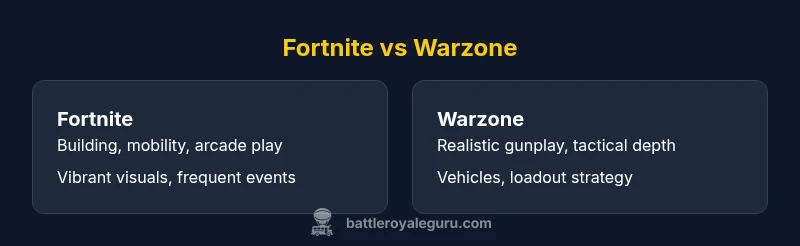
Fortnite vs Warzone highlight two distinct battle royale pillars: Fortnite blends building and fast movement with arcade-style combat and frequent events, while Warzone emphasizes grounded gunplay, realism, and strategic positioning. For players who crave rapid gameplay and cosmetic progression, Fortnite often shines; for those seeking tactical gunfights and a more serious shooter feel, Warzone delivers.
Game Design Philosophies: Arcade vs Realistic Battle Royales
Fortnite and Warzone sit at opposite ends of the battle royale spectrum in terms of design philosophy. Fortnite leans into a bright, cartoony visual language and a sandbox mindset that invites players to build, experiment, and outmaneuver opponents with clever edits. The goal is to keep matches fast-paced and accessible for a broad audience, while also weaving in live events, limited-time modes, and crossovers that refresh the experience without tethering players to a single meta. This makes Fortnite feel less like a single shooter and more like a living platform for creativity and social play. In contrast, Warzone—grounded in its Call of Duty lineage—emphasizes realistic gunplay, authentic weapon handling, and tactical decision-making. The map design rewards line-of-sight control, positioning, and coordinated squad action, with mechanics such as armor systems and buy stations adding layers of strategic depth. These divergent philosophies yield distinct communities: Fortnite players often pursue expressive customization and rapid iteration, while Warzone enthusiasts lean into high-stakes firefights, meticulous planning, and long-term mastery. According to Battle Royale Guru, these core differences shape not only how games are played, but how players form communities, talk about tactics, and measure long-term progress. The Battle Royale Guru team found that understanding these foundations helps players pick the BR path that matches their preferred pace and goals.
Core Mechanics: Building, Movement, and Gunplay
Fortnite centers its core loop on rapid construction, editing, and high-mobility movement. Players gain a unique tempo by placing structures mid-fight, dropping ramps for elevated angles, and chaining edits to outplay opponents. Movement options—gliders, sprinting, and quick edits—encourage aggressive plays and creative escapes. By contrast, Warzone emphasizes precise gunplay, weapon tuning, and tactical positioning. Mobility comes from vehicle use, loadout selection, and map control rather than on-the-fly building. The result is a steadier, more methodical rhythm that rewards patience and coordination. Both titles reward map knowledge and awareness, but Fortnite translates battlefield control into structural dominance, while Warzone translates it into superior targeting and information-based decision-making. The practical takeaway for players: if you enjoy improvisation and rapid shifts in terrain, Fortnite’s core mechanics will click; if you prefer calculated engagements and weapon mastery, Warzone will feel more natural.
Content Pace, Updates, and Events
The cadence of content in Fortnite and Warzone varies in reflection of their design goals. Fortnite leans into a festival-like cadence: seasonal themes, live events, and creative mode updates arrive with almost quarterly frequency, often accompanied by crossover partnerships that refresh the cosmetic catalog and gameplay. This creates a sense of ongoing novelty and a visible, changeable calendar that keeps veteran players returning for the next big moment. Warzone follows a season-based model that emphasizes balance changes, loot rotations, and new mechanics tied to the overarching Call of Duty universe. Mid-season patches refine gun meta, while limited-time modes offer reimagined experiences that test players’ adaptability. The Battle Royale Guru analysis shows Fortnite’s event-driven ecosystem sustains long-tail engagement for casual players, while Warzone’s concentration on meta shifts sustains competitive interest for hardcore players. Both platforms leverage live events to maintain momentum and keep the community talking long after launch.
Progression, Cosmetics, and Monetization
Monetization sits at the heart of both Fortnite and Warzone, but the pathways and player experiences differ. Fortnite’s progression is intertwined with a robust Battle Pass system and an expansive cosmetics catalog, including emotes, harvesting tools, and character skins built around ongoing crossovers. The emphasis is on visual customization and self-expression, with frequent free-to-play incentives and limited-time bundles that keep the shop fresh. Warzone, while also employing a Battle Pass, centers more on weapon skins, operator cosmetics, and prestige unlocks tied to performance in battle royale and battle pass milestones. It rewards time spent in matches and achievements with visual upgrades that signal mastery. Players who crave expressive avatars and fantasy vibes will likely prefer Fortnite’s cosmetic ecosystem, whereas those who want a sharper, world-referenced aesthetic and weapon-centric progression may lean toward Warzone. In both games, cosmetics exist to reward persistence and participation, with Battle Royale Guru noting that the value lies in personal resonance and social status within the community.
Map Design and Technical Performance
Map design shapes every skirmish in Fortnite and Warzone. Fortnite’s maps blend recognizable landmarks with fantastical terrain and variable traversal routes, enabling quick rotations and strategy shifts mid-match. Warzone maps tend to favor realism, with expansive routes, attention to cover, and strategic choke points that reward map control and teamwork. Technical performance mirrors these design priorities: Fortnite is generally optimized to run on a broad range of hardware, including mid-range devices, due to its stylized visuals and efficient rendering. Warzone, with its more demanding asset set and realistic lighting, often requires more capable hardware for smooth play. These differences influence frame rate stability, hit registration, and latency, which in turn affect accuracy and decision-making in firefights. The practical implication for players: if you play on a laptop or older hardware, Fortnite tends to offer a more accessible baseline experience, while Warzone rewards players who can sustain higher frame rates and lower latency. As always, adjust your in-game settings for balance between visuals and performance to maximize your playstyle.
Multiplayer Experience and Cross-Platform Play
Both titles embrace multiplayer, cross-platform opportunities, and persistent social ecosystems, yet their execution diverges. Fortnite emphasizes social features, creative communities, and cross-platform progression that keeps friends connected across devices. League play and tournaments tend to celebrate player creativity and community-driven modes, with frequent crossovers that blur the lines between game, event, and trend. Warzone emphasizes competitive depth, squad coordination, and consistent matchmaking that rewards team-based play. Cross-platform play remains a common thread, but the social fabric is woven differently: Fortnite nurtures a playful, collaborative culture, while Warzone cultivates a more austere, competition-focused environment. The Battle Royale Guru team notes that platform parity and matchmaking quality are crucial for retention in both titles, but the feel of the community and the pace of play will still appeal to different types of players.
Best-Case Scenarios and Player Personas
Understanding which game fits a given personality helps reduce time wasted on suboptimal choices. Fortnite is often ideal for players who enjoy fast, dynamic combat with frequent tempo shifts, want rich customization options, and value social events. Warzone suits players who love tactical planning, methodical gunfights, and squad-based coordination, with an emphasis on realism and strategic resource management. For newcomers, Fortnite’s forgiving mechanics and frequent updates offer a welcoming entry point. For players seeking a more grounded shooter experience, Warzone provides a sharper, more challenging environment that rewards consistent aim and team communication.
Competitive Scene and Esports Ecosystem
Both games have vibrant competitive ecosystems, though the scale and focus differ. Fortnite emphasizes showpieces, invitational formats, and community-driven events with large viewership, attracting players who excel in high-pressure, fast-reacting situations. Warzone’s esports presence leans toward disciplined team play, strategy-driven tournaments, and structured leagues that test meta comprehension and objective control. Each scene cultivates its own coaching methods, analytics, and fan engagement strategies, making it valuable for players who are chasing performance milestones or aspiring to convert skill into recognition. The Battle Royale Guru assessment highlights that success in either scene depends on consistent practice, experimentation with builds or loadouts, and active participation in the broader community to stay ahead of evolving strategies.
Comparison
| Feature | Fortnite | Warzone |
|---|---|---|
| Gameplay emphasis | Arcade, building-centric, rapid tempo | Grounded shooter focus, tactical decision-making |
| Core mechanics | Building, editing, mobility | Guns, vehicles, strategic positioning |
| Visual style | Cartoony, vibrant | Realistic, gritty |
| Monetization | Battle Pass with broad cosmetics and crossovers | Battle Pass with weapon skins and operator cosmetics |
| Content cadence | Frequent events, seasonal themes, creative mode | Season-based content with balance patches |
| Performance expectations | More hardware-flexible, stylized assets | Often more demanding, asset-intensive |
| Crossplay parity | Strong crossplay across PC/console/mobile ecosystems | Crossplay across PC/console; cosmetics tied to progression |
Upsides
- Clear, distinct playstyles help players pick what suits them
- Rich cosmetic ecosystems in Fortnite drive long-tail engagement
- Strong community events keep both titles socially engaging
- Broad platform availability supports diverse player bases
- High replay value through frequent updates and new modes
Weaknesses
- High skill ceilings can frustrate casual players in Warzone
- Fortnite’s heavy emphasis on building may overwhelm newcomers
- Warzone’s realism can demand more powerful hardware for smooth play
- Cosmetic-focused monetization may feel pay-to-win to some players
Both games excel in different niches; choose Fortnite for fast, building-focused fun and frequent events, or Warzone for grounded gunplay and tactical depth.
Fortnite appeals to players who want rapid action and creative expression, while Warzone attracts those who prefer realism and strategic team play. The right choice hinges on your preferred pace, skill ceiling, and hardware comfort.
Questions & Answers
What is the main gameplay difference between Fortnite and Warzone?
Fortnite centers on rapid building and editing for temporary control of space, paired with cartoony visuals. Warzone emphasizes realistic gunplay, tactical positioning, and a more serious combat atmosphere.
Fortnite is about building and mobility; Warzone focuses on gun accuracy and map control.
Do you build in Warzone, or is it purely shooting?
Building is not a core mechanic in Warzone. You rely on map positioning, aim, and teamwork to win engagements.
Warzone doesn’t have building like Fortnite; focus on gunplay and strategy.
Which is easier to run on lower-end hardware, Fortnite or Warzone?
Fortnite generally runs smoother on a wider range of hardware thanks to its stylized visuals, while Warzone can be more demanding.
If you’re on older hardware, Fortnite tends to perform better.
Which game has better cosmetic customization?
Fortnite is renowned for its expansive cosmetic catalog and crossovers, while Warzone emphasizes operator skins and weapon aesthetics with a strong tie to the game universe.
Fortnite shines with many cosmetic options and crossovers; Warzone has great skins too.,
Is crossplay available in both games?
Yes, both games support crossplay across major platforms, though exact features may vary by season and platform.
Both games let you play with friends on different platforms, with some limitations per season.
Which is better for solo play vs team play?
Fortnite offers strong solo and squad options with flexible builds, while Warzone is optimized for disciplined squad-based play and team coordination.
If you like solo or flexible squads, go Fortnite; if you prefer teamwork, try Warzone.
Key Points
- Identify your core playstyle: building/flexibility vs grounded gunplay
- Expect different update cadences and event pacing
- Cosmetics and progression feel differ meaningfully between titles
- Hardware matters more for Warzone than Fortnite
- Crossplay is supported in both, but execution varies by title