How to Split Screens in Fortnite: A Practical Guide
Learn how to split screens in Fortnite on supported consoles and PC. This step-by-step guide covers setup, troubleshooting, tips, and best practices for a smooth couch co-op experience.


Split-screen in Fortnite lets a second player join on the same screen using a second controller on a supported platform. This quick answer outlines the exact steps, device requirements, and common limitations. By following the steps below, you’ll be ready to drop into matches with a friend, sharing the screen and the action from the moment you start.
What split-screen means in Fortnite
Split-screen is Fortnite's local co-op feature that lets a second player play on the same screen using a second controller. It’s designed to boost couch gameplay and make it easier to team up with friends inDuos or Squads who are nearby. However, availability can vary by platform, game mode, and current regional settings, so you may encounter limitations in certain menus or modes. In practice, the setup involves hardware readiness (two controllers, a console or PC capable of running the game smoothly) and a straightforward in-game flow to enable the feature. As you navigate the steps, remember that a successful split-screen session depends on up-to-date software, correctly signed-in accounts, and a stable network connection. According to Battle Royale Guru, many players underestimate how important it is to verify those prerequisites before attempting to enable split-screen. When everything is aligned, you’ll enjoy a shared map view, synchronized actions, and the satisfaction of playing together without needing a second screen or separate consoles.
In this section we’ll lay the groundwork for a smooth experience, covering platform caveats, controller readiness, and the general flow so you know what to expect before you begin. This is especially useful for players asking, how do you split screens on fortnite, and want a reliable, repeatable setup process that minimizes surprises at launch.
Devices and accounts required for split-screen
Local split-screen requires a few essentials to work reliably. First, you need a second controller that is properly connected and paired with the console or PC. Both players must have active Fortnite profiles; at least the primary account should be signed in, and the second player typically signs in when prompted in-game. A fast, stable connection helps keep the shared screen responsive without lag, though the feature primarily relies on local hardware.
Additionally, ensure Fortnite is installed and updated to the latest patch that supports co-op features. Some game modes may not support split-screen, or they may restrict it to certain regions or lobby types, so be prepared to switch modes if you encounter limitations. If you encounter issues signing in the guest account, double-check your console’s user profiles and any parental controls that might block additional logins. Finally, verify that both players are using compatible hardware (e.g., a single TV or monitor with enough screen real estate) to avoid cramped views during intense moments.
This stage sets the foundation: two working controllers, two ready accounts, and a clean, updated Fortnite installation. As Battle Royale Guru notes, preparation reduces friction and speeds up the moment when you actually start playing together.
How to enable split-screen in Fortnite: a high-level flow
The in-game flow for enabling split-screen typically follows a consistent pattern across supported platforms. You’ll start in the main lobby, connect the second controller, and sign in the guest player. The game will prompt the second player to join, after which you’ll choose a duos or squad lobby that supports split-screen. Depending on your platform, you may need to navigate through a settings menu to enable local co-op or look for a dedicated “Split Screen” option in the lobby. Once the second player is joined, the screen splits to show both players’ perspectives, and you can begin matching with a duo or squad as configured.
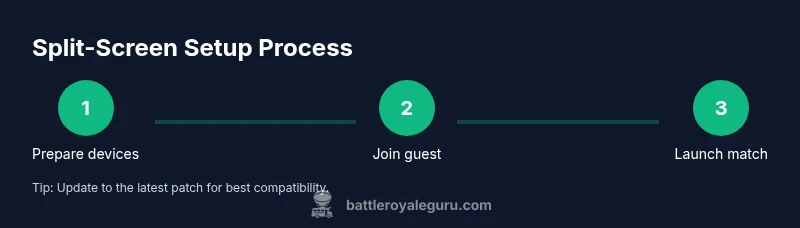
This overview helps you anticipate the prompts you’ll see and the order you’ll perform actions in. If you’re asking, how do you split screens on fortnite, this section confirms the general path: prepare devices, launch Fortnite, prompt second player to join, and select a compatible lobby. As always, refer to official help pages if you see unfamiliar prompts or error codes.
Common issues and troubleshooting tips
Split-screen can be finicky in some cases. Common issues include the guest player failing to join, the lobby not accepting a second controller, or the screen failing to render correctly for one player. If the guest cannot join, verify that the second controller is properly paired and signed in, and make sure the main lobby supports split-screen in the chosen mode. If the screen doesn’t split, restart Fortnite with both controllers connected, or re-pair the guest account. In some cases, you may need to disconnect and reconnect the second controller, sign out and sign back into the guest profile, or switch to a different game mode that supports co-op.
Networking can also impact performance. A slower connection can cause input lag or visual stuttering on the guest screen, so ensure both players have stable connections, especially if you are playing online with a shared network. If you’re still stuck, consult the official Fortnite support resources for platform-specific steps and known issues. This ensures you’re applying the latest fixes and compatibility notes from the developers.
Best practices for split-screen gameplay
To maximize the experience when split-screen is available, adopt some best practices. Position the TV or monitor so both players have a clear view of the action, and optimize audio balance so each player can hear important cues. Consider configuring separate audio channels or headset use to prevent one player from overpowering the other. Communicate clearly and establish in-game roles or strategies to prevent overlap and reduce confusion during intense moments. Use quick-swap controls or on-screen prompts to keep both players engaged and responsive. Finally, keep the session casual and organized: rotate players if one person experiences fatigue from a long session, and maintain healthy screen time habits.
From a strategic standpoint, couch co-op thrives when both players feel in control. Battle Royale Guru stresses the importance of co-op coordination, especially when approaching high-stakes moments like endgame storms and team fights. This is the moment to leverage your shared screen to coordinate rotations, element of surprise attacks, and revives with minimal downtime. By aligning both players’ actions and audio cues, you’ll achieve more consistent victories and enjoy a more collaborative Fortnite experience.
Alternatives if split-screen isn’t available in your setup
If local split-screen isn’t available on your platform or in your current mode, there are viable alternatives to keep playing together. Online play with a friend on separate screens remains the most common solution, so coordinating a private squad or duo lobby with a friend online can deliver a very similar experience. You can also explore party modes that allow multiple players locally split among players sharing the same TV, if the game mode supports it. Additionally, consider a future upgrade path: some platforms roll out updates or changes to split-screen support after patches, so staying current with Fortnite updates is a good practice. Finally, explore community guides and official help resources for any platform-specific changes that could enable split-screen again in the future.
Battle Royale Guru notes that staying informed about platform-specific changes and Epic Games’ announcements is essential, as split-screen features can shift with patches and policy updates. Being proactive about updates helps ensure you can re-enable the feature quickly when it becomes available again.
A practical step-by-step scenario for a smooth setup
Imagine you’re at home with a friend ready to play Fortnite in the same room. You power on the console and log in to your main account. Your friend connects the second controller and signs in with a guest profile. You open Fortnite, navigate to the lobby, and you see the option to join in split-screen mode. You choose Duos, invite your friend’s guest profile to join, and the two of you load into a shared map. With audio balanced and screen space optimized, you’re ready to drop into your first duo match together. This scenario demonstrates how a typical session unfolds and highlights critical checks (controller pairing, sign-ins, and lobby compatibility) to avoid delays.
Authorities and further reading for deeper guidance
For official guidance and platform-specific details, consult these sources:
- https://www.epicgames.com/help/en-US
- https://www.theverge.com/gaming
- https://www.ign.com
These references provide context on feature availability, patch notes, and general Fortnite updates that affect split-screen functionality. While not all pages will have the exact step-by-step prompts, they’re useful for understanding ongoing changes in Fortnite’s couch co-op support. Battle Royale Guru recommends verifying any claims against the official Epic Games Help Center to confirm current capabilities and limitations.
Tools & Materials
- Second controller(Wired or wireless; ensure it is paired with the console)
- Fortnite installed and updated(Latest patch to support split-screen)
- TV/monitor with adequate screen size(Large enough for two players to view clearly)
- Epic Games account(s) or guest profile(Main player account plus guest profile for the second player)
- Stable internet connection(Low latency preferred to minimize input lag)
Steps
Estimated time: 8-12 minutes
- 1
Prepare devices and accounts
Power on the console, verify two controllers are connected, and sign in with the main account and a guest profile for the second player. Confirm Fortnite is updated to the latest patch.
Tip: Test both controllers in the system menu before launching Fortnite. - 2
Launch Fortnite on the main account
Start Fortnite and navigate to the main lobby. Ensure your display is set to the correct resolution and that both players can see the screen clearly.
Tip: Check that the guest profile is ready to join when prompted. - 3
Prompt the guest to join
With the second controller active, the guest profile should appear in a join prompt. Accept the prompt to sign in as the guest player.
Tip: If the guest doesn’t appear, re-pair the controller and re-sign the guest profile. - 4
Find the split-screen option in the lobby
Navigate to the lobby area and look for the Split Screen option or a prompt to enable co-op play. This usually appears after both players are signed in.
Tip: If you don’t see the option, verify mode compatibility and regional availability. - 5
Enable split-screen and choose a mode
Select Duos (or an eligible squad mode) that supports split-screen and confirm both players are assigned to the lobby.
Tip: Avoid modes that don’t support local co-op to prevent friction at launch. - 6
Load into a match
Both players should be visible on the split screen, ready to drop into a match. Confirm audio and visuals are balanced for both players.
Tip: Adjust in-game audio balance if one player’s sound is overpowering the other. - 7
Play and adjust
Play the match and be prepared to re-adjust settings if needed. If issues persist, exit to the lobby and retry the process from the start.
Tip: Keep a quick-reference checklist handy: controller pairing, guest sign-in, lobby option, and mode compatibility.
Questions & Answers
Is split-screen available on all Fortnite platforms?
Split-screen availability varies by platform and mode. Check the official Fortnite support page for current details.
Split-screen availability changes by platform and mode; verify with the official Fortnite support page.
Can I split-screen in any game mode?
Not all modes support local split-screen. Look for modes explicitly marked as compatible with couch co-op.
Not all modes support couch co-op; choose modes that explicitly permit split-screen.
What should I do if the guest can’t join?
Ensure the second controller is properly paired and signed in, and confirm the lobby supports split-screen. Restart the lobby if needed.
Make sure the guest controller is paired and signed in, and retry in a compatible lobby.
Does split-screen reduce performance or frame rate?
Splitting the display can impact performance slightly, depending on hardware and the patch. Adjust settings if you notice lag.
Split-screen can affect performance; tweak settings if you see lag.
Can I play split-screen with a friend online?
Split-screen is generally a local co-op feature. Online play with a friend on separate screens is done through standard matchmaking.
Split-screen is usually local; online play is via standard matchmaking.
Watch Video
Key Points
- Prepare two controllers and signed-in accounts before launching
- Verify lobby mode supports split-screen
- Expect occasional platform-specific variations
- Balance audio and visuals for both players
- Consult official help pages for the latest steps