How to Fix Fortnite Stuttering: A Practical Guide
A practical, step-by-step guide to fix Fortnite stuttering. Learn how to optimize FPS, reduce input lag, and streamline your setup across PC and consoles for smoother battles.


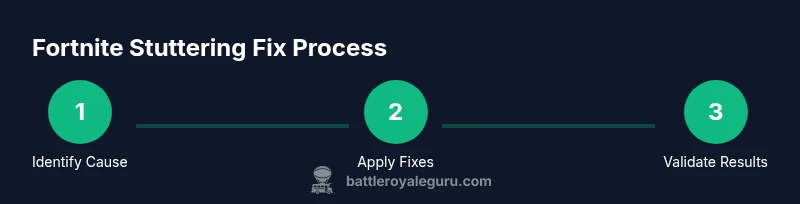
In this guide, you’ll learn how to fix fortnite stuttering by addressing common culprits: graphics settings, drivers, background processes, and network. You’ll perform a structured check of your system, adjust in-game options for stability, and test performance steps to confirm improvements. The goal is smoother gameplay with fewer frame drops on PC or console.
Why Fortnite Stuttering Happens
According to Battle Royale Guru Team, stuttering in Fortnite is usually caused by a mismatch between the game’s demands and your hardware, background tasks, and network hiccups. In practice, you’ll see intermittent frame drops when the GPU is overworked, the CPU is bottlenecked, or memory bandwidth is constrained. Patch changes or driver issues can also introduce brief pauses as the game streams assets. Understanding these drivers helps you pick the right fixes, because what works for a high-end PC may differ from a console experience.
Common causes include:
- GPU/CPU bottlenecks when the game streams high-detail textures and dynamic environments
- Memory constraints that slow asset loading and lead to stutters
- Background processes competing for CPU, RAM, or disk I/O
- Outdated or corrupted graphics drivers
- Network latency or server-side hiccups that disrupt frame pacing
The good news is that many issues can be resolved with targeted tweaks, so you can keep playing at a steady pace without costly hardware upgrades.
Quick Wins to Stabilize FPS
If you want fast improvements, start with lightweight changes you can undo later if needed. These quick wins don’t require deep tech skills but can dramatically smooth frame pacing. First, switch Fortnite to Fullscreen mode and cap your frame rate to match your monitor’s refresh rate. Disable V-sync if you’re already hitting your target FPS. Lower the texture and shadows quality, and turn off motion blur and post-processing effects. Close unnecessary background apps, especially anything that uses GPU or network bandwidth. Finally, ensure your Windows/macOS power plan is set to High Performance and keep your device cool during play.
Battle Royale Guru analysis shows that players often see immediate benefits from these steps, particularly on mid-range hardware where GPU and CPU headroom is the bottleneck. If you’re on a console, enable any performance modes available and ensure the system isn’t thermally throttling during long matches.
In-Game Settings for FPS and Smoothness
Fine-tuning Fortnite’s in-game settings can yield a smoother experience without sacrificing too much visual fidelity. Start with the basics: set Window Mode to Fullscreen, limit the frame rate to your display’s refresh rate, and keep 3D Resolution at a sane level (around 100%). Reduce View Distance to Medium, lower Textures to Medium, and set Effects, Post Processing, and Shadows to Low or Off. Anti-Aliasing can be Off for crisper edges in fast motion. If you have streaming or recording software, disable Shadowplay/Replay features during intense fights to free up resources. These adjustments reduce GPU load and stabilize frame times, which is often more impactful than chasing raw FPS alone.
Note: Changes should be tested incrementally; small adjustments can yield meaningful gains without a large drop in visual quality. In many cases, users notice a tangible improvement after a single round with tuned settings.
Driver and System Maintenance
Outdated drivers and system software are frequent culprits behind stuttering. Update your GPU drivers from the official NVIDIA, AMD, or Intel channels and install any available Windows/macOS updates. Run a quick disk cleanup and defragmentation if you’re on HDDs, and ensure you have at least some free disk space for game assets to stream efficiently. Disable any unnecessary startup programs that launch with Windows and monitor temperatures to ensure the GPU/CPU aren’t throttling due to heat. A well-maintained system reduces the risk of stutter caused by resource contention or thermal throttling.
Keeping drivers and OS components current is a long-term investment in stability, not a one-time tweak. Battle Royale Guru recommends periodic checks, especially after major game patches.
Network Tweaks for Lower Latency
Network performance plays a crucial role in frame pacing, particularly in online multiplayer games like Fortnite. Use a wired Ethernet connection whenever possible, as it offers lower jitter than Wi‑Fi. If a wired connection isn’t feasible, place the router near your gaming device and minimize distance from the access point. Enable Quality of Service (QoS) to prioritize Fortnite traffic if your router supports it, and select the server region closest to you to reduce round-trip time. Avoid VPNs or proxies during play, as they can introduce extra hops and instability. These steps can dramatically reduce input lag and stuttering caused by network delays.
Console vs PC: Platform-Specific Tactics
Platform-specific nuances matter. On PC, ensure your game uses the dedicated GPU (not integrated) and that background processes aren’t consuming CPU/GPU cycles. On consoles, keep the system firmware up to date and use any built-in performance modes. For laptops, connect to power rather than running on battery, ensure cooling is adequate, and consider lowering power-saving features that throttle performance. While the core fixes are similar, platform-specific settings can unlock meaningful gains in stability and responsiveness.
Background Apps and System Health
Identify software that competes for CPU, RAM, or disk I/O. Open Task Manager (Windows) or Activity Monitor (macOS) and end non-essential processes during Fortnite sessions. Disable overlays or recording tools that can spike GPU load. Keep background antivirus scans scheduled for off-hours. A cleaner system means fewer stutters caused by resource contention, especially during late-game moments when load spikes.
When to Consider Hardware Upgrades or Reinstall
If you’ve exhausted software-based fixes and still experience stuttering, assess your hardware headroom. Upgrading GPUs, CPUs, or adding RAM can help, especially if the game runs at or near the system’s limits. A fresh Windows/macOS reinstall can also remove hidden configuration issues that accumulate over time, though it should be a last resort. Before buying components, verify Fortnite’s official minimum and recommended specs and compare them to your current hardware. This ensures you invest in meaningful improvements rather than chasing an illusion of speed.
Final Checks and Consistency Testing
After applying fixes, test across different scenarios: solo matches, squads, and creative modes. Monitor frame pacing, input responsiveness, and visual stability. If possible, use a frame-time recording tool to confirm smoother performance over multiple runs. Keep a changelog of settings you altered so you can revert if something underperforms. Regular testing helps you confirm that the improvements are consistent and not just a temporary fluctuation.
Tools & Materials
- Fortnite game installed and updated(Ensure the latest patch is installed)
- Stable internet connection(Wired Ethernet preferred when possible)
- Up-to-date GPU drivers(NVIDIA/AMD/Intel official drivers)
- Background monitoring tools(Task Manager/Activity Monitor to spot resource hogs)
- System with adequate cooling(Prevent thermal throttling during long sessions)
Steps
Estimated time: 60-90 minutes
- 1
Assess baseline performance
Open Task Manager or Activity Monitor and note CPU, GPU, and memory usage during a typical Fortnite session. Identify whether hardware is the bottleneck or if background tasks are consuming resources. This establishes a baseline to compare against after fixes.
Tip: Take screenshots of resource usage during a high-load moment to compare before/after. - 2
Update drivers and software
Download the latest GPU drivers and install any available Windows/macOS updates. Reboot and retest performance to see if the stuttering decreases. This often resolves frame pacing issues caused by older drivers.
Tip: Manually check the driver vendor site rather than relying on automatic update tools. - 3
Tune in-game settings
Adjust Fortnite graphics: set to Fullscreen, cap FPS to monitor refresh rate, and lower texture/shadow settings. Turn off motion blur and reduce post-processing effects. Reopen Fortnite and test in a controlled session.
Tip: Make one change at a time if you want to isolate the effect of each setting. - 4
Close background processes
Quit nonessential programs that compete for CPU/GPU/RAM. Temporarily disable overlays and recording tools while playing. Keep antivirus scans scheduled for off-hours to avoid interference.
Tip: Use Task Manager’s startup tab to disable unnecessary background apps at boot. - 5
Optimize network connection
If possible, switch to a wired connection and test with the nearest server. Enable QoS on your router to prioritize Fortnite traffic. Avoid VPNs and proxies during gaming sessions.
Tip: Restart your router after applying QoS to ensure settings take effect. - 6
Test and iterate
Run multiple matches in different modes to verify improvements. Record frame times if possible and compare against the baseline. If anomalies persist, revisit a previous step or try a fresh installation of Fortnite as a last resort.
Tip: Keep a small notebook of changes and results for quick reference. - 7
Plan upgrades or reinstall if needed
If stuttering remains after software tweaks, consider a hardware upgrade or a clean reinstall of the OS. Verify the game requirements and ensure compatibility with any planned changes. This ensures you aren’t chasing artificial gains.
Tip: Consult official Fortnite specs and community testing before buying new components.
Questions & Answers
What causes Fortnite stuttering?
Stuttering typically results from GPU/CPU bottlenecks, background processes, outdated drivers, or network latency. Patches and asset streaming can also trigger brief pauses. Identifying the main culprit helps tailor fixes.
Stuttering usually comes from bottlenecks or background tasks. Start by checking drivers and your network to locate the main cause.
Will lowering in-game settings fix stuttering on PC?
Lowering settings can reduce GPU load and stabilize frame pacing, especially on mid-range systems. Start with a few key changes like fullscreen mode, frame limit, and shadows off, then test.
Lowering settings often helps stabilize performance on PCs with limited GPU power.
Does stuttering occur on consoles, and how is it addressed?
Consoles may stutter due to thermal throttling or insufficient performance modes. Enable any available performance mode, keep firmware updated, and ensure proper ventilation.
Yes, it can happen on consoles; use performance modes and keep the system cool.
Is a hardware upgrade necessary to fix stuttering?
Hardware upgrades are a last resort when software optimizations no longer reduce stutter. Verify your current specs against Fortnite’s requirements and consider RAM or GPU upgrades if bottlenecks persist.
Upgrades are a last resort after trying all software fixes.
Should I use a VPN to improve Fortnite performance?
VPNs can add latency and cause instability; they’re generally not recommended for improving Fortnite performance. Use direct connections first and only test VPNs if you’re troubleshooting routing issues.
VPNs usually slow you down; avoid them when gaming unless troubleshooting routing.
Where can I test improvements after changes?
Test in multiple match types (solo, duo, squads) and in both high-action and calmer modes. Use frame-time metrics if available to quantify stability over time.
Test across modes and watch frame times to confirm consistency.
Watch Video
Key Points
- Start with quick wins for immediate impact
- Match settings to your hardware for stability
- Stabilize network before hardware upgrades
- Test, measure, and iterate for consistency